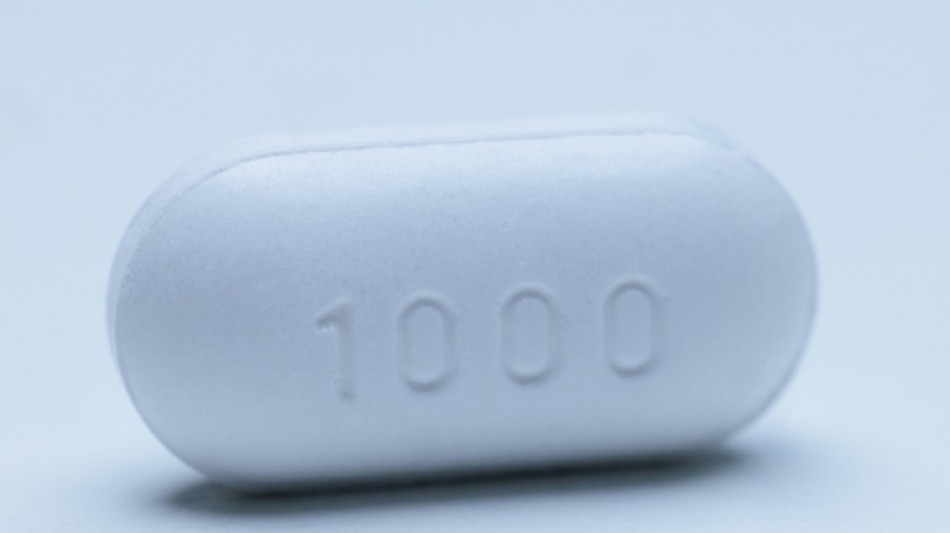
E.coli can turn plastic into painkillers, chemists discover / Photo: JOEL SAGET - AFP/File

 Spieth among five sharing Memphis lead as PGA playoffs open

 Boats rescue tourists as forest fire flames threaten Greek beaches

 Good vibes powering Djokovic return to Cincinnati

 Britain's Hunt wins 200m for European sprint double

 Draper dumped as Norrie saves face for Britain in Cincinnati

 England opener Gay out for duck in Pakistan warm-up

 Europe swelters under fresh wave of extreme heat

 French Olympic gold medallist Florent Manaudou announces retirement
 Tourists rescued by boat as forest fire threatens Greek beaches

 Indicted Raul Castro reappears after months out of public view

 Italian teen Curtis breaks women's 50m backstroke world record for second time

 Taulagi steps out of 'comfort zone' with code switch to French Top 14 new boys

 Leicester's Thai owners put troubled club up for sale: reports

 Stocks steady as US inflation worries ease, oil slips

 Porsche to end production of flagship electric car: report

 Twitch sparks gamers' wrath with Amazon AI sharing deal

 Blaze forces families to abandon Turkish tour boat

 'If you can, move!' say Rome's viral dancing seniors

 Zambia voters weigh Hichilema's economic record

 SBCFX to Showcase Trading Innovation, Regional Growth Strategy, and Future Vision at iFX EXPO Asia 2026

 Hodgkinson sets up Werro showdown after Euro 800m drama

 'How many will die?': the mysterious ailment killing Kenyan elephants

 Arteta coy over Lewis-Skelly's Arsenal future after 'emotional' celebration

 Romania shuts down nuclear plant as Danube drops

 German steel giant Thyssenkrupp weighs options as Rhine drops

Scientists have found a way to use the bacteria E.Coli to convert plastic waste into a popular painkiller, a study said Monday, though outside experts doubted the technique would make a dent in the fight against plastic pollution.
Paracetamol, which is one of the most commonly used drugs worldwide, is made from the derivatives of fossil fuels, often by Asia-based subcontractors using cheap, polluting methods that contribute to climate change.
The world is also facing an escalating crisis of plastic pollution, with countries set for another bruising round of negotiations in August in the hope of sealing an international treaty to reduce plastic waste.
The British team of researchers behind the new study sought to find a solution to the two problems by roping in a third -- E.coli, which is normally known for making people sick when they eat contaminated food.
First the chemists used a molecule derived from PET plastic, which is used in bottles and many other plastic products the world over, to spark a chemical reaction in a strain of E.coli.
This created a molecule they called PABA, according to the Nature Chemistry study, which was partly funded by drug firm AstraZeneca.
By genetically modifying the bacteria, the chemists were able to transform their molecule into acetaminophen, also known as paracetamol.
"This work demonstrates that PET plastic isn't just waste or a material destined to become more plastic -- it can be transformed by microorganisms into valuable new products, including those with potential for treating disease," lead study Stephen Wallace said in a statement.
Singaporean researchers not involved in the study praised how it combined synthetic and biological chemistry.
But "several practical considerations remain" to take this idea beyond the proof-of-concept stage, they wrote in a linked commentary in the journal Nature Chemistry.
The chemical reaction produces only a limited amount of PABA molecules, which "may be insufficient for industrial applications", they wrote.
Melissa Valliant, communications director of the Beyond Plastics project of Bennington College in the United States, expressed scepticism.
"A new 'plastic-eating bacteria' pops up in the news every few months and has been doing so for years," she told AFP.
"These discoveries never scale up to anything significant enough to tackle the massive plastic pollution problem."
This "crisis needs to be stopped at the source," she added, which means "companies and policymakers must reduce the amount of plastic being produced and used in the first place".
P.Mira--PC