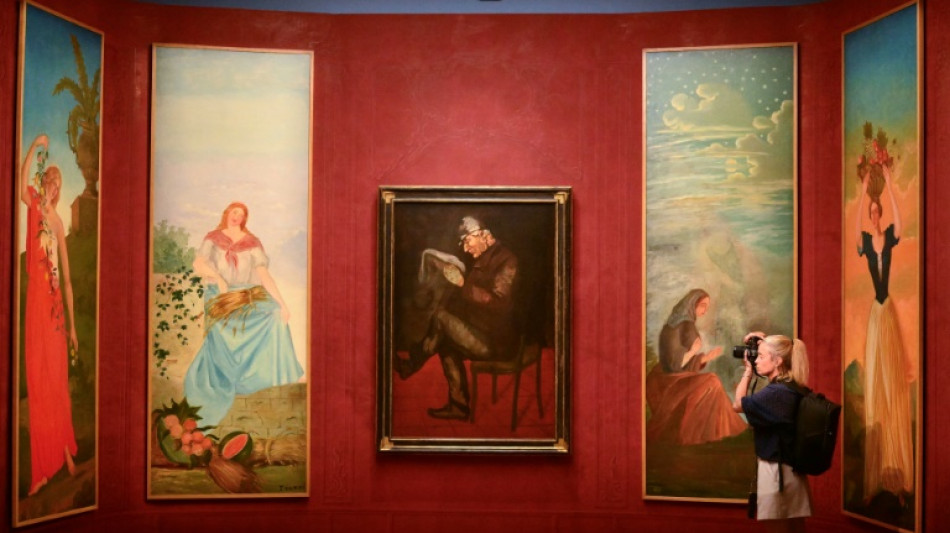
'Cezanne at home': show retraces artist's roots in southern France / Photo: Christophe SIMON - AFP

 Best Pet Advent Calendars for Christmas 2026: Dog Treats and Cat Toys

 Grattan Institute Releases Blueprint to Target Specialists Over Excessive Fees

 Arizona Science Center Hosts Girls in STEM Astro Adventures for Students

 New Turkish Cafe, Japanese BBQ, and Korean Restaurants Open Across East Bay

 Knowle Move Four Points Clear at Top After Histon Victory

 Physicians Urge Arizona to Ban Medical Gag Clauses and Enable Private Lawsuits

 New Campaign Highlights Knowledge Gaps on Carbon Monoxide Safety Among Americans
A city in southern France is celebrating its most famous local painter Paul Cezanne with an exhibition showcasing his works inspired by the sun-drenched landscapes of the Provence region.
Paintings by Cezanne, created in his hometown of Aix-en-Provence and at his family estate, went on display Saturday at the Granet Museum in the city for the over three-month exhibition, which is expected to draw hundreds of thousands of visitors.
The theme of the exhibit is "Cezanne at home," said the city's mayor Sophie Joissains.
The vivid southern French countryside provided most of the inspiration for Cezanne's works, composed mainly of still lifes and landscapes.
But the artist, known as one of the fathers of modern art, was hated by critics and shunned by his native city during his life and even years after his death.
"As long as I live, no Cezanne will enter the museum," then-conservator of the Granet Museum Henri Pontier promised after Cezanne died in 1906.
For decades, "a modest copy of a classic male nude, made during his studies, was the only work of Cezanne's in the museum of his city," said Bruno Ely, current director of the museum and the exhibit's curator.
The century-long rift between Cezanne and his native city came to an end in 2006 when the Granet Museum held its first exhibition of the artist's work.
The city has since declared 2025 "Cezanne's Year," organising a series of events celebrating his work and leaving any historical estrangement firmly in the past.
The "Cezanne au Jas de Bouffan" (Cezane at the Jas de Bouffan) exhibit displays 135 paintings, drawings and etchings, originating from museums and collectors from over a dozen different countries.
The evolution of Cezanne's painting style will be on display, from his earlier darker works featuring thick paint spread with a palette knife to impressionism to a pre-cubist style.
Though the Provence region where Cezanne roamed was "tiny," it was "enough for him to reinvent painting", said Ely.
The exhibition comes alongside major restoration efforts at the three-storey Jas de Bouffan manor home, where the Cezanne family lived in the late 19th century.
Young Cezanne adorned the estate's living room with colourful frescos, perhaps with the intention of impressing his banker father, who had wanted his son to be a lawyer or a financer.
The exhibition runs to October 12.
A.P.Maia--PC

