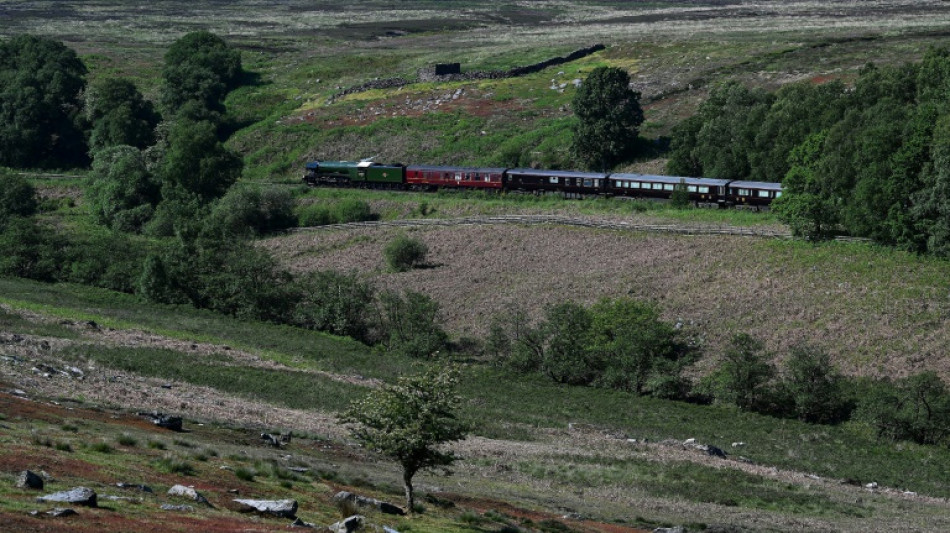
End of the line for Britain's royal train / Photo: Charlotte Graham - POOL/AFP

 Best Pet Advent Calendars for Christmas 2026: Dog Treats and Cat Toys

 Grattan Institute Releases Blueprint to Target Specialists Over Excessive Fees

 Arizona Science Center Hosts Girls in STEM Astro Adventures for Students

 New Turkish Cafe, Japanese BBQ, and Korean Restaurants Open Across East Bay

 Knowle Move Four Points Clear at Top After Histon Victory

 Physicians Urge Arizona to Ban Medical Gag Clauses and Enable Private Lawsuits

 New Campaign Highlights Knowledge Gaps on Carbon Monoxide Safety Among Americans
King Charles III is to end the British monarchy's use of a royal train for the first time since the Victorian era in the 19th century, as part of cost-cutting and modernisation plans.
As part of the royal family's annual finances revealed late on Monday, the king's treasurer announced he had approved the use of two helicopters to ferry the royal household and decommission the train due to high costs.
The process to bring the nine-carriage train to a halt will begin next year, according to the monarch's financial report.
James Chalmers, who as the Keeper of the Privy Purse is the king's treasurer, described the move as an example of the royal household applying "fiscal discipline".
The Sovereign Grant, which pays for royal duties and upkeep of palaces, remained at £86.3 million ($118.5 million) in the financial year ending in March 2025.
Next year the grant will rise to £132 million.
The king bid the "fondest of farewells" to the train, which includes a carriage created especially for him in the 1980s.
"The royal train, of course, has been part of national life for many decades, loved and cared for by all those involved," said Chalmers.
"Just as so many parts of the royal household's work have been modernised and adapted to reflect the world of today, so too, the time has come to bid the fondest of farewells, as we seek to be disciplined and forward-looking in our allocation of funding," he added.
The report comes at the end of a fiscal year in which Charles returned to royal duties after being diagnosed with cancer, for which he is still receiving treatment.
His daughter-in-law Catherine, whose husband is Charles' elder son and heir Prince William, was also diagnosed with cancer in 2024, and went into remission this year.
The king "demonstrated remarkable resilience by undertaking a wide programme of public and state duties at home and overseas while continuing to receive treatment," said Chalmers, commending his "resilience".
The royal train has a storied history, with coaches first being used during the reign of Queen Victoria in the mid-19th century.
In 2020, William and Kate undertook a 1,250-mile (2,000-kilometre) rail tour of Britain on the royal train to thank essential workers for their efforts during the Covid-19 pandemic.
The coffin of Charles's mother, Queen Elizabeth II, had been due to travel to London on the royal train when she died in Scotland in 2022, but those plans were scrapped over security fears.
A UK media probe last year sparked anger after revealing that the royal household's estates were profiting from the public health service, charities and individual renters while benefiting from major tax exemptions.
P.Sousa--PC

