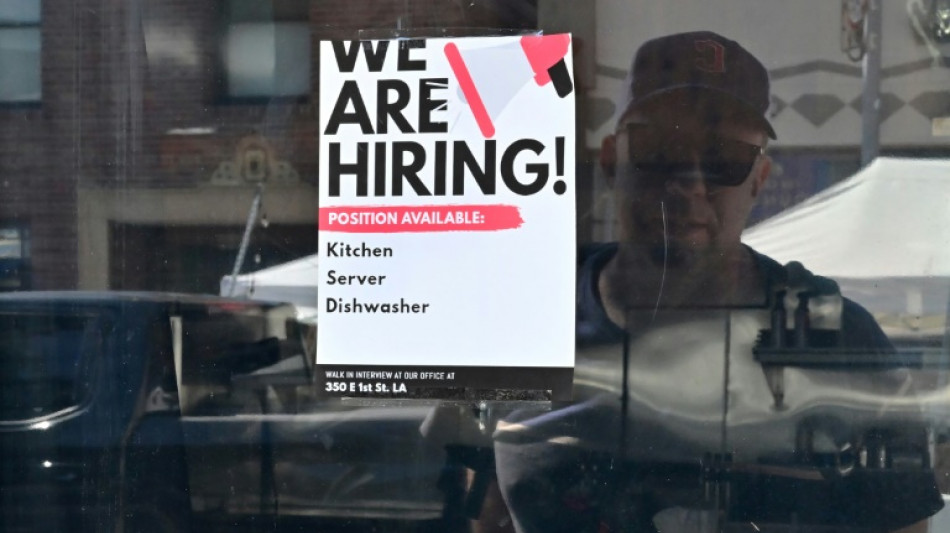
US private sector shed jobs for first time in recent years: ADP / Photo: Frederic J. BROWN - AFP/File

 Best Pet Advent Calendars for Christmas 2026: Dog Treats and Cat Toys

 Grattan Institute Releases Blueprint to Target Specialists Over Excessive Fees

 Arizona Science Center Hosts Girls in STEM Astro Adventures for Students

 New Turkish Cafe, Japanese BBQ, and Korean Restaurants Open Across East Bay

 Knowle Move Four Points Clear at Top After Histon Victory

 Physicians Urge Arizona to Ban Medical Gag Clauses and Enable Private Lawsuits

 New Campaign Highlights Knowledge Gaps on Carbon Monoxide Safety Among Americans
The US private sector unexpectedly lost jobs in June, according to data from payroll firm ADP on Wednesday, a potential sign of labor market weakness amid uncertainty from President Donald Trump's tariffs.
It was the first such decline in recent years, in data that will be scrutinized ahead of government employment numbers due to be released a day later.
As companies grapple with uncertainty from Trump's shifting tariff policies -- alongside supply chain disruptions and added cost pressures -- analysts are watching for signs that the world's biggest economy may be less solid than expected.
Private sector employment declined by 33,000 last month, ADP said, while job growth in May was revised lower to 29,000.
"Though layoffs continue to be rare, a hesitancy to hire and a reluctance to replace departing workers led to job losses last month," ADP chief economist Nela Richardson said in a statement.
But she maintained that the hiring slowdown "has yet to disrupt pay growth."
The losses came about in areas like professional and business services, alongside education and health services.
But sectors like leisure and hospitality, alongside manufacturing, showed gains, ADP said.
Meanwhile, pay growth held steady, according to the report.
For those who remained in their jobs, annual pay gains were little-changed at 4.4 percent. Increases for those who changed jobs was 6.8 percent in June, slowing slightly.
The last massive contraction in private sector employment came about during the pandemic, while ADP historical data indicates a smaller loss in early 2023.
Analysts have cautioned that the ADP data sometimes differ significantly from official numbers.
But the decline still marked a concerning development, they said.
Since returning to the presidency, Trump has imposed a sweeping 10 percent tariff on almost all US trading partners and higher levels on imports of steel, aluminum and autos.
The president's approach of unveiling, then adjusting or pausing duties, has also sent shocks through supply chains.
- 'Startling' -
"The ADP headline figure is well below market expectations, and the optics of a decline is startling," said Carl Weinberg, chief economist at High Frequency Economics.
"Whether this report is accurate or not, traders and investors will read today's number as a dark result for trading today," he added in a note.
Among different types of companies, the decline in June was riven by smaller and medium-sized businesses, ADP data showed.
"We could be in for a downside surprise in Thursday's official jobs report," warned LPL Financial chief economist Jeffrey Roach.
While he believes ADP's forecasting value is "minimal on a monthly basis," it can be helpful in determining long term trends.
Adam Sarhan from 50 Park Investments said it is the first time in recent months that the US jobs market has disappointed and contracted.
"That is worrisome because up until now unemployment has been low and jobs have been strong and growing," Sarhan said.
Weinberg cautioned that companies are likely to respond to the chances of a tariff-induced hike in costs by "becoming more aggressive about trimming their workforces."
"This may be the tip of an iceberg, but it also could be a false start," he said.
G.Teles--PC

