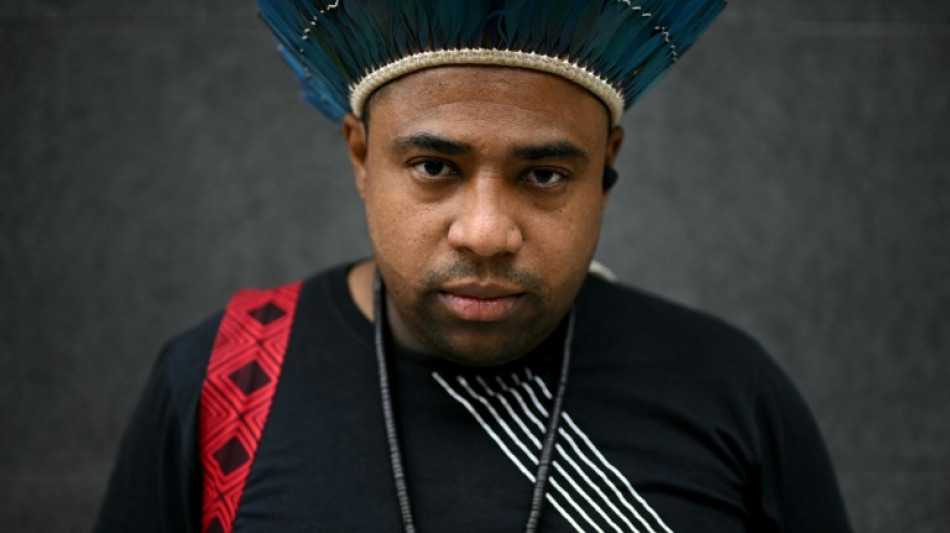
Ten years after Brazil mine disaster, pollution persists / Photo: Ben STANSALL - AFP

 Best Pet Advent Calendars for Christmas 2026: Dog Treats and Cat Toys

 Grattan Institute Releases Blueprint to Target Specialists Over Excessive Fees

 Arizona Science Center Hosts Girls in STEM Astro Adventures for Students

 New Turkish Cafe, Japanese BBQ, and Korean Restaurants Open Across East Bay

 Knowle Move Four Points Clear at Top After Histon Victory

 Physicians Urge Arizona to Ban Medical Gag Clauses and Enable Private Lawsuits

 New Campaign Highlights Knowledge Gaps on Carbon Monoxide Safety Among Americans
A decade after a dam collapsed in Brazil, sending a deluge of toxic mud into villages and waterways, residents complain of an inadequate cleanup and compensation by international mining firms.
The 2015 dam collapse which killed 19 people was one of Brazil’s worst environmental disasters, with survivors saying the Doce River region north of Rio de Janeiro remains heavily polluted.
"The entire ecosystem around the river was destroyed," Marcelo Krenak, a leader of the Krenak Indigenous people, told AFP on the sidelines of a hearing in London held this week.
The hearing is part of a large-scale legal action brought by claimants seeking compensation from Australian mining giant BHP -- which, at the time of the disaster, had one of its global headquarters in the UK.
"My people, the culture, has always been linked to the river," Krenak said, wearing a traditional headdress with striking blue feathers.
"The medicinal plants that only existed in the river are contaminated, the soil is contaminated, so you cannot plant, you cannot use the river water for animals," he added.
Following a mega-trial that concluded in March, the claimants now await a decision from the British High Court in the coming weeks regarding BHP's liability for the disaster.
The Fundao tailings dam at an iron ore mine in Minas Gerais state was managed by Samarco, co-owned by BHP and Brazilian miner Vale.
The High Court is already preparing the second phase of the case to determine potential damages and compensation, which could begin in October 2026 if BHP is found liable.
- 'Terrible tragedy' -
The company told AFP that "the recovery of the Doce River, the water quality of which had already returned to pre-dam failure levels, remained a focus".
Acknowledging the "terrible tragedy", BHP said it is "committed to supporting Samarco to do what's right by the Brazilian people, communities, organisations, and environments affected by the dam failure".
BHP maintains that the compensation agreement it reached last year in Brazil -- worth around $31 billion -- provides a resolution.
However, a majority of the 620,000 claimants, including 46 municipalities, argue that they are not sufficiently covered by the deal and are instead seeking around £35 billion ($49 billion) in damages.
Krenak said the claimants will at a potential future hearing present "visual evidence, photos and videos of what was done, what caused it, and the damage it is causing to this day".
The city of Mariana, one of the areas hardest hit by the disaster, is seeking 28 billion Brazilian real ($5 billion) in compensation.
"Our hope is that here in London, the municipality will be heard because, in Brazil, we were not heard," Mayor of Mariana, Juliano Duarte, told AFP.
Duarte said he believes the British legal system will hold BHP accountable, which could pressure the company to negotiate directly with the claimants.
He said the municipality is "open" to negotiation but "will not accept crumbs like those that were offered in Brazil".
R.Veloso--PC

