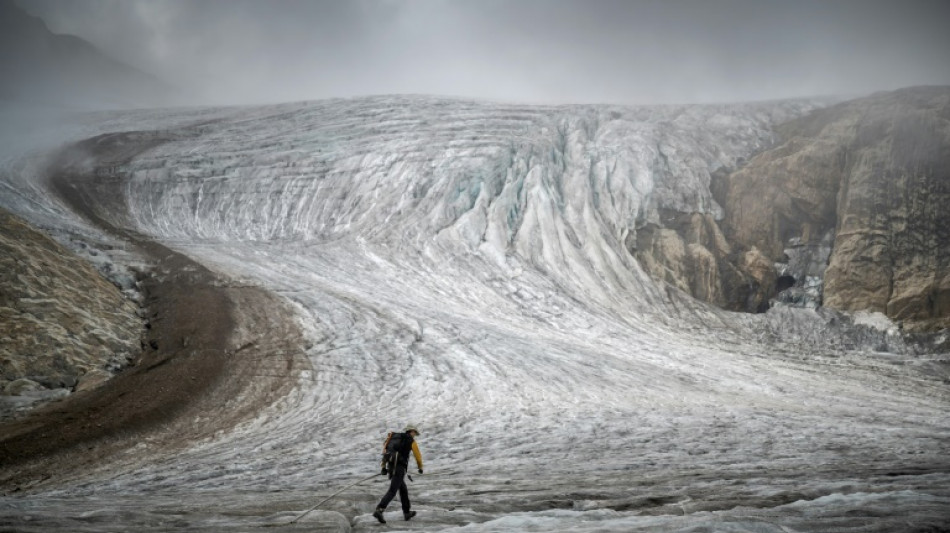
Meltdown: Swiss glaciers hit annual tipping point weeks early / Photo: Fabrice COFFRINI - AFP/File

 French Olympic gold medallist Florent Manaudou announces retirement
 Tourists rescued by boat as forest fire threatens Greek beaches
 Indicted Raul Castro reappears after months out of public view
 Italian teen Curtis breaks women's 50m backstroke world record for second time

 Taulagi steps out of 'comfort zone' with code switch to French Top 14 new boys

 Leicester's Thai owners put troubled club up for sale: reports

 Stocks steady as US inflation worries ease, oil slips

 Porsche to end production of flagship electric car: report

 Twitch sparks gamers' wrath with Amazon AI sharing deal

 Blaze forces families to abandon Turkish tour boat
 'If you can, move!' say Rome's viral dancing seniors

 Zambia voters weigh Hichilema's economic record

 SBCFX to Showcase Trading Innovation, Regional Growth Strategy, and Future Vision at iFX EXPO Asia 2026

 Hodgkinson sets up Werro showdown after Euro 800m drama

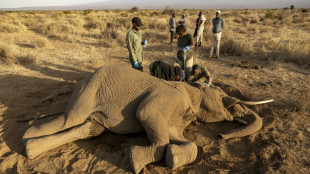 'How many will die?': the mysterious ailment killing Kenyan elephants
 Arteta coy over Lewis-Skelly's Arsenal future after 'emotional' celebration

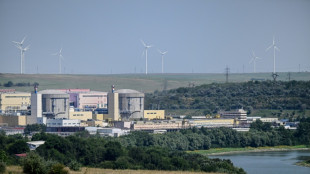 Romania shuts down nuclear plant as Danube drops

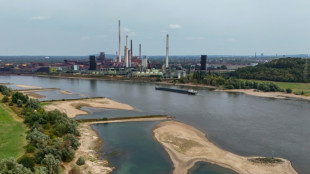 German steel giant Thyssenkrupp weighs options as Rhine drops

 US ambassador denounces settler siege as Israel dispatches troops

 Hasan takes 6-55 as Bangladesh claim opening day of Australia Test

 Taiwan says AI agents used in cyberattacks targeting island
 Japan protests Putin's first visit to disputed islands

 Kiss wants fit-again Wallabies playmaker Gordon to 'open up' Japan

 British eccentrics push humble garden shed to new heights

 Zambia votes with president's economic record on the line

The snow and ice accumulated last winter by Switzerland's glaciers has already melted away, a monitoring service said, with Friday marking the alarming second-earliest arrival on record of the tipping point known as glacier loss day.
All further melting between now and October will see the size of glaciers in the Swiss Alps shrink, according to Glacier Monitoring in Switzerland (GLAMOS).
This century, the tipping point, on average, has been reached in mid-August -- itself already bad news for the nation's 1,400 glaciers, which are shrinking at a staggering rate.
Its arrival several weeks earlier on July 4 is "another alarm call", GLAMOS chief Matthias Huss told AFP.
"It's like the glaciers are shouting out: 'We're disappearing. Help us.'"
Glaciers in the Swiss Alps began to retreat about 170 years ago.
The retreat was initially modest but in recent decades, melting has accelerated significantly as the climate warms.
The volume of Swiss glaciers shrank by 38 percent between 2000 and 2024.
- Summer of destruction -
"If we have a glacier loss day, it means that the glacier is losing mass," said Huss.
"For a glacier that is healthy, the day would occur at the end of September, or in October -- or not at all".
With no glacier loss day, the summer would simply melt away only the snow that accumulated over the previous winter.
This would be "the ideal case -- a glacier in equilibrium with the climate", said Huss.
Its arrival on July 4 means that "critically, we have the whole summer left to destroy the ice".
"Moving this day forward by five to six weeks before the normal date over the last 20 years means we're just prolonging this mass loss season dramatically," he said.
The assessment is made using 12 reference glaciers.
Last winter saw low levels of snowfall, and June was the second warmest on record, contributing to the day's early arrival this year.
In data going back to 2000, the only time that the tipping point arrived even earlier was in 2022, when it came on June 26.
"That was really a game-changer for us glaciologists because it was the first year when we saw absolutely extreme melting.
"Everything that we knew before about glacier melting changed," said Huss.
Experts thought 2022 was a complete outlier and although a warming climate meant other such years would be coming down the line, they did not expect to see the next very early glacier loss day coming so soon afterwards.
- Feedback effect -
Huss noted that extreme melting produces an accelerating feedback effect, worsening the situation even further.
Once the reflective white snow coverage from winter is gone from the top of the glacier, the darker, more absorbent grey surface of the bare ice is exposed.
"With the same amount of solar radiation, we can now melt more ice," Huss said.
With the European heatwave over the past week and the possibility of further heatwaves in July and August, "it is very like that again it is a very bad year for Swiss glaciers", he said.
Melting glaciers threatens the long-term water security for millions of people downstream who rely on them for fresh water.
Much of the water that flows into the Rhine and the Rhone, two of Europe's major rivers, comes from the Alpine glaciers.
E.Paulino--PC