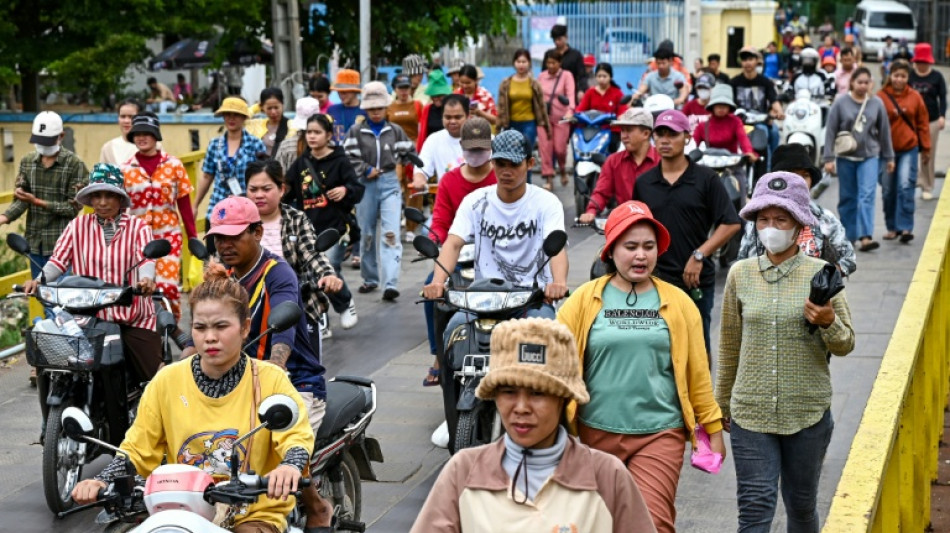
Cambodian garment workers fret Trump's new tariff threat / Photo: TANG CHHIN Sothy - AFP

 Best Pet Advent Calendars for Christmas 2026: Dog Treats and Cat Toys

 Grattan Institute Releases Blueprint to Target Specialists Over Excessive Fees

 Arizona Science Center Hosts Girls in STEM Astro Adventures for Students

 New Turkish Cafe, Japanese BBQ, and Korean Restaurants Open Across East Bay

 Knowle Move Four Points Clear at Top After Histon Victory

 Physicians Urge Arizona to Ban Medical Gag Clauses and Enable Private Lawsuits

 New Campaign Highlights Knowledge Gaps on Carbon Monoxide Safety Among Americans
As Cambodian garment workers took breaks from toiling in sweltering factories on Tuesday, they feared for their jobs after US President Donald Trump's threat to impose a 36 percent tariff.
"I beg the US to reduce the tariff for the sake of workers in Cambodia," 38-year-old Im Sothearin told AFP as she rested from her work in an underwear factory in the capital Phnom Penh.
"If they charge a high tariff, it is only workers who are going to suffer," said the mother-of-three who earns only $300 a month.
"Factories might be closed or workers will have their wages lowered, or be forced to work faster."
Cambodia -- a major manufacturer of low-cost clothing for Western brands -- was among the nations hardest hit by Trump's "Liberation Day" blitz of tariff threats in April.
The US president originally outlined a 49-percent rate if Cambodia failed to broker a deal with Washington. On Monday, he lowered it to 36 percent and extended the negotiation deadline to August 1.
While the levy is lower than the original eye-watering figure, it has done little to allay anxieties.
"If the tariff is that high, companies won't have money to pay," 28-year-old pregnant worker Sreymom, who goes by only one name, told AFP as she bought fruit on her lunch break.
"I am worried that we won't have jobs to do," the 11-year veteran of the factory floor said. "I want the tariff to be reduced more."
Cambodia has not yet made an official comment on Trump's new proposed rate, which was issued in a letter among more than a dozen he despatched to key trade partners.
But commerce ministry spokesman Penn Sovicheat told AFP in April that harsh US tariffs on his country were "not reasonable".
Cambodia said it had about $10 billion in exports to the United States last year, mainly garment products.
The nation has been paying a 10-percent standby rate as negotiators rush to make a deal.
Many factories in Cambodia are Chinese-owned. The White House previously accused the kingdom of allowing Chinese goods to stop over on the way to US markets, thereby skirting steeper rates imposed on Beijing.
Yi Mom has had a two-decade career in the garment industry. But she frets it may be ended if Cambodia fails to soften the blow threatened by the United States.
"I fear that the high tariff will affect factories and will result in fewer jobs for workers," said the 47-year-old.
"Then we will have low wages and will not be able to support our families."
S.Caetano--PC

