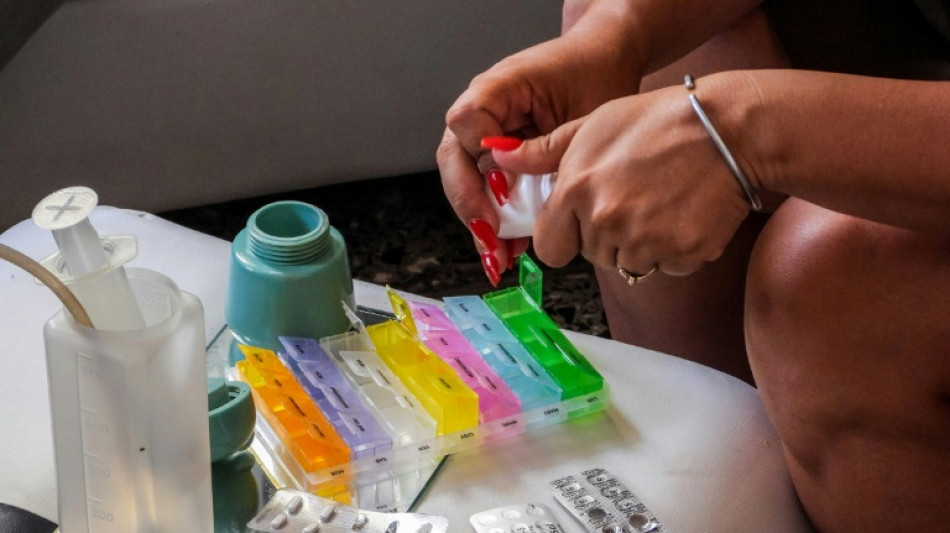
Bitter pill: Cuba runs low on life-saving medicines / Photo: ADALBERTO ROQUE - AFP

 Twitch sparks gamers' wrath with Amazon AI sharing deal

 Blaze forces families to abandon Turkish tour boat
 'If you can, move!' say Rome's viral dancing seniors
 Zambia voters weigh Hichilema's economic record
 SBCFX to Showcase Trading Innovation, Regional Growth Strategy, and Future Vision at iFX EXPO Asia 2026
 Hodgkinson sets up Werro showdown after Euro 800m drama
 'How many will die?': the mysterious ailment killing Kenyan elephants
 Arteta coy over Lewis-Skelly's Arsenal future after 'emotional' celebration
 Romania shuts down nuclear plant as Danube drops

 German steel giant Thyssenkrupp weighs options as Rhine drops
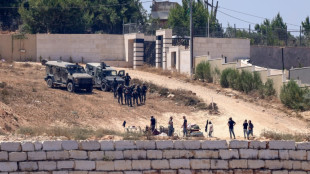 US ambassador denounces settler siege as Israel dispatches troops
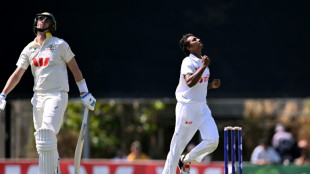 Hasan takes 6-55 as Bangladesh claim opening day of Australia Test

 Taiwan says AI agents used in cyberattacks targeting island
 Japan protests Putin's first visit to disputed islands
 Kiss wants fit-again Wallabies playmaker Gordon to 'open up' Japan

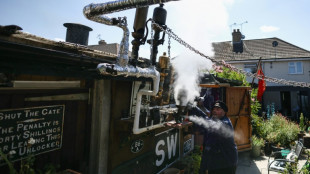 British eccentrics push humble garden shed to new heights

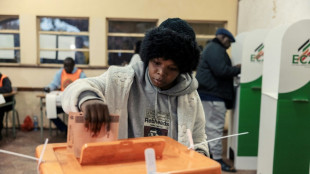 Zambia votes with president's economic record on the line
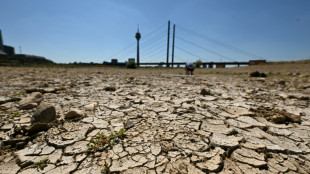 Germany's dry rivers spark battle on engineering vs restoration
 Senators demand inquiry into conditions aboard USS Abraham Lincoln

 All Blacks' Proctor out of South Africa series, Mo'unga called up

 Bangladesh quick Hasan reduces Australia to 74-4 at lunch
 Seoul tech leads Asian stock gains as traders cheer US inflation

 Farage and Count Binface go head-to-head in snap UK poll
 Afghan students divided over smartphone ban at universities
 Japan go back to school for second Australia Test
Cuban Jessica Rodriguez never knows if she will find the medicines that keep her four-year-old son alive in a country that has all but run out of essential drugs.
On a near daily basis she sprints from one state-run pharmacy to another on a quest for pills and syringes. Increasingly, she has to turn to the black market and pay the higher prices there. That is if they have what she needs.
Rodriguez, who left her job as a physiotherapist to care for her sickly son, receives a monthly state grant of less than $12. Her husband's salary is not much more.
And as Cuba sinks ever deeper into its worst economic crisis in decades -- with critical shortages also of food and fuel, regular power blackouts and rampant inflation -- Rodriguez fears that one day the drugs may run out altogether.
"It drives me crazy," the 27-year-old told AFP at her home in Havana's Santa Fe neighborhood as her son Luis Angelo, watched a cartoon on her mobile.
"Missing a dose, not having the suction tubes, a catheter that cannot be replaced... all can lead to serious illnesses which can cost him his life."
Luis Angelo was born with a deformed esophagus, and while he waits to receive a transplant, breathes through a tracheostomy and eats though a tube inserted into his stomach. He is also asthmatic, has a heart condition, and suffers epileptic fits.
The boy takes seven different drugs daily, and needs a variety of tubes, syringes and other equipment to administer them.
Cuba, reputed for supplying highly trained medical doctors to other countries and for its advanced domestic pharmaceutical industry, has long counted vaccines and medical services among its top exports.
Under US sanctions since 1962, and hard hit by the COVID-19 pandemic that all but tanked its tourism industry, the communist country is now no longer medically self-sufficient.
Last year, the island nation of 9.7 million people could not afford the $300 million needed to import the raw materials it needed to produce hundreds of critical medicines.
- 'There's nothing' -
In Havana, and further afield, pharmacy shelves are bare and hospitals lack basic supplies such as gauze, suturing thread, disinfectant and oxygen.
"There are days when there's nothing," a doctor in the capital told AFP on condition of anonymity.
Cuba's healthcare system is public and meant to be universally accessible. Private pharmacies, clinics and hospitals are illegal.
Patients who require chronic medicine are issued with a document known as a "tarjeton," which allows them access to subsidized medicines.
Luis Angelo has a "tarjeton," but it is of little use if pharmacies don't have the drugs, said his mom.
On the black market, she is forced to pay $3 to $4 for a blister sheet of pills -- about a quarter of the average monthly Cuban salary at the unofficial exchange rate.
"The price is cruel," Rodriguez told AFP.
- 'Ray of hope' -
Confronted with the ever-worsening medicine shortage, the government has since 2021 allowed travelers to bring back food and medicines in their luggage -- though not for resale.
Some of these drugs are feeding a black market that profits from the desperately infirm with sales via WhatsApp or internet sites.
Other sites, however, offer drugs for free or barter them for food.
In the NGO sphere, projects have also emerged to provide medicines to Cubans free of charge.
One, dubbed Palomas, has helped tens of thousands of people since its creation in Havana in 2021.
It relies on medicines that people have "left over from a treatment, or were brought by someone from abroad," coordinator Sergio Cabrera told AFP.
Every day, in 13 WhatsApp groups, Palomas publishes a list of medicines it has available, and another list of those it needs.
One beneficiary was 32-year-old dentist Ibis Montalban, who said she managed to get her mother's chronic diabetes medication through Palomas, adding: "thank you, thank you, thank you."
Cabrera says it is hard to witness the suffering of people in need.
"Many people cry here, and many times we cry with them," he said, grateful that Palomas can at least offer " a ray of hope."
V.Fontes--PC