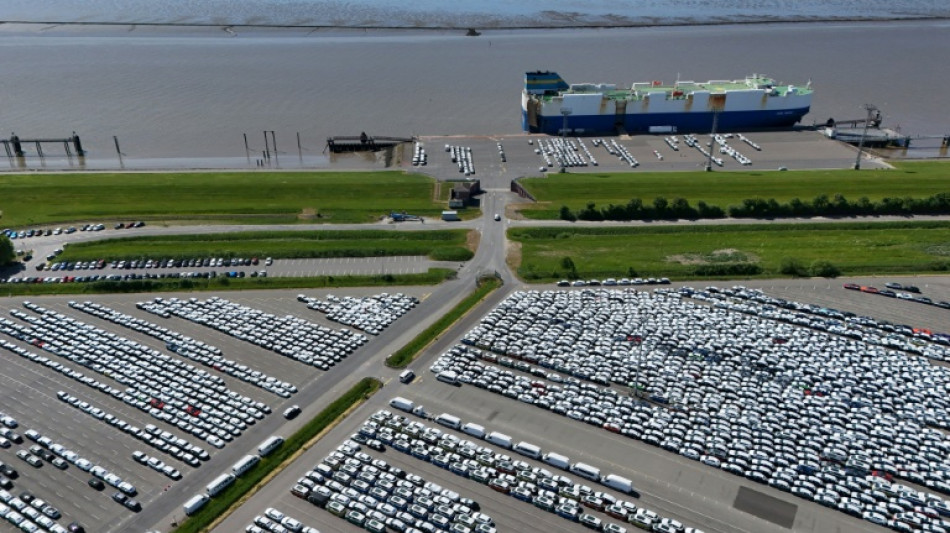
Volkswagen US deliveries fall as Trump tariffs bite / Photo: Ina FASSBENDER - AFP/File

 Best Pet Advent Calendars for Christmas 2026: Dog Treats and Cat Toys

 Grattan Institute Releases Blueprint to Target Specialists Over Excessive Fees

 Arizona Science Center Hosts Girls in STEM Astro Adventures for Students

 New Turkish Cafe, Japanese BBQ, and Korean Restaurants Open Across East Bay

 Knowle Move Four Points Clear at Top After Histon Victory

 Physicians Urge Arizona to Ban Medical Gag Clauses and Enable Private Lawsuits

 New Campaign Highlights Knowledge Gaps on Carbon Monoxide Safety Among Americans
Europe's largest automaker Volkswagen said Wednesday that sales into the United States had taken a hit, underscoring the impact of President Donald Trump's drastic trade measures.
Total vehicle deliveries into North America fell almost seven percent in the first half of the year, the German group said, even as overall deliveries worldwide notched a rise of 1.3 percent.
In the three months to June -- a period dominated by the fallout of Trump announcing 25-percent tariffs on cars in late March and further sweeping duties in April -- deliveries to North America plunged 16.2 percent.
In China, a key market where European carmakers are struggling against the electric models of local competitors such as BYD, first-half deliveries fell just over two percent.
Marco Schubert, board member for sales at the firm, said the declines were "expected" and that "gains in South America and Europe more than offset" the impact.
Trump has announced a wide range of duties in a bid to boost US manufacturing, but promptly suspended the implementation of many of them before inviting countries to seek trade deals after markets plunged worldwide.
Though April's "Liberation Day" tariffs have been paused until August 1, a 25-percent tariff on imported cars that are not largely made within North America remains in force.
Carmakers have rushed to find ways to minimise the impact of the levies, with high-end automaker Mercedes-Benz on Monday saying it had delayed some US deliveries in the expectation of tariffs coming back down.
Stuttgart-based Porsche reported Tuesday a 10-percent rise in its first-half North American sales, saying it had plentiful stocks in the region and that increased import tariffs had offered a degree of "protection" for its cars.
But overall first-half sales fell at both firms after being dragged down by China, with Porsche's deliveries in the country down 28 percent and Mercedes-Benz's car sales falling 14 percent.
X.M.Francisco--PC

