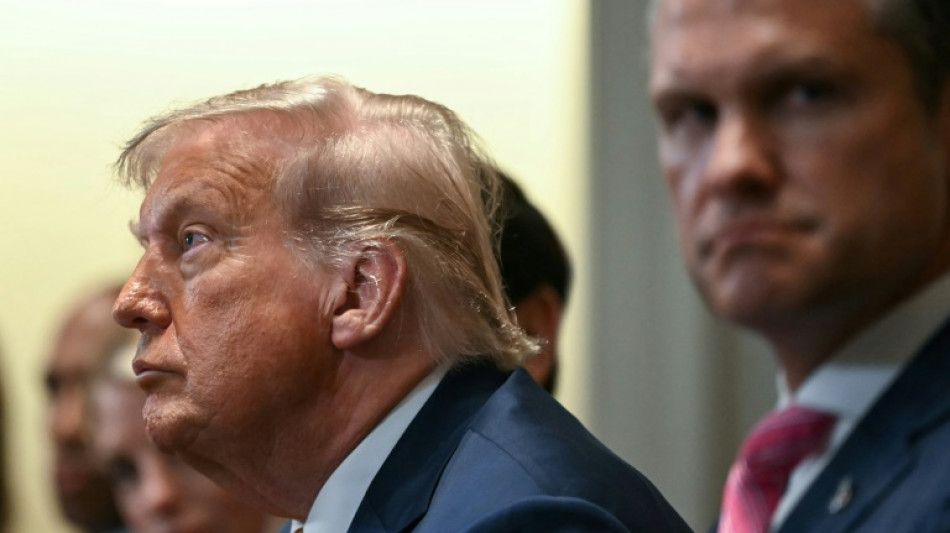
Trump issues more letters to countries in push for tariff deals / Photo: ANDREW CABALLERO-REYNOLDS - AFP/File

 Best Pet Advent Calendars for Christmas 2026: Dog Treats and Cat Toys

 Grattan Institute Releases Blueprint to Target Specialists Over Excessive Fees

 Arizona Science Center Hosts Girls in STEM Astro Adventures for Students

 New Turkish Cafe, Japanese BBQ, and Korean Restaurants Open Across East Bay

 Knowle Move Four Points Clear at Top After Histon Victory

 Physicians Urge Arizona to Ban Medical Gag Clauses and Enable Private Lawsuits

 New Campaign Highlights Knowledge Gaps on Carbon Monoxide Safety Among Americans
US President Donald Trump released a fresh set of letters to trading partners Wednesday, setting out tariff rates for six countries as Washington pushes to bring about a flurry of trade deals.
The letters, addressed to leaders of the Philippines, Brunei, Algeria, Libya, Iraq and Moldova, spelled out duties ranging from 20 percent to 30 percent that would take effect on August 1.
Similar to Trump's first batch of documents published Monday, the tariff levels were not too far from those originally threatened in April, although some partners received notably lower rates this time.
While the president in April imposed a 10 percent levy on almost all trading partners, he unveiled -- and then held off on -- higher rates for dozens of economies.
The deadline for those steeper levels to take effect was meant to be Wednesday, before Trump postponed it further to August 1.
Instead, countries who face the threats of elevated duties began receiving letters spelling out US tariff rates on their products.
Trump's latest messages were near-identical to those published earlier in the week, and justified the tariffs as a response to trade ties that he says are "far from Reciprocal."
They urged countries to manufacture products in the United States instead in order to avoid duties, while threatening further escalation if leaders retaliated to the levies.
For now, 20 countries have received Trump's letters, including key US allies Japan and South Korea, as well as Indonesia, Bangladesh and Thailand.
If counterparts changed their trade policies, Washington might consider an adjustment to its stance, Trump wrote.
- EU deal in 'coming days'? -
Analysts have noted that Asian countries are a major target of the documents so far.
But all eyes are on the state of negotiations with major partners who have yet to receive such communications, including the European Union.
For now, the Trump administration is under pressure to unveil more trade pacts. So far, Washington has only reached agreements with Britain and Vietnam, alongside a deal to lower tit-for-tat levies with China.
Trump on Tuesday said that his government was "probably two days off" from sending the EU a letter with an updated tariff rate for the bloc.
"They're very tough, but now they're being very nice to us," he added at a cabinet meeting.
An EU spokesman said Wednesday that the bloc wants to strike a deal with the United States "in the coming days," and has shown readiness to reach an agreement in principle.
EU diplomats say the European Commission, in charge of trade policy for the 27-country bloc, could continue talks until August 1.
The EU expects Trump to keep a 10 percent baseline tariff on its goods, with exemptions for critical sectors such as airplanes, spirits and cosmetics, diplomats told AFP this week.
Apart from tariffs targeting goods from different countries, Trump has also rolled out sector-specific duties on steel, aluminum and autos since returning to the White House in January.
On Tuesday, Trump said tariffs were incoming on copper and pharmaceuticals.
The planned rate for copper is 50 percent, he added, while pharmaceutical products face a levy as high as 200 percent -- but manufacturers would be given time to relocate operations.
P.Cavaco--PC

