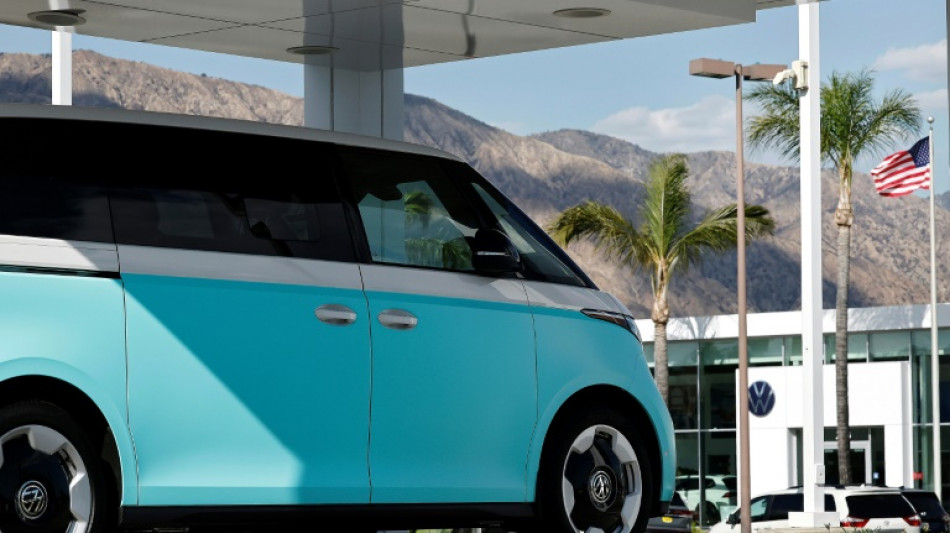
Volkswagen halts electric minivan exports to the United States / Photo: MARIO TAMA - GETTY IMAGES NORTH AMERICA/AFP/File

 Best Pet Advent Calendars for Christmas 2026: Dog Treats and Cat Toys

 Grattan Institute Releases Blueprint to Target Specialists Over Excessive Fees

 Arizona Science Center Hosts Girls in STEM Astro Adventures for Students

 New Turkish Cafe, Japanese BBQ, and Korean Restaurants Open Across East Bay

 Knowle Move Four Points Clear at Top After Histon Victory

 Physicians Urge Arizona to Ban Medical Gag Clauses and Enable Private Lawsuits

 New Campaign Highlights Knowledge Gaps on Carbon Monoxide Safety Among Americans
German auto giant Volkswagen said Thursday it had suspended deliveries of its electric minivan ID. Buzz due to a technical issue amid reports the decision was influenced by costly US tariffs on cars.
"No electric ID. Buzz models made in Hanover are currently being delivered to North America due to a technical recall mandated by US authorities," Tobias Riepe, a spokesman for Volkswagen's commercial vehicles division, told AFP.
The van's rear seats are "deemed too wide for the vehicle", Riepe said.
Citing company insiders, however, German business daily Handelsblatt reported the main reason was high tariffs imposed by US President Donald Trump.
Manufactured in Hanover, the ID. Buzz has since April been subject to a new US tariff of 25-percent on imported cars that are not largely made within North America.
That has made exporting the ID. Buzz into the United States untenable, according to Handelsblatt.
Foreign carmakers have scrambled to respond to Trump's levies, with high-end automaker Mercedes-Benz on Monday saying it had delayed some US deliveries in the expectation of tariffs coming back down.
Volkswagen itself reported declining US deliveries in the first half of the year, with vehicle shipments plunging 16.2 percent in the three months from April, after the duties came into force.
On Wednesday, German chancellor Friedrich Merz said he was "cautiously optimistic" that the United States and European Union could strike a trade agreement by the end of the month that would benefit key German industries like autos and machine-making.
L.Torres--PC

