Defence, joint debt and farmers: EU draws budget battle lines / Photo: PETRAS MALUKAS - AFP/File

 Twitch sparks gamers' wrath with Amazon AI sharing deal

 Blaze forces families to abandon Turkish tour boat
 'If you can, move!' say Rome's viral dancing seniors

 Zambia voters weigh Hichilema's economic record
 SBCFX to Showcase Trading Innovation, Regional Growth Strategy, and Future Vision at iFX EXPO Asia 2026

 Hodgkinson sets up Werro showdown after Euro 800m drama
 'How many will die?': the mysterious ailment killing Kenyan elephants
 Arteta coy over Lewis-Skelly's Arsenal future after 'emotional' celebration
 Romania shuts down nuclear plant as Danube drops
 German steel giant Thyssenkrupp weighs options as Rhine drops
 US ambassador denounces settler siege as Israel dispatches troops
 Hasan takes 6-55 as Bangladesh claim opening day of Australia Test

 Taiwan says AI agents used in cyberattacks targeting island
 Japan protests Putin's first visit to disputed islands

 Kiss wants fit-again Wallabies playmaker Gordon to 'open up' Japan

 British eccentrics push humble garden shed to new heights

 Zambia votes with president's economic record on the line

 Germany's dry rivers spark battle on engineering vs restoration
 Senators demand inquiry into conditions aboard USS Abraham Lincoln

 All Blacks' Proctor out of South Africa series, Mo'unga called up

 Bangladesh quick Hasan reduces Australia to 74-4 at lunch
 Seoul tech leads Asian stock gains as traders cheer US inflation
 Farage and Count Binface go head-to-head in snap UK poll
 Afghan students divided over smartphone ban at universities

 Japan go back to school for second Australia Test
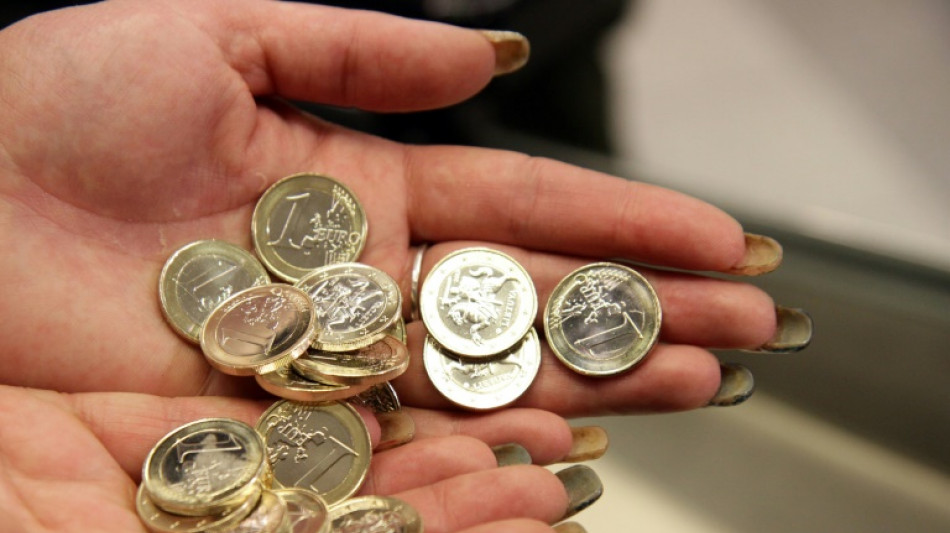
When the European Union unveils its long-term spending proposals next week, it will kick off the bloc's biggest budget battle in recent history.
EU chief Ursula von der Leyen has a mammoth task on her hands: present a budget for 2028-2034 that supports farmers, helps member states ramp up their defence spending, and all while paying back the debts racked up during the covid pandemic.
The European Commission, the bloc's executive arm, will outline the proposals Wednesday, setting the stage for explosive debates with capitals and EU lawmakers over the next two years.
The previous 2021-2027 budget was worth around 1.2 trillion euros ($1.4 trillion) and made up from national contributions -- around one percent of the member states' gross national income -- and money collected by the EU such as customs duties.
The European Parliament has already made it clear it wants more money.
Von der Leyen wants the budget to address the EU's priorities: security, competitiveness and better preparing the 27-country bloc for economic shocks.
But the EU wants to achieve this while reining in ballooning public debts and deficits, and simultaneously bolstering its industries to catch up with rivals in China and the United States.
- Better EU security -
Security will be top of von der Leyen's mind as she makes the finishing touches to the budget with war still raging in Ukraine and fears among member states of a more aggressive Russia.
It is more important given the NATO military alliance last month pledged to spend significantly more on defence -- some five percent of national economic output.
There are 23 EU members in the Western military alliance.
Also under consideration is a 100-billion-euro fund to keep Ukraine afloat, but one EU official said it could change between now and Wednesday.
Von der Leyen this week vowed to support Ukraine "until 2028 and beyond, when the new European budget kicks in".
Under EU treaties, the bloc cannot spend directly on defence, but it can pour money into dual-use infrastructure like bridges that would be critical during a war.
- Supporting farmers -
The EU's common agricultural policy (CAP) -- vast farming subsidies that make up the biggest share of the budget -- will be the subject of fiery debates.
It accounts for nearly a third of the EU's current multi-year budget -- around 387 billion euros, of which 270 billion euros are directly paid to farmers.
The EU is thinking about moving away from subsidies based on farm size -- and putting a cap on how much one farm can get -- which could free up billions of euros.
"There is a growing recognition that its share in the EU budget should decline and I also expect it to decline further," said Zsolt Darvas of Bruegel think tank.
The commission is considering cutting part of the agriculture budget without touching the direct payments, but farmers have made it clear that's a red line.
"I have a tractor and I'm ready," Massimiliano Giansanti, president of Europe's influential Copa farming lobby, raising the spectre of more farmers' protests after months of demonstrations last year by disgruntled European farmers.
Farmers plan to protest Wednesday in front of the commission in Brussels as they seek to pile the pressure on the EU.
Brussels is also looking into whether CAP will keep its dedicated budget or be integrated into wider cohesion funds, with allocations left to member states to decide.
France, whose farmers are the biggest CAP beneficiary, opposes this.
- How to pay for it? -
The big question looming over everything: where will the money for all this come from?
France, Italy and others are pushing for more joint borrowing but that's a no-go for Germany, a major net contributor to the budget, as well as frugal EU states Finland, The Netherlands and Sweden.
One idea put forward has been an instrument that would allow the EU to seek grants or loans in the event of a crisis like the pandemic.
Since some states would fiercely oppose such a measure, an EU diplomat said he had seen the idea appear and disappear from draft texts shared with capitals.
Other options to raise money include a possible digital services levy as well as collecting money from taxes on small packages entering from outside the EU.
The last time the EU took on joint debt was during the pandemic, borrowing around 800 billion euros to rescue the European economy.
Except now the bloc must start paying that money back -- potentially up to 30 billion euros annually -- from 2028.
Ferreira--PC