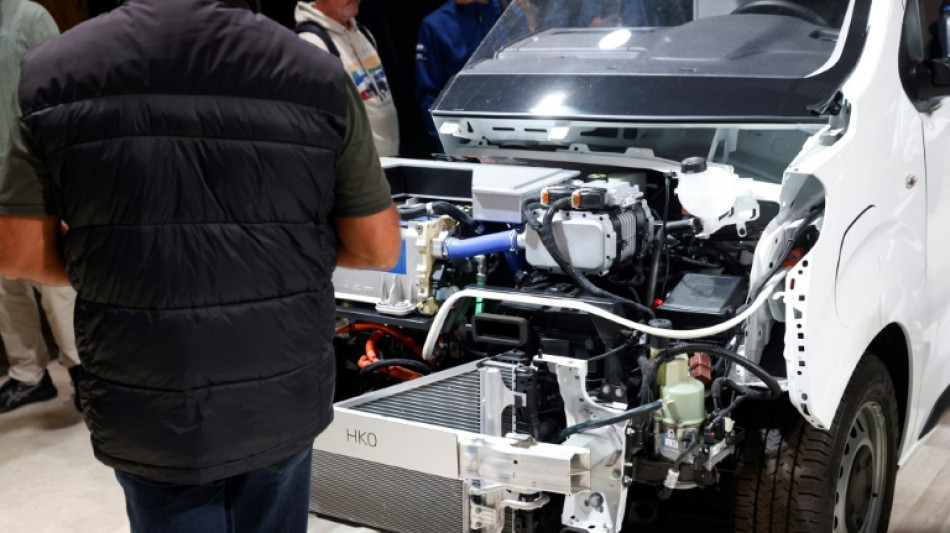
Stellantis pulls plug on hydrogen fuel cell vans / Photo: GEOFFROY VAN DER HASSELT - AFP/File

 Best Pet Advent Calendars for Christmas 2026: Dog Treats and Cat Toys

 Grattan Institute Releases Blueprint to Target Specialists Over Excessive Fees

 Arizona Science Center Hosts Girls in STEM Astro Adventures for Students

 New Turkish Cafe, Japanese BBQ, and Korean Restaurants Open Across East Bay

 Knowle Move Four Points Clear at Top After Histon Victory

 Physicians Urge Arizona to Ban Medical Gag Clauses and Enable Private Lawsuits

 New Campaign Highlights Knowledge Gaps on Carbon Monoxide Safety Among Americans
Jeep-maker Stellantis said Wednesday it was pulling the plug on plans to build light vans using hydrogen fuel cells, saying it saw no prospects for it to be commercially viable.
The company, whose stable of brands also includes Peugeot, Citroen and Fiat, had planned to begin serial production of commercial vans equipped with hydrogen fuel cells this summer at sites in northern France and southern Poland.
"The hydrogen market remains a niche segment, with no prospects of mid-term economic sustainability," said Jean-Philippe Imparato, Stellantis's chief operating officer for the European region.
The company cited limited availability of hydrogen refuelling infrastructure, high capital requirements, and the need for stronger consumer purchasing incentives.
"We must make clear and responsible choices to ensure our competitiveness and meet the expectations of our customers with our electric and hybrid passenger and light commercial vehicles offensive," Imparato added.
Hydrogen fuel cell technology was seen as a possible rival to battery electric vehicles to reach zero emissions. When hydrogen and air are fed into a cell it creates electricity and water.
The technology could offer faster refill times than recharging electric batteries, but also involves creating expensive new infrastructure and most hydrogen is currently produced from natural gas without capturing the greenhouse gas emissions.
Only Toyota, Hyundai and BMW are still developing fuel cell vehicles and few models are on the roads.
France's Renault shut its hydrogen fuel cell factory at the start of the year.
Stellantis said staff at the factories would be reassigned to other tasks, but acknowledged the move would create "financial challenges" for fuel cell supplier Symbio.
Stellantis took a stake in Symbio in 2023 alongside tyre manufacturer Michelin and auto parts supplier Forvia.
Symbio opened a fuel cell factory near the French city of Lyon in 2023.
Stellantis said it had launched discussions with the other shareholders in Symbio, but Michelin called the announcement "unexpected, brutal and uncoordinated".
Forvia noted that Stellantis accounts for nearly 80 percent of Symbio's activity.
"Stellantis's announcement will have serious and immediate operational and financial repercussions for the future of Symbio," it said.
M.A.Vaz--PC

