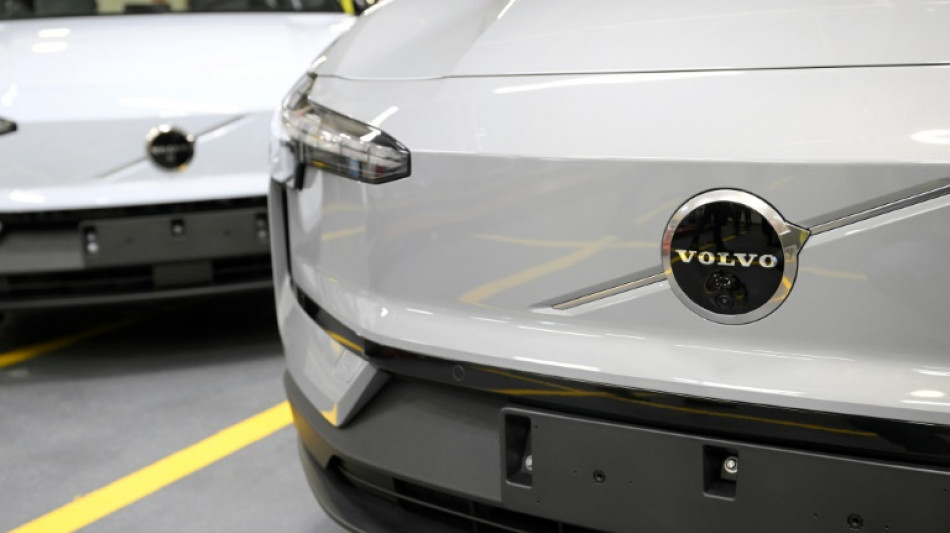
Volvo Cars swings into loss on electric vehicles, tariffs / Photo: Nicolas TUCAT - AFP/File

 Best Pet Advent Calendars for Christmas 2026: Dog Treats and Cat Toys

 Grattan Institute Releases Blueprint to Target Specialists Over Excessive Fees

 Arizona Science Center Hosts Girls in STEM Astro Adventures for Students

 New Turkish Cafe, Japanese BBQ, and Korean Restaurants Open Across East Bay

 Knowle Move Four Points Clear at Top After Histon Victory

 Physicians Urge Arizona to Ban Medical Gag Clauses and Enable Private Lawsuits

 New Campaign Highlights Knowledge Gaps on Carbon Monoxide Safety Among Americans
Volvo Cars announced on Thursday it had swung into loss in the second quarter, after it took an impairment charge for its electric cars, booked restructuring charges and dealt with a slower, tariff-troubled market.
The net loss of 8.1 billion kronor ($830 million) was due to a 11.4-billion-kronor writedown in the value of its EX90 electric SUV and ES90 electric sedan due to production delays, higher development costs than planned and now US tariffs making sales there unprofitable.
"Demand remains under pressure from the macroeconomic environment, tariff-related uncertainties and tougher competition," chief executive Hakan Samuelsson said in the quarterly earnings report.
The Sweden-based manufacturer owned by China's Geely also took a 1.4-billion-kronor restructuring charge, having announced 3,000 job cuts in May.
The group had booked a net profit of 5.7 billion kronor in the same quarter last year.
Excluding exceptional items, it estimated its quarterly operating profit at 2.9 billion kronor, down from 8.0 billion last year.
Retail sales of cars dropped by 12 percent by volume, while revenue fell by eight percent to 93.5 billion kronor due to lower volumes and the higher value of the Swedish kronor.
That beat the analyst consensus of 88.2 billion kronor compiled by Bloomberg.
Shares in Volvo Cars shot more than seven percent higher as trading got underway on the Stockholm stock exchange.
Volvo Cars announced in April an 18-billion-kronor cost-cutting plan, part of efforts to navigate a car market buffeted by US tariffs and a costly switch to electric vehicles.
It said then it would adapt to the increasing regionalisation in trade.
And on Wednesday it announced it would begin building its XC60 SUV in the United States next year to avoid the 25-percent US tariffs applied to its vehicles.
The company said it would no longer provide financial guidance for 2025 and 2026 due to "external developments and increased uncertainties".
X.M.Francisco--PC

