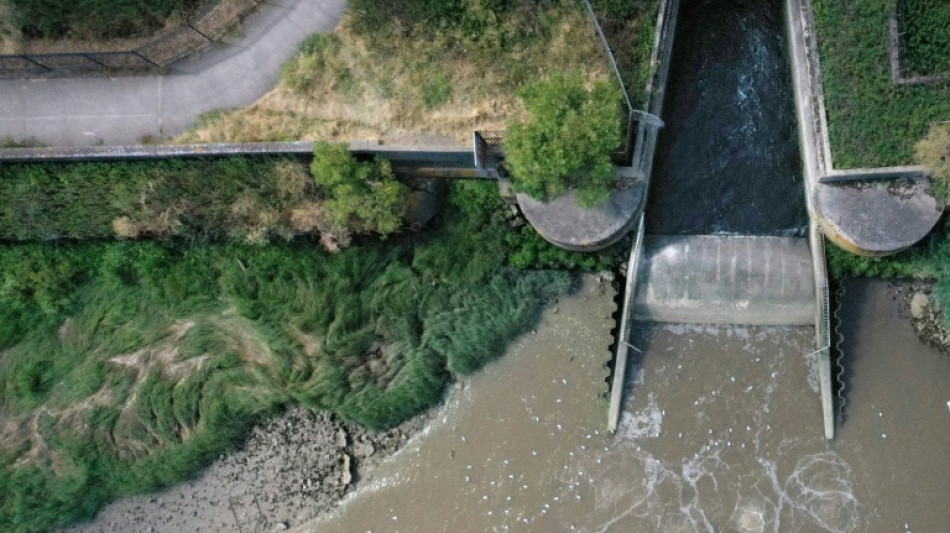
UK overhauls regulation of 'broken' water system / Photo: Ben Stansall - AFP

 Best Pet Advent Calendars for Christmas 2026: Dog Treats and Cat Toys

 Grattan Institute Releases Blueprint to Target Specialists Over Excessive Fees

 Arizona Science Center Hosts Girls in STEM Astro Adventures for Students

 New Turkish Cafe, Japanese BBQ, and Korean Restaurants Open Across East Bay

 Knowle Move Four Points Clear at Top After Histon Victory

 Physicians Urge Arizona to Ban Medical Gag Clauses and Enable Private Lawsuits

 New Campaign Highlights Knowledge Gaps on Carbon Monoxide Safety Among Americans
The UK government announced Monday it will overhaul the management and regulation of the water system, following a landmark report that slammed systematic failings in the heavily-criticised industry.
The move comes after years of angry complaints about the privately-run system and its much-maligned regulator Ofwat, including constant leaks and raw sewage being discharged into waterways and oceans.
"Our water industry is broken," Environment Secretary Steve Reed said in a statement.
The government will abolish Ofwat in response to failures identified by the Independent Water Commission, dubbed the most comprehensive review of the sector since its privatisation in the late 1980s.
"A single, powerful regulator responsible for the entire water sector will stand firmly on the side of customers, investors and the environment and prevent the abuses of the past," Reed said.
Spiralling bills and high executive pay at the water companies, alongside decades of dividends paid to their shareholders and underinvestment in crumbling infrastructure, have stoked public anger.
On Sunday, it emerged the number of serious contamination incidents in England had risen by 60 percent in a year, prompting the government to vow to halve sewage pollution caused by water companies by 2030.
"The water industry, the system of regulation that we have and actually our system for managing our rivers and waterways generally ... is failing," Jon Cunliffe, head of the Independent Water Commission, told Times Radio.
Published alongside a 67-page summary detailing the 88 recommendations, the commission's report concluded the "complex and unintelligible" framework to upgrade infrastructure is "clearly not working".
It urged the UK and Welsh governments to give themselves more powers to "direct" failing water firms, while also demanding an overhaul of their regulation.
Britain's publicly-owned water and sewage industry was privatised in 1989 under the Conservative government of then-prime minister Margaret Thatcher.
Then the sector had no debt, but that has now ballooned to tens of billions of pounds, which critics say has been partly used to pay generous dividends.
Water campaigner Feargal Sharkey said Monday that successive governments had "lost control of this industry" and he had little faith the suggested reforms would succeed.
"The beating heart of this debacle is ... corporate greed, the financial engineering, the exorbitant salaries," he told BBC News.
"We were promised a proper root and branch wide-ranging review, including ownership and structure. We were promised champagne. All we've actually got is sour milk."
M.Carneiro--PC

