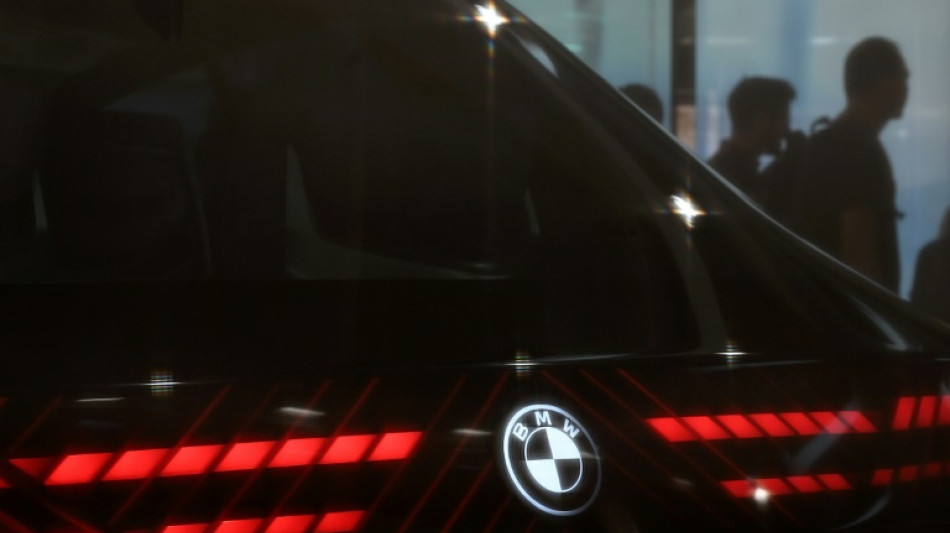
BMW says can weather tariff storm despite profit plunge / Photo: CHRISTOF STACHE - AFP

 Best Pet Advent Calendars for Christmas 2026: Dog Treats and Cat Toys

 Grattan Institute Releases Blueprint to Target Specialists Over Excessive Fees

 Arizona Science Center Hosts Girls in STEM Astro Adventures for Students

 New Turkish Cafe, Japanese BBQ, and Korean Restaurants Open Across East Bay

 Knowle Move Four Points Clear at Top After Histon Victory

 Physicians Urge Arizona to Ban Medical Gag Clauses and Enable Private Lawsuits

 New Campaign Highlights Knowledge Gaps on Carbon Monoxide Safety Among Americans

German carmaker BMW stuck to its 2025 targets Thursday despite quarterly profits tumbling a third due partly to US tariffs, insisting its large American operations meant it could weather the storm.
Their optimism stands in contrast to domestic rivals Volkswagen and Mercedes-Benz, who cut their outlooks in the past week as they grapple with the fallout from US President Donald Trump's hardball trade policies.
Automakers have faced US import taxes of 27.5 percent since April, part of Trump's tariff blitz, although these are set to be cut to 15 percent from August under a deal between the United States and the EU.
"Our footprint in the US is helping us limit the impact of tariffs," BMW finance chief Walter Mertl said in a statement.
"We set ourselves apart in the automotive industry with our global footprint and our highly flexible operations. This strong strategic positioning... allows us to adapt swiftly to changing market conditions."
The group's largest plant worldwide is in the United States, in South Carolina, where they produce 400,000 vehicles annually.
Despite the upbeat statements, BMW still saw second-quarter net profits slide 32 percent year-on-year to 1.8 billion euros ($2.1 billion), hit by the US import taxes as well as falling sales in China.
Revenues fell to 34 billion euros.
While they did not give a precise figure, BMW said tariffs pushed down profit margins in its auto segment by two percentage points in the April-June period, amounting to a hefty hit.
The Munich-headquartered group also forecast the levies would cut 1.25 percentage points off margins over the whole year.
But the manufacturer stuck to its full-year guidance of achieving margins of between five and seven percent in its auto segment.
That is similar to the 6.3 percent level recorded last year but below a long-term aim of between eight and 10 percent.
It is also continuing to forecast earnings before tax in 2025 on par with the previous year when they were just below 11 billion euros.
- 'Stable' position -
BMW's position is "more stable" compared to its domestic rivals, said Ferdinand Dudenhoeffer, director of the Center Automotive Research institute.
"The large plant in (the United States) and the SUVs produced there have helped to make the slump more manageable and BMW was able to sell more cars in the United States despite the tariffs," he said.
Deliveries of BMWs in the United States rose 1.4 percent in the April-June period, as they increased worldwide by 0.4 percent.
The manufacturer remains exposed to the tariffs however, as it continues to export around half of its cars destined for US customers to the United States, mainly from Europe and Mexico.
China was a different story, however, with sales down 14 percent in the quarter. Like other German manufacturers, BMW is facing fierce competition from local rivals like BYD particularly for sales of electric vehicles.
CEO Oliver Zipse also welcomed the trade deal struck between Trump and the European Union at the weekend but said the new tariffs still "burden" European exporters.
"We urge both sides to continue working towards market openness," he said.
X.Brito--PC

