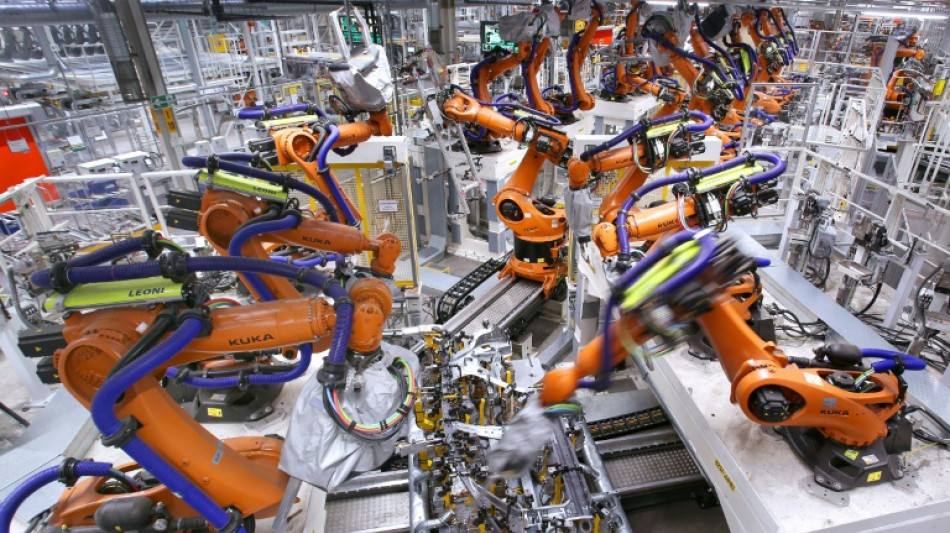
EU approves end of combustion engine sales by 2035 / Photo: RONNY HARTMANN - AFP/File

 Former Peru minister last-minute contender for UN labour agency helm

 Messi legacy will 'live forever', says Beckham
 'Literally tasting the smoke': Malaysians suffer as haze worsens

 Kyiv's defences, 'hybrid' threat from Moscow headline EU talks

 Oil extends gains, stocks mostly down as Trump issues fresh Iran warning

 ThinkMarkets Expands Weekend Trading Offering, Launches Weekend League Competition

 Tibet activists accuse China of downplaying floods

 Afghanistan war victims left 'without justice', UN says

 Iran president offers US olive branch before Putin meeting

 China-Nepal flood toll tops 1,000 as tunnel rescue offers last hope

 Japan to relax overtime regulation under workaholic PM

 Thwarted Niger mutiny exposes junta's Russia dependence

 Illegal mining ravages S.Africa's economic hub

 Nepal's wall of missing offers last hope after Himalayan flood

 US to press G20 on light-touch AI regulation

 2 die in Grand Canyon flash flood, only 1 person unaccounted for

 US Army Secretary Driscoll submits resignation: White House

 Oil extends gains, stocks drop as Trump issues fresh Iran warning

 Tsitsipas says Kyrgios's positive cocaine test 'kind of expected'

 In Japan's mountains, a different way to manage bears

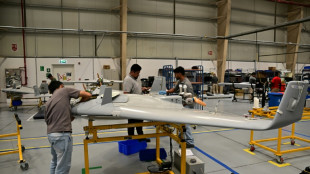 Middle East war a boon for UAE defence giant with global ambitions

 Former gang member found guilty of murdering Tupac Shakur

 Top-seeded Zverev opens US Open campaign

 US regulator, 22 states accuse Amazon of 'manipulating' ad auctions: lawsuit

 TRON Founder Justin Sun Shares Outlook on Bitcoin, Stablecoins and Global Finance at Bitcoin Asia 2026

The European Union approved a plan to end the sale of vehicles with combustion engines by 2035 in Europe, the 27-member bloc announced early Wednesday, in a bid to reduce CO2 emissions to zero.
The measure, first proposed in July 2021, will mean a de facto halt to sales of petrol and diesel cars as well as light commercial vehicles and a complete shift to electric engines in the European Union from 2035.
The plan is intended to help achieve the continent's climate objectives, in particular, carbon neutrality by 2050.
At the request of countries including Germany and Italy, the EU-27 also agreed to consider a future green light for the use of alternative technologies such as synthetic fuels or plug-in hybrids.
While approval would be tied to achieving the complete elimination of greenhouse gas emissions, the technologies have been contested by environmental NGOs.
Environment ministers meeting in Luxembourg also approved a five-year extension of the exemption from CO2 obligations granted to so-called "niche" manufacturers, or those producing fewer than 10,000 vehicles per year, until the end of 2035.
The clause, sometimes referred to as the "Ferrari amendment", will benefit luxury brands in particular.
These measures must now be negotiated with members of the European Parliament.
"This is a big challenge for our automotive industry," acknowledged French Minister of Ecological Transition Agnes Pannier-Runacher, who chaired Tuesday night's meeting.
But she said it was a "necessity" in the face of competition from China and the United States, which have bet heavily on electric vehicles seen as the future of the industry.
These decisions will "allow a planned and accompanied transition", the minister said.
- Openness to synthetic fuels -
Europe's automotive industry, which is already investing heavily in the move to electric vehicles, fears the social impact of a too-rapid transition.
"The overwhelming majority of car manufacturers have chosen electric cars," said Frans Timmermans, the EU Commission Vice President in charge of the European Green Deal, at a press conference.
He affirmed the EU body's willingness to be open-minded to other technologies -- like synthetic fuels, which are also referred to as e-fuels.
"We are technology neutral. What we want are zero-emission cars," he explained.
"At the moment, e-fuels do not seem a realistic solution, but if manufacturers can prove otherwise in the future, we will be open."
The technology of synthetic fuels, currently under study, consists of producing fuel from CO2 from industrial activities using low-carbon electricity, in a circular economy approach.
Like the oil industry, the automotive sector has high hopes for these new fuels, which would extend the use of internal combustion engines now threatened by the emergence of completely electric vehicles.
But environmental organisations object to the use of this technology in cars, as it is considered both expensive and energy-consuming.
The synthetic-fuelled engines also emit as much nitrogen oxide (NOx) as their fossil fuel equivalents, they say.
Cars are the main mode of transport for Europeans and account for just under 15 percent of total CO2 emissions in the EU. It is also one of the main gases responsible for global warming.
In response to manufacturers' concerns about insufficient consumer demand for 100 percent electric cars, the Commission has recommended a major expansion of charging stations.
"Along the main roads in Europe, there must be charging points every 60 kilometres (37 miles)," said European Commission President Ursula von der Leyen last year.
Manufacturers regularly complain about the lack of such infrastructure, especially in southern and eastern European countries.
A.P.Maia--PC