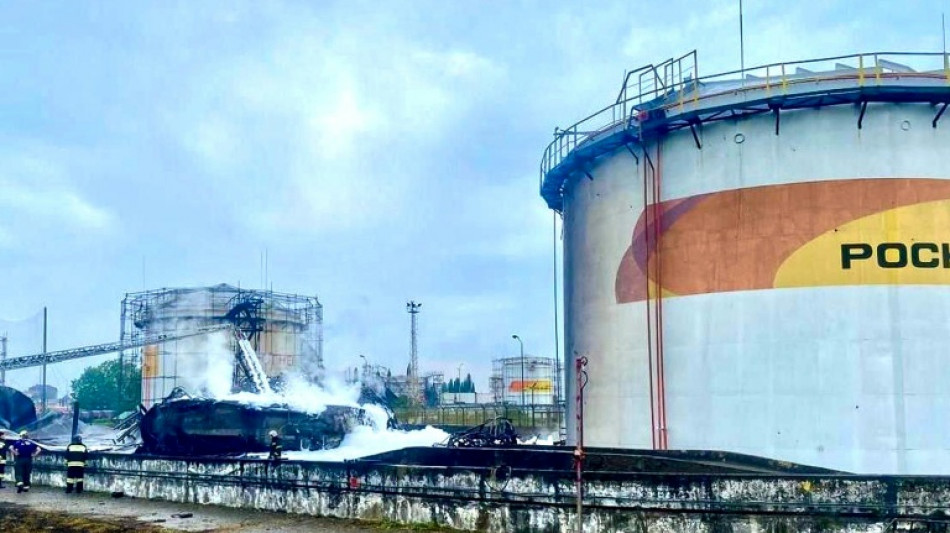
Russian fuel prices surge after Ukraine hits refineries / Photo: Handout - Telegram / t.me/agproshunin/AFP

 Best Pet Advent Calendars for Christmas 2026: Dog Treats and Cat Toys

 Grattan Institute Releases Blueprint to Target Specialists Over Excessive Fees

 Arizona Science Center Hosts Girls in STEM Astro Adventures for Students

 New Turkish Cafe, Japanese BBQ, and Korean Restaurants Open Across East Bay

 Knowle Move Four Points Clear at Top After Histon Victory

 Physicians Urge Arizona to Ban Medical Gag Clauses and Enable Private Lawsuits

 New Campaign Highlights Knowledge Gaps on Carbon Monoxide Safety Among Americans

Russian fuel prices are at near-record highs, stock exchange data showed Thursday, after a slew of Ukrainian attacks on refineries caused breakdowns during the travel season.
Ukraine routinely targets Russian refineries and oil depots to hamper Moscow's ability to fund its offensive.
Recent hits have coincided with the summer holiday season and have contributed to higher rates of driving over train and air travel.
In a bid to tame prices, Russia, one of the world's biggest oil producers, introduced a total ban on fuel exports last month, but it appeared to have little effect.
AI-92 and AI-95, the two most popular fuel blends in Russia, were trading at around 72,663 and 81,342 thousand rubles per tonne ($900 and $1,000), close to their all-time highs, according to trading data from the Saint Petersburg commodities exchange.
Russian broker BKS cited "the high season, repairs and new accidents at the refineries" as reasons for the price surge, noting higher demand for fuel because people tend to drive more during the summer months.
Additionally, Ukrainian attacks have also disrupted air and railway travel, further contributing to the surge, the brokerage said.
"Recent disruptions at the Afipsky, Ryazan and Saratov oil refineries could have reduced the petrol supply on the market," it added, saying this could have probably exacerbated the situation.
Ukraine claimed to have hit the three refineries this month, but there was no official comment from Russia on any stoppages there.
The Russian energy ministry said the price rise was due to "high seasonal demand and agricultural works", and supported extending the ban to September as well, without mentioning Ukrainian strikes or any repair work on refineries.
The fuel shortage is the most acute in Russia's south and far east, as well as in the part s of Ukraine held by Russian troops, local authorities said.
A.Magalhes--PC

