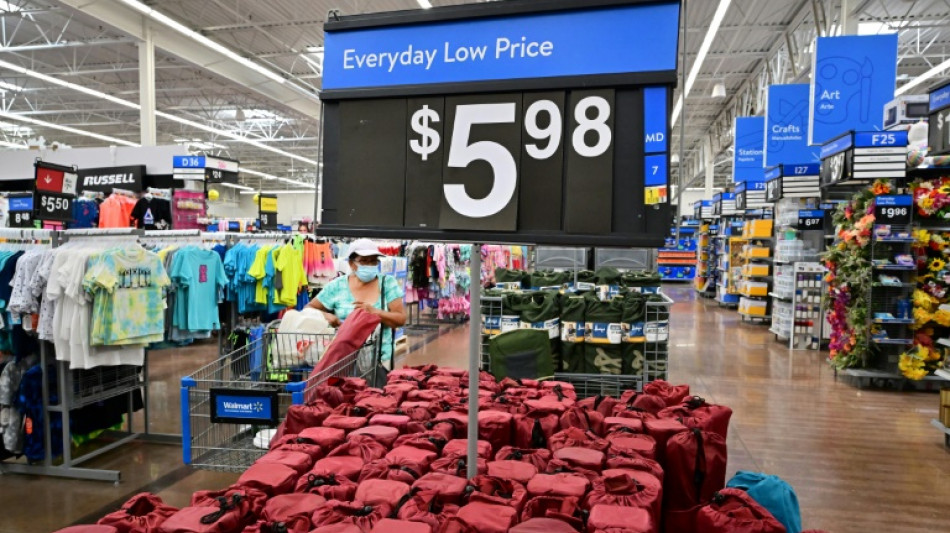
US inflation high but stable in May as spending slows / Photo: Frederic J. BROWN - AFP/File

 Back-to-school in Cuba a grim day with shortages of everything
 Canadian minister says Russia's G20 presence sparked 'discomfort'

 IMF reaches agreement with Senegal on new $2.2 bn loan programme

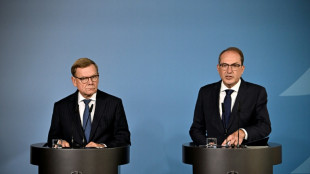 Germany blames Russia for airport drone incident, hits back with sanctions
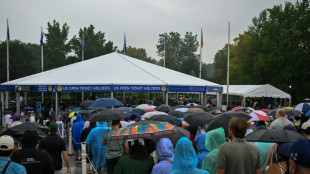
 Iran president urges return to truce, hails Russian support

 Aster and World Liberty Financial Launch USD1 RWA Boost: Phase 1, Offering 125M $WLFI + 6.25M USD1 in Rewards

 Tronchon sprints to Vuelta stage 10 win, Mas keeps red jersey

 Germany defender Rudiger announces international retirement

 Musk defends AI data centers, slams EU rules at G20
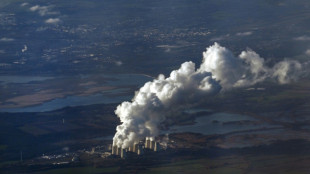
 Activists blame Kenya for Ugandan opposition figure's plight

 Iran president offers US olive branch, hails Russian support

 TrustFinance Community Choice Awards 2026 Opens Global Voting

 Nepal disaster a climate 'warning signal': foreign minister

 France winger Diaby returns to Leverkusen until 2031

 Barcelona confirm Jesus arrival from Arsenal

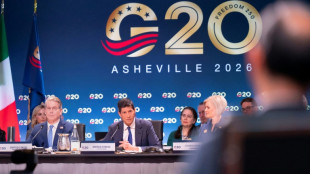 EU official says it's not time to 'normalize' Russia at G20 finance talks

 RedHill Announces Transformational Acquisition of Commercialization Rights to Ferring’s Rebyota® and Clenpiq®
 TrendEadvisor Launches Global Multi-Asset Platform Combining Online Investing with Social Trading
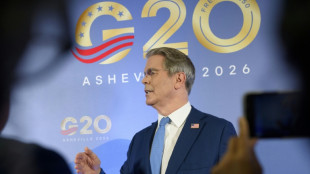
 India's top court drops criminal cases against protesters

 Philippine couple married in hip-deep floodwaters

 Villa sign Senegal winger Mbaye from PSG

 Former Peru minister last-minute contender for UN labour agency helm

 Messi legacy will 'live forever', says Beckham
 'Literally tasting the smoke': Malaysians suffer as haze worsens

 Kyiv's defences, 'hybrid' threat from Moscow headline EU talks

A key US inflation measure showed price increases held steady in the 12 months ended in May, while consumer spending growth slowed sharply, a good sign in the battle against soaring prices.
Any sign of moderation will be a boon to President Joe Biden whose approval ratings have tumbled, as his administration has struggled to find effective tools to help American families feeling the pain of surging gasoline, food and housing prices.
The trend also offers comfort to the Federal Reserve, showing its aggressive interest rate strategy is starting to have an impact to quell the fastest surge in inflation in more than 40 years.
The personal consumption expenditures (PCE) price index rose 6.3 percent compared to May 2021, still high but the same pace as in the prior month, the Commerce Department reported Thursday.
The index jumped 0.6 percent compared to April, much faster than in the prior month, but slightly below what economists had projected.
But spending edged up just 0.2 percent, less than half the increase in April and part of a steady downward drift as consumers pull back amid surging prices.
Buoyed by a stockpile of savings, helped by massive government aid, consumers have been the lynchpin in the rapid US recovery from the pandemic downturn.
But strong demand clashed with global supply chain snarls and the world's largest economy has been battered for months by a cresting inflation wave, made more painful by the surge in energy prices sparked by the Russian invasion of Ukraine in late February.
Excluding volatile food and energy prices, "core" PCE rose 0.3 percent in the month, the same as in April, while the 12-month pace slowed slightly to 4.7 percent, the report said.
- Fed inflation battle -
Brian Deese, head of the White House National Economic Council, noted that the three-month annual average for core PCE fell to four percent from 5.2 percent.
"That is important moderation that we're seeing," he said on CNBC.
However, he said the headline continues to be driven by higher energy prices.
Energy prices jumped four percent in the month, after dropping in April, and are 35.8 percent higher than May 2021, the data showed.
The PCE price index is the Federal Reserve's preferred inflation gauge, as it reflects consumers' actual spending, including shifts to lower cost items, unlike the more well-known consumer price index, which jumped 8.6 percent in May.
PCE also gives less weight to things like rent, vehicles and airline fares, which have contributed to the blistering pace of the CPI rise.
The Fed early this month announced the biggest hike in the benchmark lending rate in nearly 30 years, a three-quarter point increase that was the third step in its counteroffensive against rising inflation, as it aims to cool demand.
Policymakers have signaled there is a good chance of another similar increase in late July, followed by more big steps in coming months.
That has raised concerns the Fed could push the economy into a recession -- a price Fed Chair Jerome Powell signaled the central bank is willing to pay to control inflation.
- Slower spending -
The signs of consumers pulling back will weigh on second quarter GDP growth, after the Commerce Department revised first-quarter consumer spending sharply lower, cutting it to 1.8 percent from 3.1 percent, as the economy contracted 1.6 percent.
Diane Swonk of Grant Thornton estimates that "consumers have drained about $600 billion of the excess $2.5 trillion in savings they amassed during the pandemic to deal with the bite of higher prices."
The key driver of the slower consumption growth in May was the sharp drop in spending on big-ticket manufactured items, that economists note reflects a pull back on vehicle sales.
Spending on services rose 0.7 percent in the month, the same as in April.
F.Carias--PC