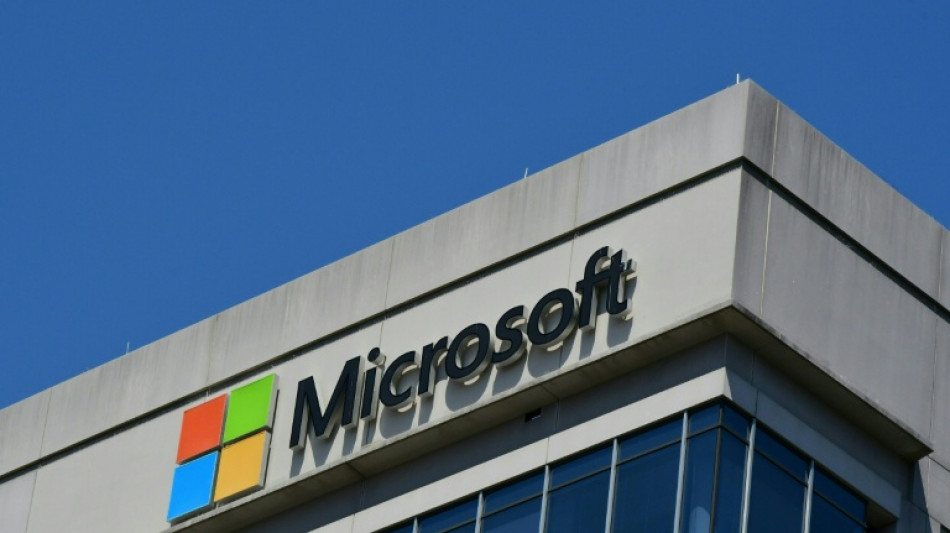
Sunset for Windows 10 updates leaves users in a bind / Photo: Eva HAMBACH - AFP/File

 Rybakina ousts Osaka to book Toronto semi-final against Gauff
 Colombia rescuers find woman alive as quake death toll passes 240

 Charges dropped against Bondi Beach attack hero

 Parched and desperate for rain, Kazakhstan turns to cloud-seeding

 The perfect storm that turbocharged Venezuela's twin quakes
 2.4 million girls banned from Afghan schools since Taliban return: UNESCO

 Colombians dig through rubble as quake death toll surpasses 240

 New Zealand's ruling party meets to decide PM Luxon's fate

 Total solar eclipse to spellbind Europe

 Jodar, Nakashima to make Masters semis debuts in Montreal

 Chilean veteran Sanchez signs with MLS club Montreal

 Cristiano Ronaldo marries long-term partner Georgina Rodriguez

 Oil prices higher, stocks mixed ahead of inflation report

 Jacobs into 100m final with eye on third title

 Eight-try New Zealand cruise to tour victory over Sharks

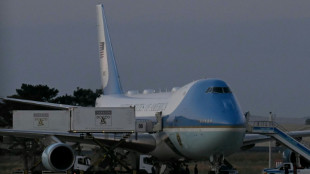 Trump's secret plane swap triggers questions and confusion

 California calls Paramount's threat to leave state 'blackmail'

 PSG 'want to win everything', says Luis Enrique
 Barred from elections, Russia's anti-war party vows to fight on

 Jaissle states Newcastle ambition but urges patience

 NBA star Cooper Flagg trading card a slam dunk for lucky buyer

 ForumPay Expands Payment Infrastructure with New Card and Bank Transfer Acceptance Solution

 Oil prices higher, stocks flat ahead of inflation report

 Orban-critic ex-judge becomes Hungary president after predecessor ouster

 US rights groups sue Trump over ICC sanctions

Microsoft's plan to halt updates for its Windows 10 operating system in mid-October has raised hackles among campaign groups and left some users worried they must buy new computers to be safe from cyberattacks.
Here is what you need to know about the planned end of support for the software.
- What happens on October 14? -
Computers running Microsoft's 2015-vintage Windows 10 will receive no further updates from the American tech giant from October 14.
Such downloads were used to "regularly patch (update) the operating system because it had become the target of many cyberattacks", said Martin Kraemer, a computer security expert with American firm KnowBe4.
- What does this mean for users? -
Microsoft has urged its customers to upgrade to the latest version of its operating system: Windows 11, released in 2021.
But the company is also offering a $30 one-year extension of Windows 10 security updates for users whose computer hardware is not compatible with the new operating system.
Consumer groups have blasted the move.
"The lack of backwards compatibility for certain Windows 10 machines sold only a couple of years ago is a blow to consumers' pocketbooks" as they face being forced to upgrade, US campaign organisation Consumer Reports said in a blog post last week.
In Europe, French groups such as End Planned Obsolescence (HOP) have started a petition demanding free updates extending to 2030.
And Germany's Verbraucherzentrale federation of consumer groups said in May that the move "worries consumers and leaves them unable to make free purchase decisions".
"Such a large volume of new (computer) purchases are also bad for the environment," including by creating large amounts of hard-to-recycle electronic waste, they added.
- How many users are affected? -
Microsoft declined to answer AFP's request for data on how many Windows users are unable to upgrade.
But Consumer Reports tallied 650 million people worldwide still using Windows 10 in August.
Another American outfit, the Public Interest Research Group (PIRG) estimates that up to 400 million computers are incompatible with Windows 11.
- What are the dangers ? -
Users unable to make the switch and who do not pay for security updates face a heightened threat of cyberattacks.
"By receiving no updates, you're no longer protecting yourself against the most recent cybersecurity risks," Kraemer said.
Although the increase in exposure is "very difficult" to quantify for individual users, as a group they would become priority targets for attackers sniffing for security holes.
As time goes on, Windows 10 users may also find themselves unable to install the latest third-party software, said Paddy Harrington of American consulting firm Forrester.
"Application vendors rely on the operating system vendor to provide certain features and functions," Harrington pointed out.
"If these are not updated, the app vendor can't be assured that their application will continue to function properly."
- What alternatives do users have? -
Even the most recent antivirus software may not be enough to protect an operating system no longer receiving updates.
"There's a limit to how much protection they can offer... it's much better than doing nothing, but should be a temporary patch while you find a permanent solution," Harrington said.
Users determined to stick with their existing hardware could switch instead to a different operating system, such as the open-source alternative Linux -- already the choice for many devices like internet servers and the basis for Google's Android smartphone operating system.
"As long as your applications support that OS and your management and security tools will support it, it's a good choice," Harrington said.
G.Machado--PC