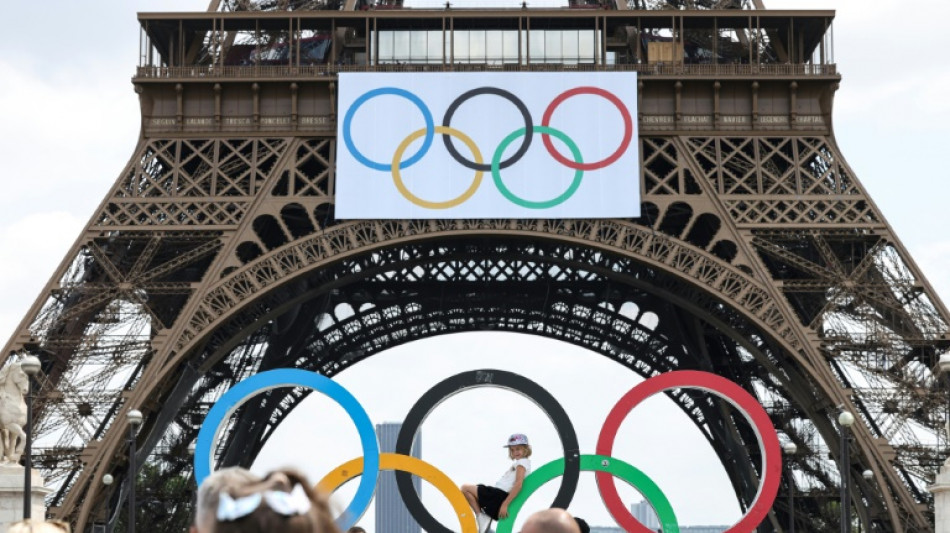
Paris Olympics and Paralympics cost French state 6.6bn euros: audit body / Photo: ALAIN JOCARD - AFP

 Grattan Institute Releases Blueprint to Target Specialists Over Excessive Fees

 Arizona Science Center Hosts Girls in STEM Astro Adventures for Students

 New Turkish Cafe, Japanese BBQ, and Korean Restaurants Open Across East Bay

 Knowle Move Four Points Clear at Top After Histon Victory

 Physicians Urge Arizona to Ban Medical Gag Clauses and Enable Private Lawsuits

 New Campaign Highlights Knowledge Gaps on Carbon Monoxide Safety Among Americans

The 2024 Paris Summer Olympics and Paralympics cost the French state 6.6 billion euros ($7.7 billion), the national audit body announced on Monday.
The amount is an increase on the initial estimate of 5.9 billion euros in June but the head of the national audit body said it did not represent "budgetary overspending".
Government expenditure on the organisation of the two sporting extravaganzas last summer cost 3.02 billion euros, which included 1.44 billion euros for security.
A further 3.63 billion euros were spent on work linked to infrastructure projects.
The figures include money spent to ensure that the River Seine was suitable for swimming in preparation for the open water swimming and triathlon events.
By way of comparison, in 2023, budget documents had estimated public investment of 2.44 billion euros.
Last year the president of the national audit body, Pierre Moscovici, said the Paris Olympics would cost the state "three, maybe four, five billion euros".
Moscovici, a former French finance minister and European Union Commissioner, on Monday highlighted "the undeniable success of the Games".
He said although the event generated "significant public spending", he emphasised that there had been "no budgetary overspending" and that public costs had been "contained".
The separate 4.4 billion-euro costs of the local organising committee (COJO), which represented a surplus of 75 million euros, had already been made public.
That money came almost exclusively from private financing and from Solideo, the body responsible for delivering Olympic construction projects, which was in part publicly financed.
The auditing body said while infrastructure expenditure was "generally well controlled", there was "a particularly erratic process of budgeting for security costs".
It also said that based upon available data the economic impact of Paris 2024 was "modest at this stage" and "relatively limited in the short term".
Nogueira--PC

