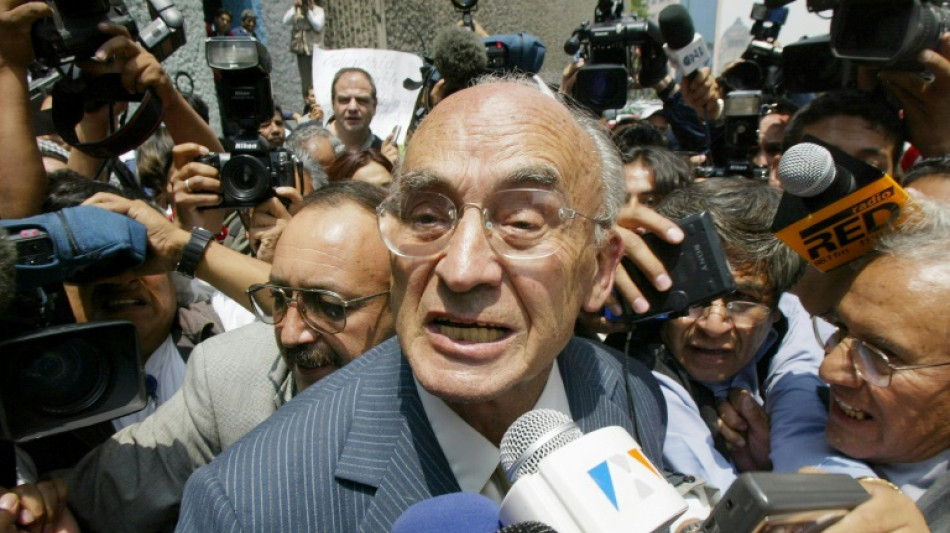
Mexican ex-president linked to brutal repression dead at 100 / Photo: JORGE UZON - AFP/File

 Belgian PM Bart De Wever Given New Deadline to Resolve €10 Billion Budget Deadlock

 $1.8 Billion Pledged for Biodiversity at COP17 as Monaco Reaffirms Commitment

 Phoenix Symphony Resumes Performances Amid Financial Uncertainty

 Turkish Energy Minister Highlights Qatar as Key Partner for Regional and Global Energy Security

 London Museum Granted 24/7 License Ahead of November Opening

Former Mexican president Luis Echeverria Alvarez, known for brutal repression of political opponents, has died at the age of 100, the government said Saturday.
Echeverria, who belonged to the once dominant Institutional Revolutionary Party, or PRI, died Friday in the city of Cuernavaca, President Andres Manuel Lopez Obrador wrote in a message of condolence.
A lawyer by trade, Echeverria was accused of ordering massacres of students in 1968 when he was interior minister and again in 1971 when he was president, both times in Mexico City.
He stood trial over the death of some 200 student protesters in the 1968 violence in the Tlatelolco district of the Mexican capital right before the Olympic Games.
It was the first time a former president was indicted in Mexico.
A house arrest warrant was issued for Echeverria in 2006 but the charges were eventually dropped on grounds there was a lack of evidence that he had ordered the killings by an elite police unit.
He was also accused of being behind forced disappearances of dissidents during a so-called "dirty war" from 1960 to 1980.
His death comes two weeks after the government gave relatives of people who disappeared during the 1970s access to military archives to try to learn what happened to their loved ones.
On the diplomatic front, after president Salvador Allende was ousted in a military coup in 1974 in Chile, Echeverria severed relations with that country and allowed Mexico to take in Chilean refugees.
After he left the presidency, Echeverria, a father of eight, served as Mexico's ambassador to UNESCO in Paris, among other diplomatic postings.
V.Dantas--PC

