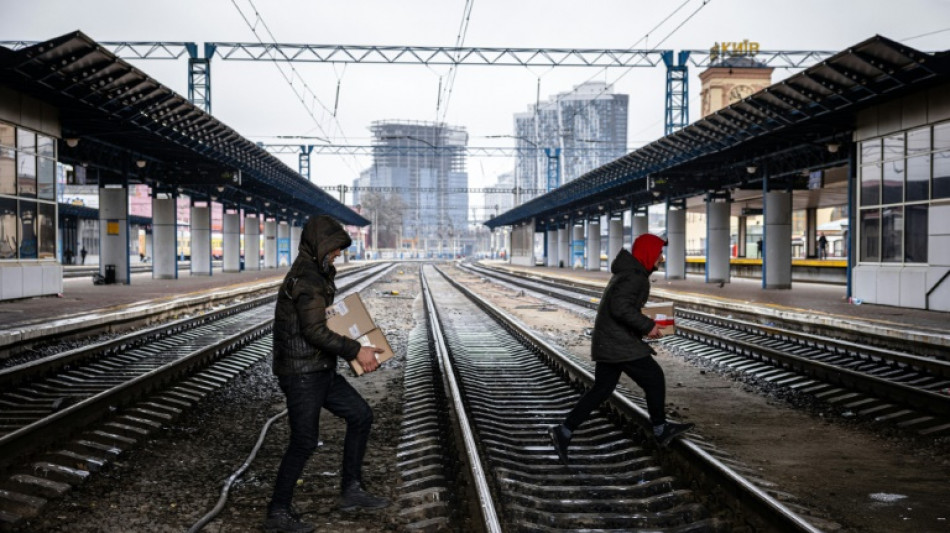
Return to Kyiv by night train / Photo: Dimitar DILKOFF - AFP

 Kyrgios gets month ban for cocaine, enters treatment programme
 Colombian judge bans strikes on guerrillas if minors are present

 Khachanov shocks ailing Auger-Aliassime, Swiatek and Osaka advance at US Open

 Lone juror blocking verdict in US mother's child murder trial: defense
 'Kinda chic' - Williams sisters set to launch US Open doubles bid

 Volkswagen says cutting 100,000 jobs by end of decade

 Russia slaps curfew on charity director over army criticism

 Ailing Auger-Aliassime upset by Khachanov at US Open

 Richarlison omitted from Tottenham's Premier League squad
 How El Nino is choking the Panama Canal

 Hamilton drives his Ferrari dream at Monza

 Senegal has an IMF loan, now what?

 Auger-Aliassime upset by Khachanov at US Open

 Hugging Face, the French start-up that became AI's warehouse
 World Cup winner Llorente retires from Spain team at 31

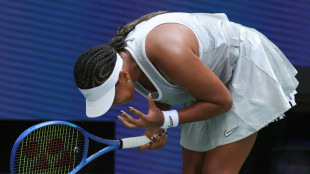 Osaka squeezes into US Open third round
 Apple faces £2 bn lawsuit in UK over app privacy feature
 Former champ Swiatek eases into US Open third round

 DR Congo latest to promise moving Israel embassy to Jerusalem

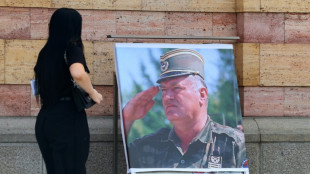 War criminal Mladic's body returns to Serbia with military honours

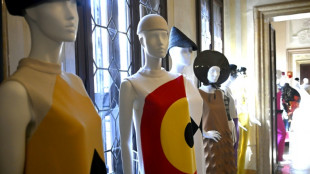 Pierre Cardin museum brings designer's futurist style to Venice

 Slovenian rookie Omrzel triumphs as Mas extends Vuelta lead

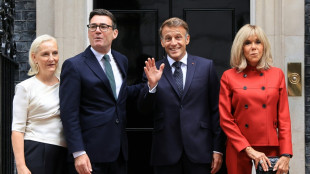 British, French leaders talk migrants, EU relations

 Heading for Ferrari's home race, Leclerc still dreams of world title

 Cafe at centre of Israel culture clash agrees to shut on Sabbath

When the train slows to a halt just after the Polish border, Tatiana's smile lights up her moon-shaped face.
"Ukraine!"
Like the other passengers on the train linking the Polish city of Chelm to Kyiv, Tatiana and her mother, Valentina, have decided after four months in exile that it is time to come home, despite the war, despite the uncertainty.
The two women -- who declined to give their surname -- hail from Kryvyi Rig, President Volodymyr Zelensky's hometown in central Ukraine.
They fled abroad right at the start of the Russian invasion on February 24 to join friends living in Izmir, in Turkey.
Tatiana, who worked in the capital, Kyiv, as a sales representative for a marketing firm, continued her job remotely from Turkey.
"Four months is enough, though. It's not easy living in a country where you don't know anything and you don't speak the language," she explained.
"I don't know what's going to happen or when the war will end, but we're going home."
A third of the 7.3 million people who have fled Ukraine since the start of the war have, like Tatiana and Valentina, decided to return.
In the capital -- where a semblance of normality has resumed since Russian forces withdrew from the region in April -- two-thirds of residents have decided to come back.
- 'If they're not dead' -
Many of the passengers on the sleeper train are women and children.
One of the handful of male travellers, a man in his 30s, spends long hours standing in the corridor gazing silently out of the window at the green Ukrainian countryside.
After two months away, Maxime is going to Donbas, the industrial region in the east that Russia is going all-out to seize and where the war rages without respite.
The shelling is relentless and the Russian forces are slowly but surely gaining territory at huge cost to human life. The destruction is massive.
"I've got some people to go and see there. If they're not dead," Maxime says baldly.
No one seems to bother much about the long hours of waiting on the Polish side of the border and then again on the Ukrainian side.
The journey is going to take more than 15 hours, so why get impatient?
The passengers appear to be joined by a subtle, intangible thread. Whatever their personal stories, whatever their reasons for coming back -- and in most cases they don't wish to elaborate -- they are linked by this decision to return.
- Look after yourself -
Two young women who didn't know each other before talk quietly in the corridor until late into the night.
An Ed Sheeran song at low volume drifts from one of the carriages.
The blonde ticket collector, bossy but sympathetic, passes up and down taking orders for tea and water and checking everyone is comfortable.
The same calm reigns as the train approaches Kyiv in the early morning light.
But there are more damp eyes and the atmosphere becomes more solemn.
A good-natured supervisor, who made the journey in shorts and flipflops, changes into his white-shirted uniform.
The travellers carefully fold their beds away and empty their bins.
The train pulls into the station.
The guard unloads the cases and helps passengers down onto the platform, where husbands, fathers and brothers are waiting for their families, bouquets of flowers in hand.
Tatiana, still beaming, bids farewell to her travelling companions. She tells them to look after themselves.
L.Carrico--PC