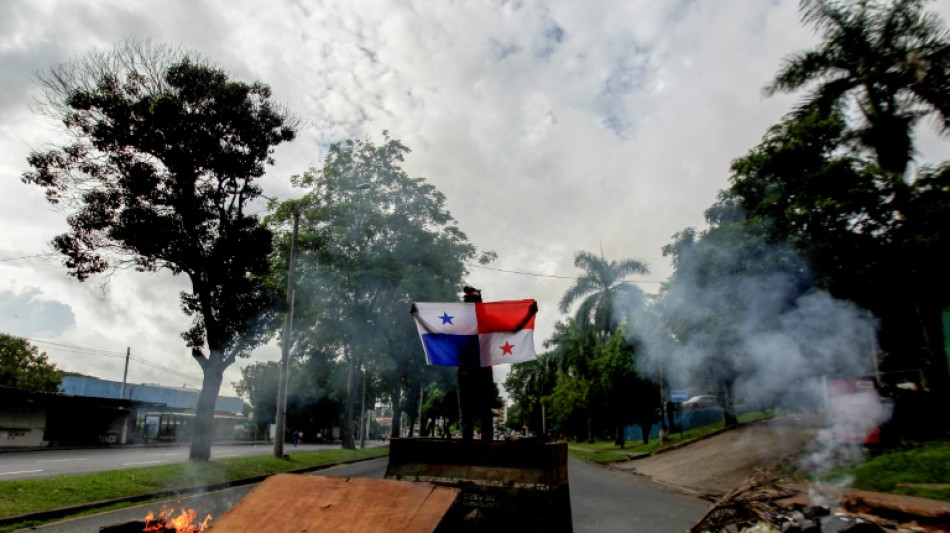
Panama government reduces fuel prices in face of protests / Photo: ROGELIO FIGUEROA - AFP

 Belgian PM Bart De Wever Given New Deadline to Resolve €10 Billion Budget Deadlock

 $1.8 Billion Pledged for Biodiversity at COP17 as Monaco Reaffirms Commitment

 Phoenix Symphony Resumes Performances Amid Financial Uncertainty

 Turkish Energy Minister Highlights Qatar as Key Partner for Regional and Global Energy Security

 London Museum Granted 24/7 License Ahead of November Opening

Panama's president announced a reduction in gasoline prices and freezing of rates for several other essential products Monday in the face of continuing protests against inflation and corruption.
"I understand the dissatisfaction of various sectors with the situation we are experiencing, caused by the effects of the pandemic and the consequences of the conflict in Ukraine," Laurentino Cortizo said in a statement.
The price of gasoline for private vehicles will be reduced to $3.95 per gallon from July 15, he said, a drop of 24 percent from the price at the end of June.
Public transportation has already benefited from the lower price since May.
On Monday, hundreds protested in Panama in the second week of demonstrations against increases in fuel prices, which have risen 47 percent since January.
Cortizo also announced that his government would draft a decree to freeze the prices of a dozen essential food products.
Several unions, however, say that protests will continue until there is a general reduction in prices and gasoline rates drop below $3 per gallon.
In the western provinces of Veraguas and Chiriqui, near the border with Costa Rica, protesters blocked the Inter-American Highway, which connects the country to the rest of Central America.
In Panama City, a group of students clashed with police around the University of Panama, where a group of people temporarily seized a patrol car and broke its windows.
Inflation "means that fewer and fewer people can live in dignity," said Saul Mendez, secretary-general of the country's main construction union.
According to Mendez, for citizens to regain their purchasing power, the prices of medicine, food, electricity and fuel must be lowered or frozen, in addition to a general wage increase.
The Panamanian government set up a round table on Monday in the city of Santiago de Veraguas, one of the hotbeds of the protest, but no agreement was reached.
F.Moura--PC

