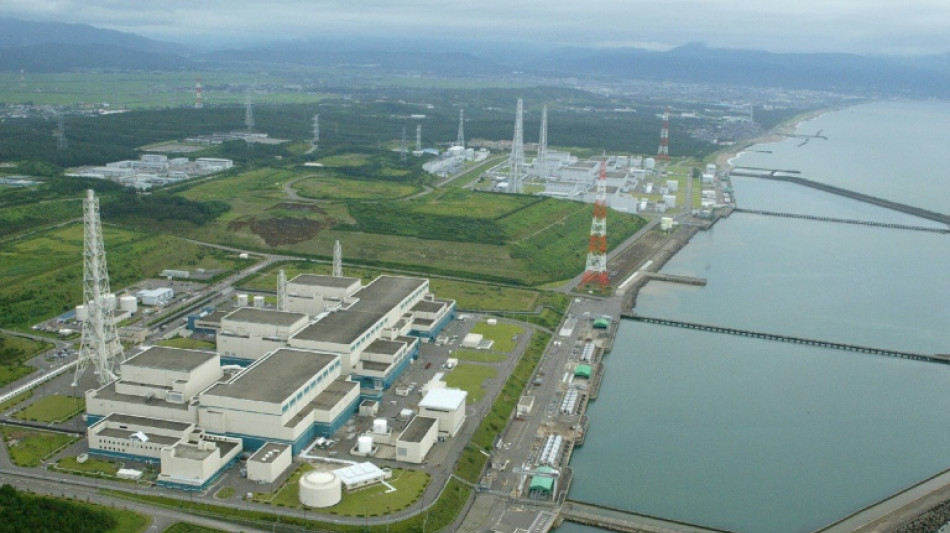
World's biggest nuclear plant edges closer to restart / Photo: STR - JIJI Press/AFP

 'Dreams disappear' as Gaza students await evacuation to Italy

 Third European gold for Schilder in women's shot put

 Golden relay double for Britain at Europeans as Marchand settles for silver

 US had hottest month on record in July

 Colombia quake leaves 69 dead, with more trapped under rubble

 Bookmap Announces Partnership with Plus500 to Expand Futures Trading Access
 Barcelona turn down PSG offer for Torres

 Buildings collapse as major quake rocks Colombia and neighbors
 Meta releases new AI model as Zuckerberg lays out vision
 Freedom Holding Corp. Reports 40% Increase in Quarterly Revenue to $732.5 Million

 What next for beleaguered FIFA president Infantino?

 Greece contains new wind-driven fire near Athens
 Massive shake-up of Hungary media after Orban's exit
 Days of heavy rain leave at least 16 dead in Philippines

 Bezos consortium nears deal to buy Liverpool stake: report

 Stocks mostly rise with focus on US inflation
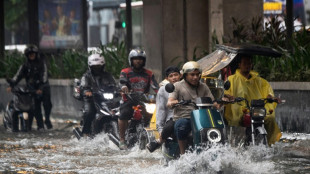 Days of heavy rain leave at least 13 dead in Philippines

 Ex-Thai MP shoots dead local official over money row
 July was Spain's hottest month on record: weather agency

 SCANDIC TRADE Ultimate 2.6 je hotový – systém SNC SCANDIC ECO je kompletní

 تم الانتهاء من تطوير SCANDIC TRADE Ultimate 2.6 – وبذلك أصبح نظام SNC SCANDIC ECO متكاملاً

 SCANDIC TRADE Ultimate 2.6が完成――SNC SCANDIC ECOシステムが完成しました
 Embattled Infantino target of letter from three confederations

 SCANDIC TRADE Ultimate 2.6 已正式推出——SNC SCANDIC ECO 系統現已完整建置

 SCANDIC TRADE Ultimate 2.6 завершена — экосистема SNC SCANDIC стала полноценной

Japanese local authorities approved the restart of the world's biggest nuclear plant on Friday for the first time since the 2011 Fukushima disaster.
Hideyo Hanazumi, governor of Niigata province where the Kashiwazaki-Kariwa plant is located, told a news conference he "would approve" the resumption, which will need final permission by Japan's nuclear regulator.
The plant was taken offline when Japan pulled the plug on nuclear power after a colossal earthquake and tsunami sent three reactors at the Fukushima atomic plant into meltdown in 2011.
However, the resource-poor nation now wants to revive atomic energy to reduce its heavy dependence on fossil fuels, achieve carbon neutrality by 2050 and meet growing energy needs from artificial intelligence.
Fourteen reactors, mostly in western and southern regions, have resumed operation since the post-Fukushima shutdown after strict safety standards were imposed.
The 400-hectare (1,000-acre) Kashiwazaki-Kariwa plant on the Sea of Japan coast facing the Korean peninsula would be the first restart for Fukushima operator Tepco since the disaster.
The huge facility in central Japan has been fitted out with a 15-metre (50-foot) wall in case of tsunamis, new power backup systems on higher ground and other measures.
Before the 2011 quake and tsunami, which killed around 18,000 people, nuclear power generated about a third of Japan's electricity, with fossil fuels contributing most of the rest.
Power company Kansai Electric said in July it was taking an initial step towards building the nation's first new nuclear reactor since the Fukushima disaster.
Japan is the world's fifth-largest single-country emitter of carbon dioxide, after China, the United States, India and Russia, and is heavily dependent on imported fossil fuels.
Nearly 70 percent of Japan's power needs in 2023 were met by power plants burning coal, gas and oil -- a figure Tokyo wants to slash to 30-40 percent over the next 15 years.
Almost all these fossil fuels must be imported, at a cost of around $500 million per day.
Japan passed a law in June allowing nuclear reactors to operate beyond 60 years to compensate for stoppages caused by "unforeseeable circumstances".
It aims to make renewables its top power source by 2040.
Under the plan, nuclear power will account for around 20 percent of Japan's energy supply by 2040 -- up from 5.6 percent in 2022.
F.Cardoso--PC