
-
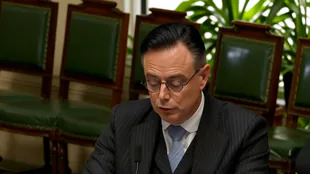 Belgian PM Bart De Wever Given New Deadline to Resolve €10 Billion Budget Deadlock
-
KUFOS Signs MoU With Old Dominion University to Expand Academic Ties

-
 $1.8 Billion Pledged for Biodiversity at COP17 as Monaco Reaffirms Commitment
-
Karen Wazen Launches First Standalone Boutiques in Cairo

-
 Phoenix Symphony Resumes Performances Amid Financial Uncertainty
-
Municipal Elections: How Service Failure Becomes a Public Health Crisis in South Africa

-
 Turkish Energy Minister Highlights Qatar as Key Partner for Regional and Global Energy Security
-
Rene Eyre Revisits Autobiographical Performance 'Say A Little Prayer' in London

-
 London Museum Granted 24/7 License Ahead of November Opening
-
UAE's HCT Holds Record Graduation and Announces Major Training Expansion

Panama government and protesters strike deals to clear key highway
Panama's government and indigenous leaders reached a second deal Sunday to clear all remaining demonstrators from the Panamerican Highway in exchange for lower fuel prices, ending a two-week blockade that had stymied food deliveries.
The government released footage from the signing of an initial agreement in far-west Chiriqui province, where most of the Central American country's food is produced, and of a blocked section of the highway being cleared.
Angered by high prices and corruption, protesters had clogged the highway linking Panama to the rest of Central America over the past two weeks. Large trucks and banner-waving demonstrators paralyzed the strategic route, making it hard for the country of 4.4 million to feed itself.
To avert the crisis, a second deal was signed later Sunday in Santiago de Veragua, a city 250 kilometers (155 miles) northwest of Panama City, the epicenter of the negotiations and a protester stronghold.
"Many Panamanians have suffered from these stoppages," said Vice-President Jose Gabriel Carrizo after signing the agreement. "This is a huge government effort."
The deal establishes the fixed price of fuel for 91 and 95 octane gasoline and diesel, and is effective from July 18.
"The traffic of cars and heavy equipment in Veraguas is free," Eduardo Cortés, who participated in the demonstrations on the highway, told AFP by phone.
The proposal of 3.25 dollars per gallon (3.78 liters), was better than the 3.30 offered in the deal made earlier in the day with the indigenous community of the Ngabe-Bugle Comarca in Chiriqui.
"This has not been easy, we have made progress with (reducing the cost of) the basic food basket," said Luis Sanchez, a spokesman for the organizations promoting the protests.
In Panama City, a hundred people gathered on the waterfront to demonstrate. They all wore black, in contrast with the white suits worn by lawmakers during official ceremonies.
Food costs are "higher than what is earned. We have a big social problem," lawyer Jaqueline Hurtado told AFP. "People are fed up and have taken to the streets to demonstrate for things to change."
Retiree Iliana Arango said: "In my 68 years of life, I am tired of seeing governments that promise, go up, steal, go down, the next one follows and here we are lacking everything, medicine, education, food."
Year-on-year inflation in Panama of 4.2 percent was recorded in May, along with an unemployment rate of about 10 percent and fuel price hikes of nearly 50 percent since January.
Despite its dollarized economy and high growth figures, the country has a high rate of social inequality.
Economic woes have led to a shortage of fuel in some parts of the country, and stalls at food markets in the capital have run out of products to sell.
R.J.Fidalgo--PC

