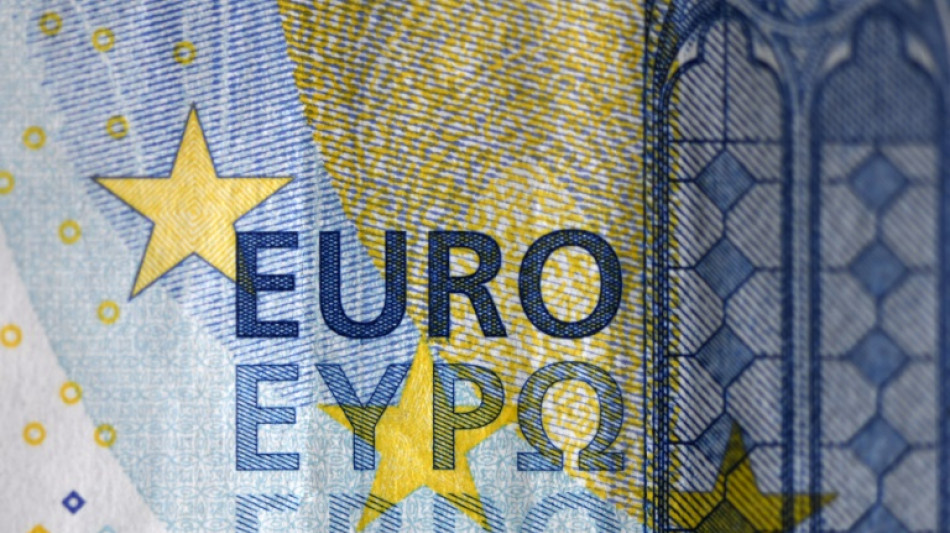
ECB faces dilemma as it prepares historic hike / Photo: INA FASSBENDER - AFP/File

 In Iceland, the mystery of the poet, the tomb and the Danish grocer

 Ratko Mladic: Bosnian Serb commander to convicted war criminal

 Bolivian army base blasts kill two, wound dozens
 Alcaraz, Sabalenka into US Open last 16 as Williams sisters lose on return

 Williams sisters fall in thrilling return to US Open doubles
 Bangladesh measles toll nears grim 1,000-child mark

 Bolivia farmers return to streets over diesel price hikes
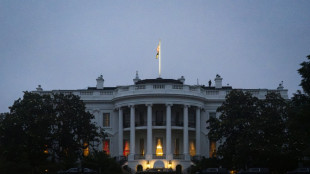 Tetris distances itself from controversial White House 'arcade' games

 Africa bigger, US smaller - UN adopts new map

 Bad weather will not affect All Blacks, says captain Savea

 Mbappe misses penalty as Parrott lifts Betis past Real Madrid

 PSG still winless in Ligue 1 as Monaco go top

 Defending champion Alcaraz reaches last 16 at US Open

 Lyles ends season before Budapest due to injury flare ups
 US Republicans announce probe into environment groups

 Sabalenka survives despite 'tricky' weed smell at US Open

 S&P Revises Outlook on Freedom Holding Corp. and Core Subsidiaries to Positive

 Job growth but record-high diesel prices -- Trump's midterms mixed bag

 Women's NBA comissioner Engelbert to retire at season's end

 Luis Enrique extends contract as PSG coach until 2030

 Duplantis pulls out of Diamond League finals

 Defending champ Sabalenka, Pegula lead way into US Open fourth round

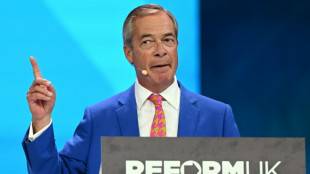 UK hard-right party rallies behind leader after new donation scandal

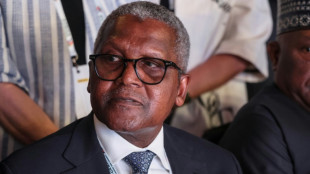 Nigeria's Dangote refinery looks to raise $1.6 bn in IPO

 Portugal extends talks to privatise national carrier TAP
The European Central Bank is set to raise its interest rates for the first time in over a decade on Thursday as fears of a gas supply cut cloud the outlook for the eurozone economy.
In the face of soaring inflation, the central bank's policymakers are committed to raising interest rates by at least a quarter point from their current historic lows.
Consumer prices rose at an 8.6-percent annual pace in June, a record for the eurozone and well above the ECB's two-percent target.
The broken supply chains and the rising cost of energy following Russia's invasion of Ukraine that have driven the price surge are also weighing on economic activity in Europe.
The continent's dependence on Russian energy imports has eurozone members bracing for a difficult winter and planning to ration supplies if Moscow halts gas deliveries.
The European Commission on Wednesday put forward a plan to cut gas use by 15 percent to mitigate the worst potential impacts on the economy.
But with inflation showing no signs of slowing, the ECB lagging behind its peers in Britain and the United States, and the euro looking weak against the dollar, the pressure is on the ECB to think about bigger hikes.
- Giant steps -
Central banks would normally hesitate before raising rates with the economy in such a delicate position "but inflationary pressures have increased to a point where the ECB has to act whatever it breaks", said Frederik Ducrozet, head of macroeconomic research at Pictet Wealth Management.
Finding a way to balance growth and inflation risks looked like "an impossible equation to solve" for the ECB, he said.
The central bank's deposit rate has been negative for the past eight years, with the key rate currently at minus 0.5 percent.
The punitive interest rate, which effectively charges banks to park their money with the ECB overnight, was designed to encourage more lending, more economic activity and higher inflation rates.
ECB President Christine Lagarde has said the aim is to lift interest rates out of negative territory by the end of September as part of a "gradual but sustained" series of hikes.
Meanwhile, the US Federal Reserve and the Bank of England have already raced ahead of the ECB, beginning their hiking cycles sooner and cranking rates up more aggressively.
It would be difficult to explain why the ECB would "spend the summer with negative interest rates while inflation in the eurozone is climbing further", said Franck Dixmier, head of fixed income at Allianz Global Investors.
- Lost transmission -
The last time the ECB raised rates in 2011, the emergence of a European debt crisis quickly forced the central bank to reverse course.
The ECB president that finally quelled the tensions on the bond market was Mario Draghi, who is now prime minister of Italy and at the centre of new concerns over government debt as his coalition teeters on the brink.
The ECB's announcement in early June that it would finally raise interest rates led borrowing costs for more highly indebted eurozone members like Italy to rise faster than others.
Limiting the divergence between the 19 different members is "critical" to make sure monetary policy moves were felt evenly across the eurozone, ECB vice-president Luis de Guindos said in early July.
To this end, the ECB has said it will "flexibly" reinvest maturing bonds from its portfolio to hoover up debt from more at-risk countries and ease the pressure.
The bank has also set about designing a new crisis tool to preserve the "transmission" of its monetary policy moves with targeted bond buys.
ECB policymakers could unveil more details about the "anti-fragmentation" tool Thursday but the idea has been met with scepticism by some governing council members, who would see it used only under strict conditions.
At the same time, a political crisis in Italy is a "textbook case of a situation where the ECB should not intervene", said Ducrozet from Pictet.
V.F.Barreira--PC