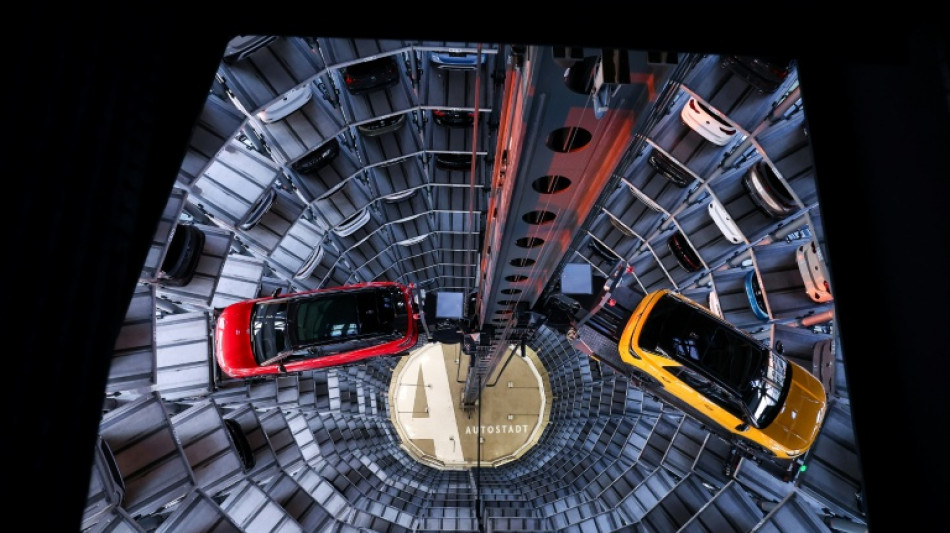
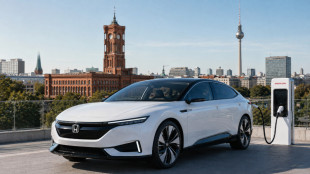
Germany brings back electric car subsidies to boost market / Photo: Ronny HARTMANN - AFP

 Vollering wins Tour de France Femmes after war of nerves
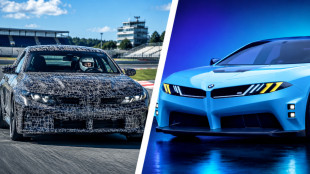 BMW’s next chapter accelerates with New Class rollout

 Five dead in new Russia, Ukraine strikes

 PSG sign France full-back Digne from Villa
 Sinner withdraws from Cincinnati Open with knee injury

 Fernandez's 'perfect' race earns him British MotoGP Grand Prix win

 Iran Guards say won't reopen Hormuz without US meeting Tehran's demands

 Hogh's hat-trick inspires Celtic to 5-1 victory over Kilmarnock

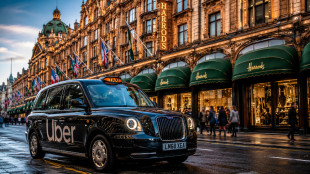 London grants first licences for supervised Uber robotaxis

 Erasmus hopeful Kolisi hamstring injury not 'too bad'
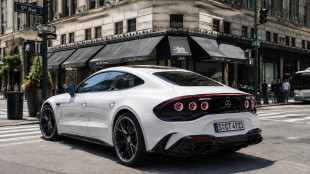
 Luxury car buyers trade prestige for mainstream value

 Students, teachers mourn girl killed in Thailand school shooting
 Jacobson to lead New Zealand for first time against Sharks
 Typhoon Dolphin makes landfall in China after flight cancellations, evacuations

 South Korea FA apologises after sex scandal adds to controversies

 Indonesia closes national park as wildfire spreads

 ZXMoto leads China's charge to dominate the global motorbike market

 Top-ranked Sabalenka, Pegula stunned in Toronto fourth round

 Japan nuclear debate unnerves proponents of pacifism

 Spanish teen Jodar ousts eighth seed Lehecka at Montreal

 Angers mounts in US over vast network of car license plate cams

 Darderi to face Nakashima in Montreal quarter-finals
 Espresso power fires Darderi past Borges in Montreal

 Shnaider upsets Pegula to book Toronto quarter-final with Swiatek

 Mount injury overshadows Man Utd draw with Paris Saint-Germain

Germany on Monday reintroduced electric car subsidies as it seeks to accelerate the transition to less polluting vehicles, drawing praise from industry groups but criticism from environmentalists who demanded greater efforts.
Sales of electric vehicles (EVs) in Europe's biggest auto market are growing but progress has been patchy, and the government and the struggling auto sector are keen to speed up the shift.
The previous government scrapped an earlier subsidy scheme in 2023 due to a budget crisis, prompting a collapse in EV sales, although they have been recovering in recent times.
The new programme "helps the environment, the automotive industry, and in particular families who otherwise couldn't afford a new, environmentally friendly car," said Environment Minister Carsten Schneider.
Private households with a taxable income of no more than 80,000 euros ($93,000) will be eligible for subsidies, Schneider announced.
Car buyers can apply for the support from May, which will apply to EVs registered from the start of 2026, he said.
Fully electric cars are eligible for a subsidy of at least 3,000 euros. Plug-in hybrids and cars with range extenders -- in which a small combustion engine can charge the battery -- are covered by a basic subsidy of 1,500 euros.
There are extra subsidies for families with children as well as households on lower incomes.
The IG Metall union, which represents many auto sector workers, welcomed the scheme as an "an important step in the right direction".
The VDA auto industry group said the programme will "support the success of e-mobility in Germany" although it urged other steps, such as improving charging infrastructure.
But the group Environmental Action Germany voiced criticism, especially of subsidies for plug-in hybrids, which it said "offer hardly any climate benefits" over combustion engine cars.
"The government is still failing to implement effective climate protection policies in the transport sector," said the group's chief Juergen Resch.
German carmakers -- already struggling with slowing sales and fierce competition -- desperately need electric sales to rise as they invested hugely in the EV shift and also face strict new European environmental rules.
Though the European Union in December proposed scrapping a planned 2035 ban on new combustion-engine vehicles, carmakers would still face having to cut emissions by 90 percent from 2021 levels under its latest plan.
After plunging in 2024 following the end of the last subsidy programme, German EV sales rebounded in 2025 and represented almost a fifth of all new cars sold.
H.Silva--PC