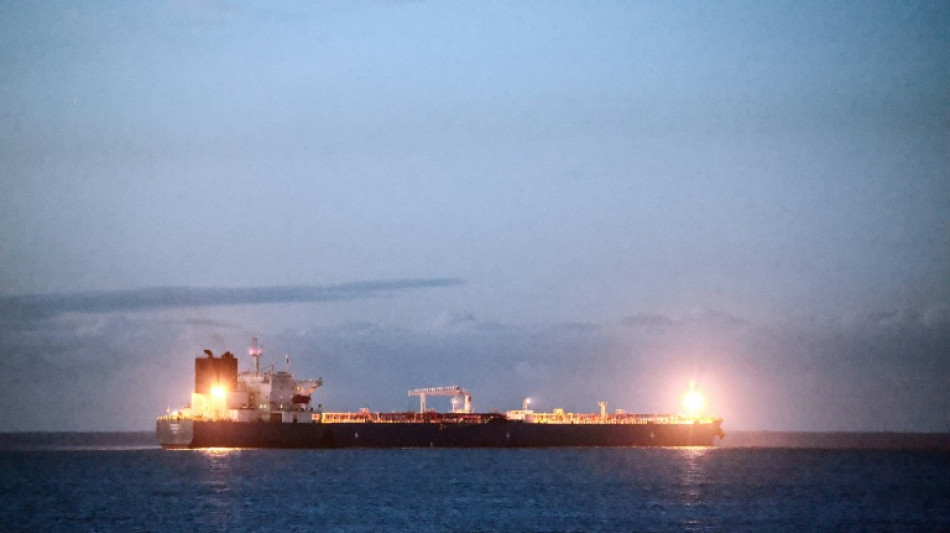
What is Russia's 'shadow fleet' and how does it work? / Photo: Thibaud MORITZ - AFP

 Demi Vollering wins Tour de France Femmes

 Iraola's first Anfield match as Liverpool manager ends in Monaco defeat

 Bodies hanging from bridge revive violence in once-calm town in Mexico
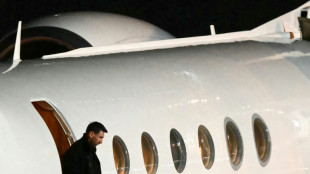 Lionel Messi bids farewell to father who guided his glittering career

 Raul Fernandez wins British MotoGP Grand Prix
 Tesla FSD secrecy puts Europe’s safety oversight under scrutiny
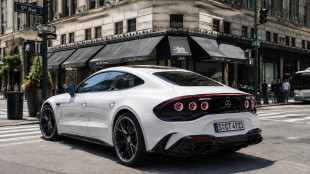 Mercedes-AMG GT 53 balances speed, range and daily usability

 Lion queen Werro focused on Euro medal, not 800m world record

 Changan uses FILDA 2026 to accelerate its African expansion

 Honda plots a profitable European comeback without a price war
 Iran Guards say won't reopen Hormuz without US meeting all Tehran's conditions
 Messi absent after father's death as Miami lose in Leagues Cup
 Flight cancellations, evacuations in China as Typhoon Dolphin looms
 Iran issues demands for reopening of Hormuz
 Afghanistan's gold rush upends lives and landscapes
 Messi missing after father's death as Miami lose in Leagues Cup

 World number one Sabalenka ousted in Toronto by Alexandrova
 Olympic weightlifter hoists debris for Venezuela earthquake recovery

 FIFA condemns 'concerted and ongoing effort' to weaken Infantino

 South Africa win after surviving late Argentina surge

 Man Utd boss Carrick being 'careful' with Mount as Man Utd draw with PSG

 All Black Tuipulotu surprised after Sharks include Nonu
 Infantino denies allegations of affair, favouritism while at UEFA: report

 MotoGP leader Martin soars to victory in British GP sprint race
 Mosimane set to succeed Broos as South Africa coach

France's interception of an oil tanker suspected of being part of Russia's "shadow fleet" draws attention to how the vessels allegedly operate in order to escape Western sanctions.
- What is the 'shadow fleet'? -
Russia has reportedly built up a flotilla of old oil tankers of opaque ownership to get around sanctions imposed by the European Union, United States and the G7 group of nations over Moscow's all-out invasion of Ukraine that started in 2022.
The sanctions, based on a price-cap on Russian crude to limit Moscow's revenues used to pursue its war, have shut out many tankers carrying Russian oil from Western insurance and shipping systems.
The EU lists 598 vessels that are banned from European ports and maritime services.
The US -- which seized a Russian-flagged tanker in the north Atlantic early in January -- lists 183 vessels and asserts an extraterritorial right to act against them.
- How does it operate? -
According to experts, and a briefing paper by the European Parliament, the "shadow fleet" obscures the ownership of vessels, and ensures the companies managing them are outside Russia and fly flags of convenience -- or even sometimes falsely claimed flags.
In addition, the vessels have been observed turning off their Automatic Identification System, to go "dark" at sea, where ship-to-ship transfers of Russian oil occur.
Many of the vessels are old, meaning they can be more easily written off if seized, or forfeited if they cause oil spills.
The Kyiv School of Economics, which runs a "Russian Oil Tracker", said in its latest report, in December, that 78 percent of the shadow-fleet tankers it monitored in November were older than 15 years.
"The top three flags used by Russian shadow-fleet vessels transporting crude oil are false/unknown flag, Sierra Leone, and Cameroon," it said.
It said management companies for the vessels were located in the United Arab Emirates, the Seychelles, Mauritius, the Marshall Islands and elsewhere.
The Kyiv School of Economics also said that "India remains the biggest Russian seaborne crude importer with 40 percent share in total Russian exports".
- What is being done against it? -
The United States, which is leading efforts to try to broker an end to the conflict in Ukraine, in early January stepped up its sanctions against Russia's oil industry, including the shadow fleet.
When its forces seized the tanker in the Atlantic on January 7, the White House said the vessel was "deemed stateless after flying a false flag".
Russia said on Tuesday that the US still had not released two Russian crew members from the tanker.
The European Union is considering expanding its powers to board Russia's shadow-fleet vessels, according to a document by its foreign-policy service viewed by Politico in October.
The French navy on Thursday boarded an oil tanker in the Mediterranean suspected of belonging to Russia's shadow fleet.
President Emmanuel Macron said on X the vessel, "coming from Russia, was subject to international sanctions and suspected of flying a false flag".
Britain said it provided tracking and monitoring support for the French interception.
- How is Russia reacting? -
When France in late September detained a Russian-linked ship called the Boracay, a vessel claiming to be flagged in Benin, Russian President Vladimir Putin condemned the move as "piracy".
After the US seizure of the tanker in early January, the Russian foreign ministry warned the move could "result in further military and political tensions", and said it was worried by "Washington's willingness to generate acute international crisis situations".
B.Godinho--PC