US consumer confidence drops to lowest level since 2014 / Photo: CHARLY TRIBALLEAU - AFP/File

 Physicians Urge Arizona to Ban Medical Gag Clauses and Enable Private Lawsuits

 New Campaign Highlights Knowledge Gaps on Carbon Monoxide Safety Among Americans

 GoodData.AI Launches the Agentic Serving Plane, a New Category of Enterprise Data Infrastructure for AI Agents

 US Government Questions Effectiveness of Waymo’s School Bus Software Fix

 Panthers expected to begin 2027 NRL season away from new stadium

 Sweet As app launches restaurant discovery platform

 MLA seeks inquiry into reported sectarian gestures on Ormeau Road

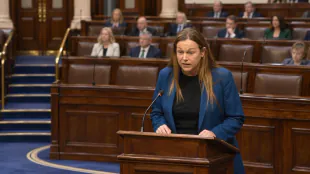 Louise O’Reilly attacks Simon Harris over unemployment remarks
Consumer confidence in the United States plunged in January to its lowest level since 2014, survey data showed Tuesday, as American households continue to fret about inflation and elevated costs of living.
The Conference Board's Consumer Confidence Index slumped by 9.7 points from December to 84.5, with consumers growing more cautious about major spending decisions.
A consumption slowdown -- if it took hold -- would hit at the key driver of the world's biggest economy, with consumer spending accounting for more than two-thirds of US GDP.
The new data comes as US President Donald Trump struggles to reverse voters' negative feelings about the economy ahead of the critical midterm elections in November -- in which his Republican Party risks losing control of Congress.
"Confidence collapsed in January, as consumer concerns about both the present situation and expectations for the future deepened," said the research group's chief economist Dana Peterson.
She added that all five components of the index worsened, driving the overall level to its lowest since May 2014 -- "surpassing its Covid-19 pandemic depths."
While the Conference Board survey data on expectations has diverged from spending patterns in the past, economist Oliver Allen of Pantheon Macroeconomics said: "We'd be surprised if its recent deterioration proves to be an entirely false signal."
This is "particularly given the recent stagnation in real incomes and the already rock-bottom personal saving rate," he said in a note.
In January, net views on current business conditions "dwindled to just barely positive," while perceptions of employment conditions also weakened, The Conference Board said.
Meanwhile, consumers tended to be pessimistic about factors influencing the economy.
"The low hiring rate is a problem," said Navy Federal Credit Union chief economist Heather Long.
"Layer on top of that a lot of geopolitical uncertainty over Venezuela, Greenland and the Federal Reserve, and Americans continue to be frustrated with the economy," she added.
Peterson of The Conference Board flagged that "references to prices and inflation, oil and gas prices, and food and grocery prices remained elevated."
"Mentions of tariffs and trade, politics, and the labor market also rose in January, and references to health/insurance and war edged higher," she said.
Consumers increasingly indicated that they were not planning on big-ticket purchases in the next six months as well, suggesting that they are becoming more selective in their spending.
"Used cars, furniture, TVs, and smartphones remained the most popular within their categories for future purchases," according to The Conference Board.
O.Salvador--PC