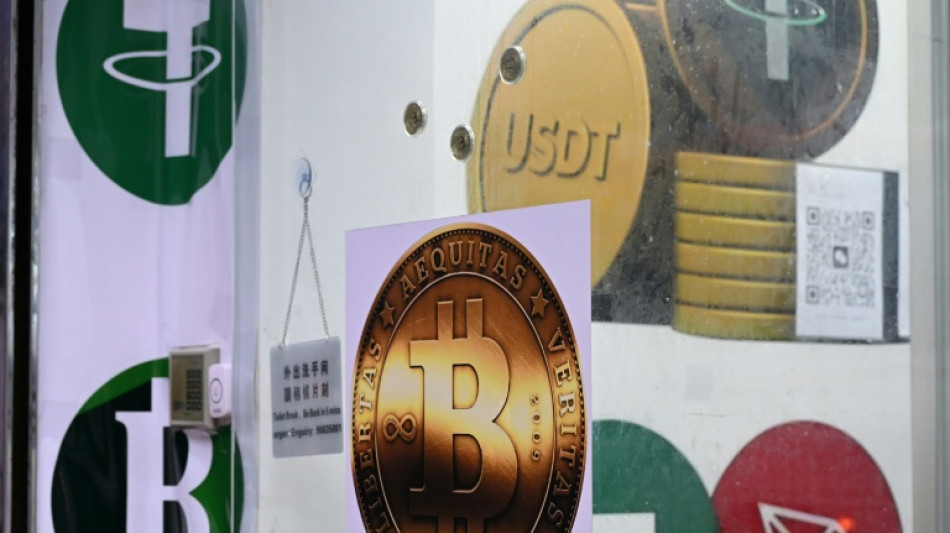
US banks fight crypto's push into Main Street / Photo: Peter PARKS - AFP/File

 Demi Vollering wins Tour de France Femmes

 Iraola's first Anfield match as Liverpool manager ends in Monaco defeat

 Bodies hanging from bridge revive violence in once-calm town in Mexico

 Lionel Messi bids farewell to father who guided his glittering career

 Raul Fernandez wins British MotoGP Grand Prix

 Tesla FSD secrecy puts Europe’s safety oversight under scrutiny

 Mercedes-AMG GT 53 balances speed, range and daily usability

 Lion queen Werro focused on Euro medal, not 800m world record

 Changan uses FILDA 2026 to accelerate its African expansion

 Honda plots a profitable European comeback without a price war

 Iran Guards say won't reopen Hormuz without US meeting all Tehran's conditions

 Messi absent after father's death as Miami lose in Leagues Cup

 Flight cancellations, evacuations in China as Typhoon Dolphin looms

 Iran issues demands for reopening of Hormuz

 Afghanistan's gold rush upends lives and landscapes

 Messi missing after father's death as Miami lose in Leagues Cup

 World number one Sabalenka ousted in Toronto by Alexandrova

 Olympic weightlifter hoists debris for Venezuela earthquake recovery

 FIFA condemns 'concerted and ongoing effort' to weaken Infantino

 South Africa win after surviving late Argentina surge

 Man Utd boss Carrick being 'careful' with Mount as Man Utd draw with PSG

 All Black Tuipulotu surprised after Sharks include Nonu

 Infantino denies allegations of affair, favouritism while at UEFA: report

 MotoGP leader Martin soars to victory in British GP sprint race

 Mosimane set to succeed Broos as South Africa coach

The banking industry is pushing back against White House-aligned crypto companies seeking to expand their business to Main Street customers in the United States.
At the heart of the battle being waged by some of Washington's most powerful lobbies is control over several trillions of dollars in banking deposits and a debate over whether crypto companies can offer an alternative place to stash cash.
The crypto industry has long had a complicated and adversarial relationship with traditional banks, a distrust dating back to the birth of the crypto movement in the wake of the 2008 financial crisis. Crypto believers fear that banks are trying to derail their rise.
The current battle centers on draft legislation -- the Clarity Act -- that would allow crypto players to offer cash rewards to stablecoin holders, boosting their ability to lure customers away from traditional banks.
According to the American Banking Association, these incentives would endanger the $6.6 trillion in deposits parked in traditional banks, especially lenders smaller than the national giants JPMorgan Chase or Bank of America.
These deposits are the lifeblood of the economy, especially in areas outside major cities, where local banks use them to finance loans to individuals, small businesses and farmers.
"Community banks make 60 percent of all the small business loans in this country," Independent Community Bankers of America CEO Rebeca Romero Rainey told AFP. "They make 80 percent of all agriculture loans. If they don't have those deposits, where are the funds coming from to fund those loans?"
Stablecoins are cryptocurrencies designed to maintain steady value by being pegged to traditional assets like cash or US government bonds -- meaning they can be used reliably for transactions and transfers while bypassing banks.
The crypto industry touts them as proof that crypto businesses can be trusted and aren't necessarily high-risk or vulnerable to scams.
For Bhau Kotecha, CEO and co-founder of platform Paxos Labs, banning stablecoins from offering interest "would narrow the use cases that make stablecoins compelling for mainstream adoption."
The key player in the battle is Coinbase and its CEO Brian Armstrong, who has led efforts to rehabilitate crypto's reputation after years of scandals and a Biden administration notably skeptical of crypto's benefits.
In the runup to the 2024 election, Armstrong and Silicon Valley venture capital firm Andreessen Horowitz helped raise tens of millions of dollars for the Trump campaign and lawmakers on both sides of the aisle to change Washington's stance on crypto.
The gamble paid off with the Republican sweep in November 2024.
Since Donald Trump's victory, crypto companies have seen their power and influence surge. Trump and his wife Melania each have their crypto coins, and his sons are heavily invested in the industry. One bill -- the GENIUS Act -- has already been signed into law, giving stablecoins long-sought legal recognition.
But with the Clarity Act -- a broader proposal setting the rules of the road for digital assets -- the crypto industry is moving onto the banking industry's turf.
- Beware of the midterms -
For banks, the risk of customers diverting deposits to stablecoins and potentially gutting their core business was too grave a threat.
After their concerns were heard, the Senate Banking Committee was poised last month to pass a version of the bill that would ban stablecoins from paying interest.
An irate Armstrong maneuvered to have the bill pulled, and the Clarity Act is now stuck in limbo.
"We'd rather have no bill than a bad bill," Armstrong wrote on X.
The banks counter that if the crypto industry wants to operate as banks, they should apply for banking licenses and be regulated like any other lender.
The White House remains confident the bill can get back on track, and warns of the consequences if the opportunity is missed and the Democratic party wins midterm elections in November.
"You might not love every part of the CLARITY Act, but I can guarantee you'll hate a future Dem version even more," said Patrick Witt, who coordinates crypto policy at the White House.
O.Salvador--PC