
Musk merges xAI into SpaceX in bid to build space data centers / Photo: Fabrice COFFRINI - AFP

 Physicians Urge Arizona to Ban Medical Gag Clauses and Enable Private Lawsuits

 New Campaign Highlights Knowledge Gaps on Carbon Monoxide Safety Among Americans

 GoodData.AI Launches the Agentic Serving Plane, a New Category of Enterprise Data Infrastructure for AI Agents

 US Government Questions Effectiveness of Waymo’s School Bus Software Fix

 Panthers expected to begin 2027 NRL season away from new stadium

 Sweet As app launches restaurant discovery platform

 MLA seeks inquiry into reported sectarian gestures on Ormeau Road

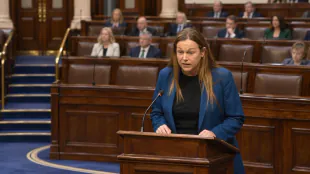 Louise O’Reilly attacks Simon Harris over unemployment remarks

 Virginia overwhelms Arkansas 91-72 behind balanced scoring

 Second major storm brings destructive winds and outages to British Columbia

 Godzilla Minus Zero leads North American box office with $31.6m

Elon Musk's SpaceX has taken over his artificial intelligence company xAI in a merger aimed at deploying space-based data centers, a statement said on Monday.
The acquisition combines SpaceX's rocket capabilities with xAI's technology to create what Musk in the statement called "the most ambitious, vertically-integrated innovation engine on (and off) Earth."
The merger comes as funding for the AI buildout embraced by big tech companies begins to show signs of tension.
Musk said SpaceX plans to launch a constellation of satellites that would function as orbital data centers, harnessing solar power in space to meet growing electricity demands for AI computing.
Musk said those needs cannot be met on Earth "without imposing hardship on communities and the environment."
"By directly harnessing near-constant solar power with little operating or maintenance costs, these satellites will transform our ability to scale compute," Musk wrote in the announcement.
SpaceX aims to launch one million satellites operating as data centers using its Starship rocket, which the company said will soon achieve launch rates of one flight per hour carrying 200 tons of payload.
The announcement did not disclose financial terms of the acquisition or provide a timeline for initial satellite deployments.
According to Bloomberg, the combined company would have a valuation of $1.25 trillion.
The deal further intertwines Musk's sprawling business empire, which already includes carmaker Tesla and social media platform X, formerly Twitter.
Musk merged X with xAI after acquiring Twitter in late 2022.
xAI, which operates the Grok chatbot, was valued at $230 billion in a January funding round.
The combined company would pool capital, computing resources and talent as Musk pursues his vision of placing data centers in space for AI computing.
SpaceX is reportedly targeting a mid-June initial public offering that could raise as much as $50 billion, according to US media.
The company dominates the space launch market with its reusable rockets and owns the largest satellite constellation through Starlink.
Musk had previously opposed an IPO for SpaceX because he had not enjoyed the required scrutiny of publicly traded Tesla.
He also argued that the market's desire for financial returns was at odds with his ultimate goal of settling Mars.
But the company's latest priorities will require significant investment.
These include developing Starship, the largest rocket ever built, for missions to the Moon and Mars.
X.Matos--PC

