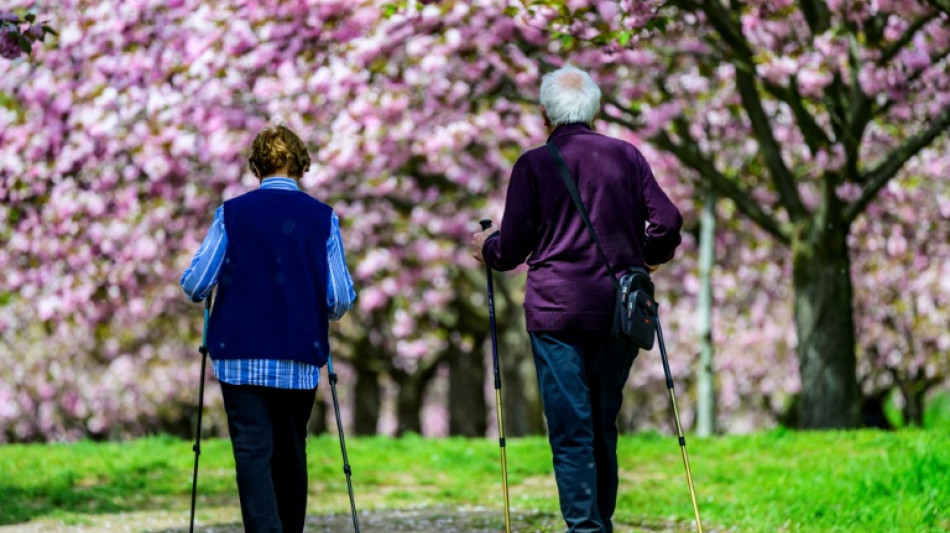
Germany has highest share of older workers in EU / Photo: John MACDOUGALL - AFP

 Physicians Urge Arizona to Ban Medical Gag Clauses and Enable Private Lawsuits

 New Campaign Highlights Knowledge Gaps on Carbon Monoxide Safety Among Americans

 GoodData.AI Launches the Agentic Serving Plane, a New Category of Enterprise Data Infrastructure for AI Agents

 US Government Questions Effectiveness of Waymo’s School Bus Software Fix

 Panthers expected to begin 2027 NRL season away from new stadium

 Sweet As app launches restaurant discovery platform

 MLA seeks inquiry into reported sectarian gestures on Ormeau Road

 Louise O’Reilly attacks Simon Harris over unemployment remarks

 Virginia overwhelms Arkansas 91-72 behind balanced scoring

 Second major storm brings destructive winds and outages to British Columbia

 Godzilla Minus Zero leads North American box office with $31.6m

Germany has the highest proportion of older workers of any European Union country, official data showed Tuesday, with almost a quarter of those in employment aged between 55 and 64.
Roughly 9.8 million people -- around 24 percent -- of the 40.9 million people in work in Europe's biggest economy were in this age bracket in 2024, according to statistics agency Destatis.
This compared to an EU average of around one fifth.
"A key reason for the high proportion of older workers in Germany is that the population is increasingly ageing," said Destatis in a statement.
The agency also noted that people were retiring later in Germany, which has a population of almost 84 million, as the statutory retirement age rises gradually to 67 by 2029.
The average retirement age for women and men was 64.7 years in 2024, compared to 63 for women and 63.1 for men in 2004, it said.
Experts believe it is crucial for Germans to work longer to ease the strain on the pension system as the population ages.
In 2024, Italy had the second-highest proportion of workers in the 55- to 64-year-old age bracket in the EU after Germany, at 23 percent, according to Destatis, citing European data.
Malta by contrast had the lowest proportion of older workers in the workforce, at around 11 percent, it said.
V.Dantas--PC

