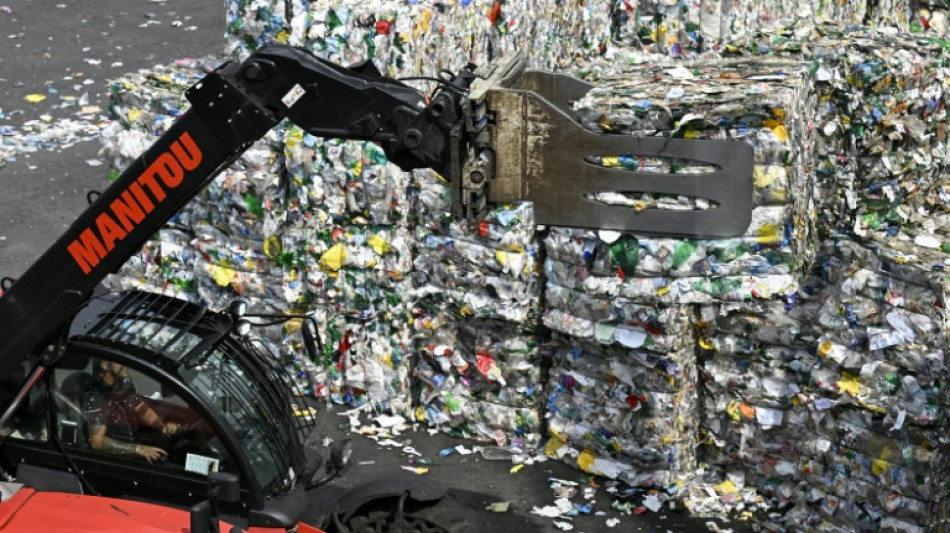
EU nations back chemical recycling for plastic bottles / Photo: Jean-Christophe VERHAEGEN - AFP/File

 Physicians Urge Arizona to Ban Medical Gag Clauses and Enable Private Lawsuits

 New Campaign Highlights Knowledge Gaps on Carbon Monoxide Safety Among Americans

 GoodData.AI Launches the Agentic Serving Plane, a New Category of Enterprise Data Infrastructure for AI Agents

 US Government Questions Effectiveness of Waymo’s School Bus Software Fix

 Panthers expected to begin 2027 NRL season away from new stadium

 Sweet As app launches restaurant discovery platform

 MLA seeks inquiry into reported sectarian gestures on Ormeau Road

 Louise O’Reilly attacks Simon Harris over unemployment remarks

 Virginia overwhelms Arkansas 91-72 behind balanced scoring

 Second major storm brings destructive winds and outages to British Columbia

 Godzilla Minus Zero leads North American box office with $31.6m

European nations voted Friday to allow for chemical recycling to play a larger role in the production of plastic bottles, overcoming reservations about the energy-intensive technology.
Under EU rules, single use plastic bottles need to contain at least 25 percent of recycled plastic -- with the share set to increase to 30 percent by 2030.
Currently only plastic recycled through mechanical techniques, which involve washing, shredding, and remelting the stuff, can be used towards the quota.
But representatives for the European Union's 27 member states voted Friday to extend the same benefit to chemically recycled plastics.
The vote follows a proposal put forward by the European Commission aimed at supporting investment in the plastic recycling sector, which is struggling against competition from China and other parts of Asia.
The change "will benefit the plastics industry, they now have consistent and clarified rules to calculate, verify and report the recycled content," said Anna-Kaisa Itkonen, a spokeswoman for the European Commission.
She defined the vote as a "first milestone for defining rules for chemical recycling at EU-level."
Brussels believes that chemical recycling can help the re-use of certain challenging types of packaging such as yoghurt pots.
But environmental groups complain that the process, which involves heating plastics to high temperatures to recycle them, is energy intensive, more polluting than mechanical techniques and could serve as a fig leaf for companies to continue produce more plastics.
A commission source said there was "strong pressure from industry" to back chemical recycling despite doubts about its benefits.
"We see many pilot projects, but at the industrial level, we're not there yet," the source said.
Europe's recycling sector is under severe pressure, due to abundant supply of cheap plastics as global production continues to rise.
More than half of plastics produced -- 57 percent -- come from Asia, with 35 percent coming from China.
G.Machado--PC

