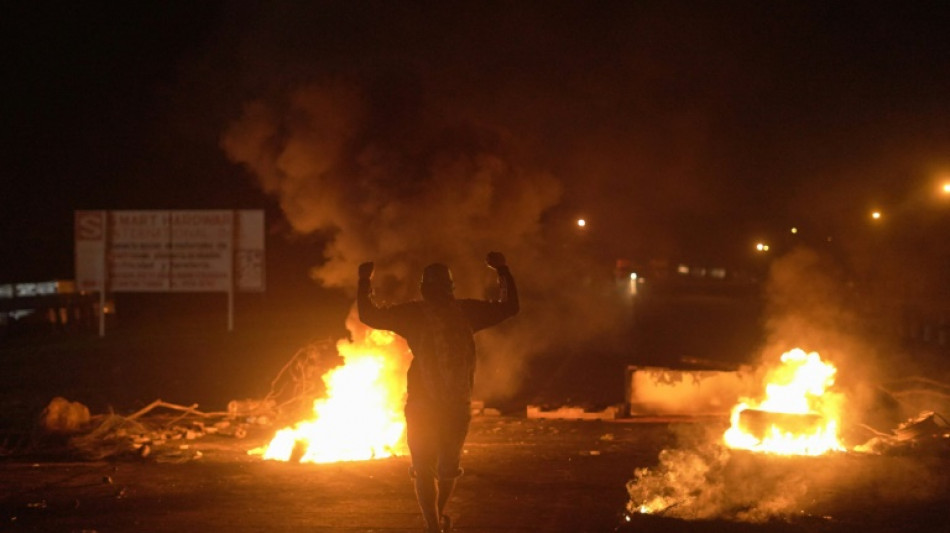
Panama govt, protesters edge closer in talks to end road closures / Photo: mauricio valenzuela - AFP/File

 Belgian PM Bart De Wever Given New Deadline to Resolve €10 Billion Budget Deadlock

 $1.8 Billion Pledged for Biodiversity at COP17 as Monaco Reaffirms Commitment

 Phoenix Symphony Resumes Performances Amid Financial Uncertainty

 Turkish Energy Minister Highlights Qatar as Key Partner for Regional and Global Energy Security

 London Museum Granted 24/7 License Ahead of November Opening

The Panamanian government and protesters edged closer Monday to an agreement to end a weeks-long living cost revolt that has blocked roads, interrupted food supplies and damaged the economy.
Authorities agreed in the early morning hours to reduce the price of 72 basic consumer items by some 30 percent on average.
"The national government has every intention of continuing dialogue and today has shown it also has the will to reach agreements," Labor Minister Doris Zapata said on the fifth day of marathon talks in Penonome, 150 kilometers (93 miles) southwest of the capital Panama City.
"There is already the first step on the road to solving the problems of the social crisis that this country is experiencing," said Fernando Abrego, a spokesman for one of the demonstrators.
For three weeks, amid worsening economic woes for Panama, protesters demanding lower fuel, food and medicine prices have blockaded the crucial Pan-American Highway and other major roads with stalled trucks and burning tires. Some have clashed with police.
Despite its dollarized economy and impressive growth figures, the country of 4.4 million people has one of the world's highest rates of social inequality, with poor access to health services, education and clean drinking water in some areas.
The demonstrations have triggered food and fuel shortages in some parts of the country, and the business sector says some $500 million has been lost.
Even before the talks started, the government had lowered the price of 18 basic products and that of fuel from $5.20 per gallon to $3.25 in an unsuccessful bid to end the standoff.
Protesters had demanded a lowering of the price of 82 products and want a limit to be imposed on company profits, a measure the government has rejected.
Other demands include reducing the price of medicines and electricity, increasing investment in education and the public health system, and measures against government corruption.
Luis Sanchez, another spokesman for the protesters, said some roads have been opened in a gesture of good faith.
But the government asked for all blockades to be ended.
"There is a population distressed by the closures," said Zapata.
C.Amaral--PC

