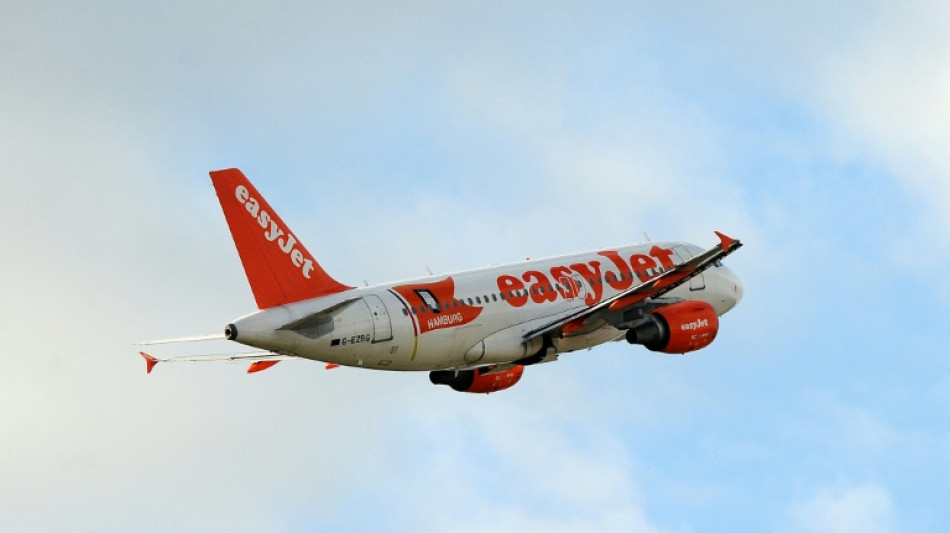
EasyJet hit by aviation disruption but slashes loss / Photo: REMY GABALDA - AFP/File

 Belgian PM Bart De Wever Given New Deadline to Resolve €10 Billion Budget Deadlock

 $1.8 Billion Pledged for Biodiversity at COP17 as Monaco Reaffirms Commitment

 Phoenix Symphony Resumes Performances Amid Financial Uncertainty

 Turkish Energy Minister Highlights Qatar as Key Partner for Regional and Global Energy Security

 London Museum Granted 24/7 License Ahead of November Opening

British airline EasyJet on Tuesday said it took a sizeable financial hit from sector-wide disruptions, notably staff shortages, but still slashed quarterly losses as demand recovers.
As airport staff shortages spark flight cancellations, EasyJet said in a statement that it booked a one-off charge totalling £133 million ($160 million).
That saw the airline post a pre-tax loss of £114 million in the group's third quarter, or the three months to the end of June.
However, that marked a major improvement from a loss of around £318 million for the same period of last year, as travel demand picked up from a Covid-induced downturn.
Third-quarter revenue increased more than eight-fold to £1.8 billion, while traffic rebounded close to pre-Covid levels.
EasyJet chief executive Johan Lundgren said the carrier was hit by "short-term disruption issues", but that it was experiencing "the return to flying at scale".
Traffic surged more than seven-fold to 22 million passengers in the quarter after the lifting of Covid travel curbs.
That was almost 90 percent of the group's 2019 capacity, before the pandemic ravaged the global aviation sector by grounding planes worldwide.
EasyJet said "the unprecedented ramp-up across the aviation industry, coupled with a tight labour market" had caused "widespread operational challenges culminating in higher levels of cancellations than normal".
Despite the disruption, EasyJet operated 95 percent of its planned schedule in the quarter.
Airlines and airports are struggling to recruit staff having sacked thousands of workers as the world entered Covid pandemic lockdowns.
F.Santana--PC

