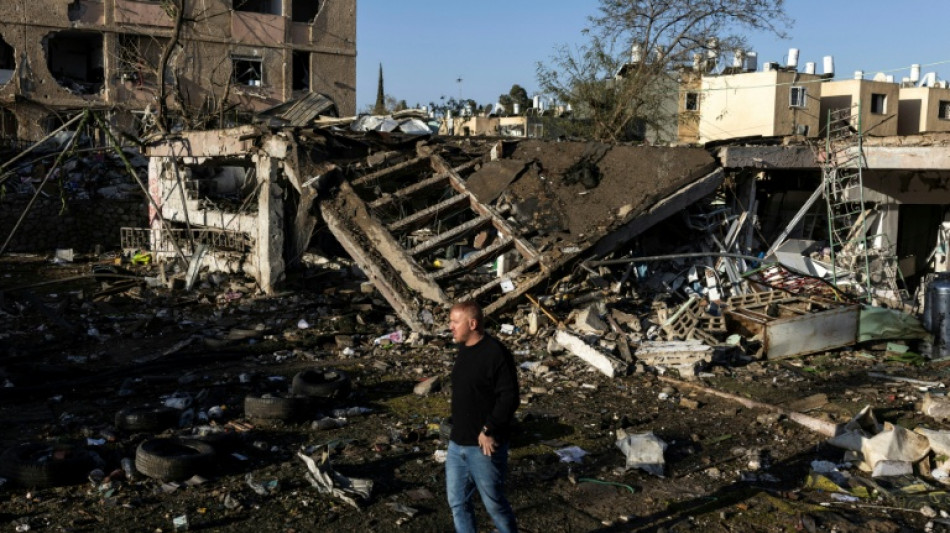
Iran threatens Middle East infrastructure after Trump ultimatum / Photo: JOHN WESSELS - AFP

 Johnson reveals 'stress' of Grand Slam Track collapse, clarifies payment
 Defending champion Ferrand-Prevot out of Tour de France Femmes
 Wallabies squeeze past Japan to give Kiss a winning start

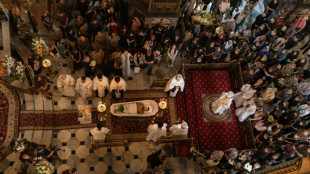 Kyiv mourns recovery volunteer, whose life 'intertwined with the fallen'

 Only two vehicles earn perfect child-seat scores for 2026

 Chinese car brands reshape Australia’s automotive market

 Electric cars enter their most decisive generation yet

 Three Chinese carmakers enter the global automotive top 10
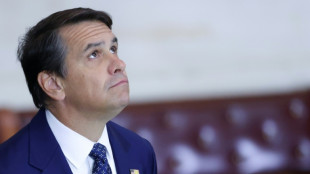
 Ukraine's Zelensky visits Russian ally Serbia as Moscow pounds Kyiv

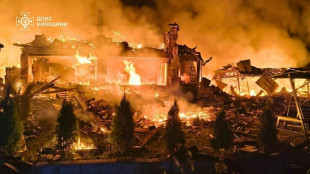
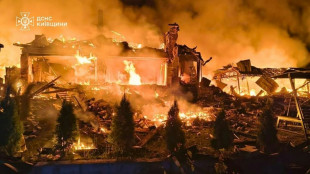 Ukraine's Zelensky visits Russian ally Serbia for talks

 Defending champion Shelton storms to Montreal win
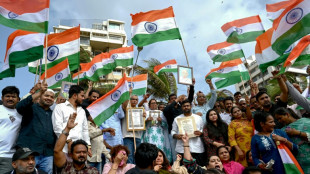
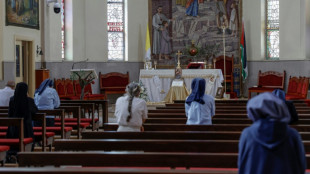 Exodus: West Bank hardships drive out Palestinian Christians

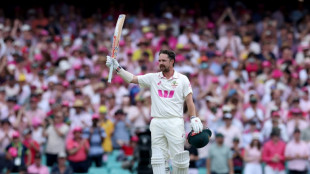 Travis Head wins Australian cricketer of the year gong
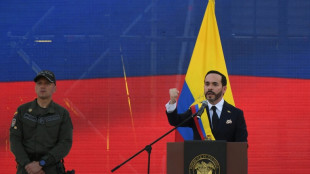 Colombia's new president vows to 'defeat narco-terrorists'

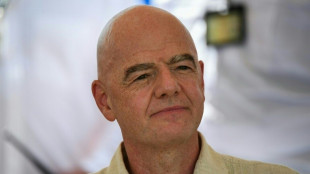
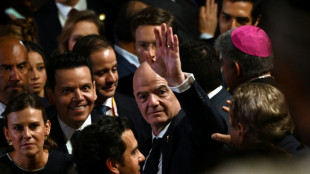 Call for Infantino to resign comes amid wave of support
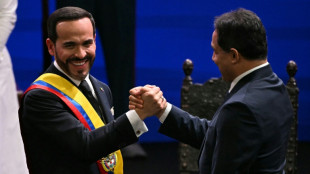 Trump ally Abelardo de la Espriella sworn in as Colombia president

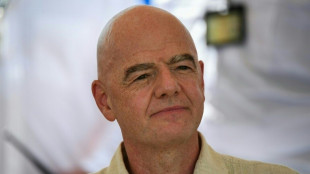 FIFA chief Infantino gets backing of South American football

 Amazon behind massive private gas plant for new data centers

 Apple and OpenAI escalate legal battle over devices
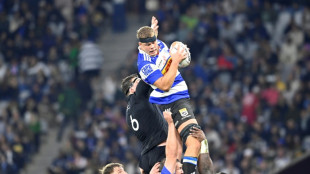
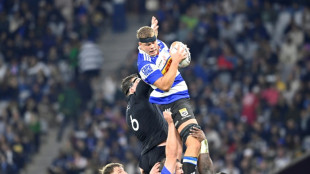 All Blacks strike late to secure opening win against Stormers
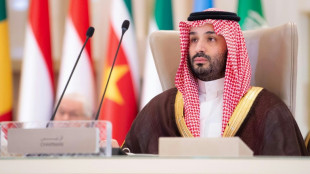 Saudi Arabia, Turkey, Pakistan sign defence pact amid regional war
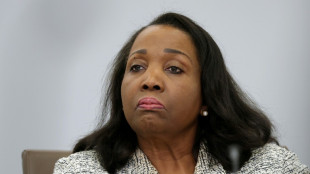 Trump renews effort to remove US Fed Governor Lisa Cook

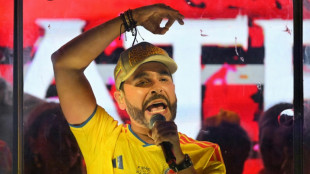
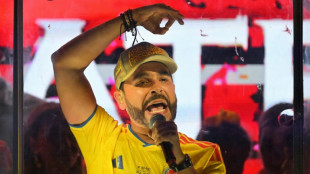 Abelardo de la Espriella, the flamboyant millionaire taking power in Colombia

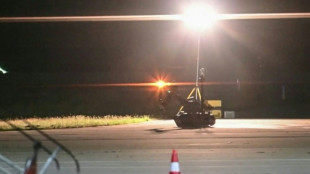 Germany holds security meeting over explosive drone amid Russia protest

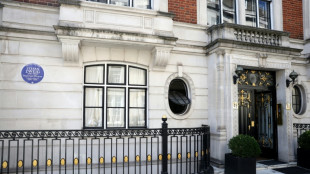 Austrian writer Stefan Zweig, who fled Nazis, honoured in London
Iran threatened on Sunday to attack key infrastructure across the Middle East if US President Donald Trump follows through on his vow to "obliterate" the Islamic republic's power plants unless the Strait of Hormuz swiftly reopens.
Iran's defiant response came after its missiles slipped through air defences and struck two towns in southern Israel including one housing a nuclear facility, underscoring Tehran's continued ability to retaliate as the war entered its fourth week.
Trump ratcheted up pressure on Iran's leadership, announcing a countdown over the Islamic republic's de facto blockade on the crucial trade route.
Trump wrote on Truth Social that the US would "hit and obliterate" Iranian power plants "starting with the biggest one first" if Tehran did not fully reopen the strait within 48 hours, or 23:44 GMT on Monday according to the time of his post.
But Iran's military operational command responded that if the country's facilities were hit, "all energy, information technology and desalination infrastructure belonging to the US" in the region would be targeted.
Early Sunday morning, AFP journalists in Jerusalem heard blasts and air raid sirens as Iran launched a fresh barrage of missiles at Israel.
The alerts came hours after direct hits on the towns of Arad and Dimona wounded more than 100 people, in one of the most destructive attacks on Israel since the start of the war on February 28.
"There was a 'boom, boom!', my mother was screaming," 17-year-old Arad resident Ido Franky told AFP near the impact site, where an AFP correspondent saw three damaged buildings and firefighters reported a blaze.
"This was terrifying... this town had never seen anything like this."
- Nuclear infrastructure -
Israel launched a fresh wave of strikes on Iranian capital Tehran on Sunday in response, while the Israeli military said it was investigating how air defence systems had failed to intercept the incoming missiles.
Iran's attacks on Israel indicated that its arsenal still poses a threat across the region, even after Trump and Israeli Prime Minister Benjamin Netanyahu claimed to have decimated Tehran's forces.
Dimona hosts what is widely believed to be the Middle East's only nuclear arsenal, although Israel has never admitted to possessing nuclear weapons, insisting the site is for research.
The missile fell about five kilometres (three miles) from the nuclear facility, according to rescuers.
Iran said the strike on Dimona, which tore open residential buildings and gouged craters into the ground, was in response to an earlier attack on its nuclear site at Natanz.
After the Natanz attack, UN nuclear watchdog chief Rafael Grossi reiterated his call for "military restraint to avoid any risk of a nuclear accident".
The Natanz facility hosts underground centrifuges used to enrich uranium for Iran's disputed nuclear programme and sustained damage in the June 2025 war.
Asked about Natanz, the Israeli military said it was "not aware of a strike".
- Hormuz blockade -
As concerns grow about the economic fallout from the war, Trump has turned his attention to the blockaded Strait of Hormuz which typically carries around a fifth of the world's crude oil and liquefied natural gas.
The standoff has rattled markets and sent fuel prices soaring, with North Sea Brent crude now trading above $105 a barrel, feeding fears about higher inflation and weaker global growth.
Trump has slammed NATO allies as "cowards" and urged them to secure the strait.
A total of 22 countries -- including the UK, France, Italy, Germany, South Korea, Australia, the UAE and Bahrain -- said on Saturday they were ready to contribute to efforts ensuring safe passage in the vital waterway.
As thousands more American Marines head to the Middle East, US Central Command said bunker-busting bombs were dropped on an underground Iranian coastal facility this week, degrading Iran's ability to threaten freedom of navigation in the strategic waterway.
- Attacks in Riyadh, Baghdad -
Meanwhile Iran has kept up retaliatory attacks on Gulf nations it accuses of serving as a launchpad for US strikes.
Saudi Arabia said Sunday it detected three ballistic missiles around the capital Riyadh. One was intercepted, and two fell in uninhabited areas, the defence ministry said.
The United Arab Emirates said it responded to new missile and drone attacks from Iran, after the Islamic republic warned its neighbour against allowing strikes from disputed islands near the Strait of Hormuz.
In Lebanon, the Iran-backed Hezbollah militant group said it attacked Israeli soldiers in northern Israel's Misgav Am, where first responders said rocket fire from Lebanon killed one person.
The death is the first Israeli fatality from fire from Lebanon since fighting started with Hezbollah on March 2.
The war has also spilled into Iraq. At least six overnight attacks targeted a US diplomatic and logistics centre at Baghdad's International Airport, two Iraqi security officials told AFP on Sunday.
- 'Uncertainty' -
Tehran partially emptied out at the weekend as many locals headed to the countryside for the Persian New Year holidays.
As the number of strikes on the capital eased off in recent days, AFP journalists reported seeing people in the streets again and browsing market stalls, but the shadow of the war loomed large.
"The only common feeling these days is uncertainty about what lies ahead and what the outcome will be" of this war, 31-year-old Tehran resident Shiva told AFP.
"We've all lost our work. We have no income, and we don't know how long we can continue like this," she added.
burs-mfp/amj
L.Mesquita--PC