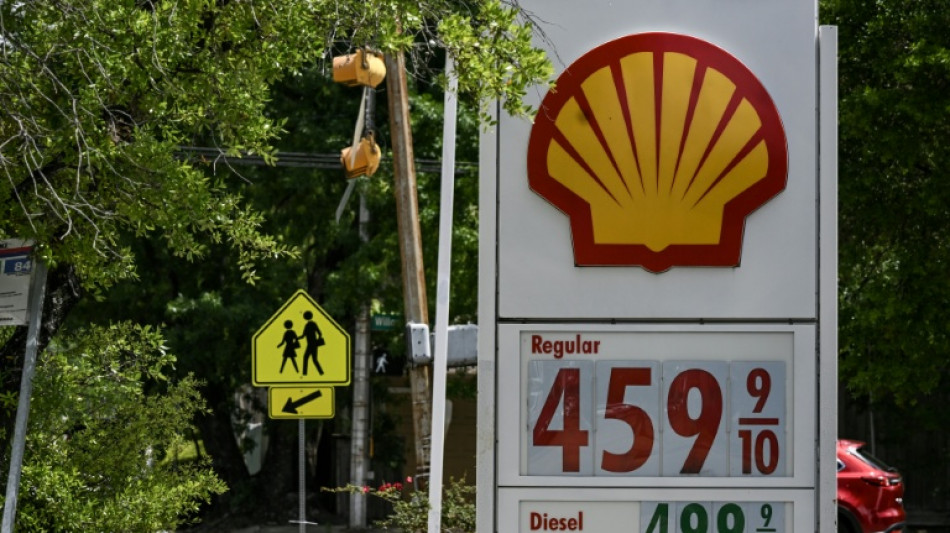
US inflation surges 3.3% as Iran war impact bites / Photo: RONALDO SCHEMIDT - AFP/File

 Nocturnal 'coffee frog' discovered in Costa Rica

 India's 'cockroach' protest movement keeps heat on Modi

 Russia's only anti-war party eyes support boost at elections

 Canada tries to adapt to a future of wildfires

 Death of NBA forward Clarke ruled accident due to heroin, cocaine

 Abelardo de la Espriella, Colombian president and flamboyant millionaire

 Maradona's 'Hand of God' ball heads to US auction

 Rybakina advances while Andreeva exits at Toronto

 Shelton storms to Montreal win as title defence solidifies
 All Blacks need to improve says coach after opening win against Stormers

 Spain imposes border checks on Italy as migrant showdown grows
 Bezzecchi smashes Silverstone track record in MotoGP qualifying
 Rashid Khan takes six wickets as Afghanistan thrash Ireland

 Flintoff quits England Lions role after Sydney Thunder appointment

 Movement, El Vecino and RISE Partner to Launch First Digital Dollar Wallet for Mexican Remittances

 FIFA chief Infantino travels to Colombia for presidential inauguration

 Niewiadoma seizes Tour de France Femmes lead on Mont Ventoux

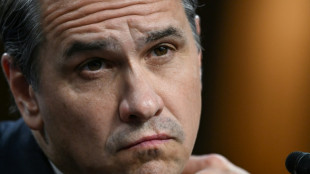 Trump's ex-lawyer all set for confirmation as US attorney general

 WHO urges Ervebo vaccine trial in DR Congo Ebola outbreak

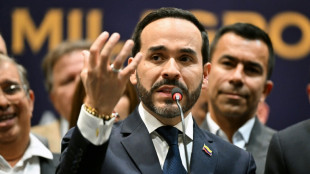 Hardline Trump ally De la Espriella to take office in Colombia

 Cambridge to review hiring process amid plagiarism row

 STARTRADER in Discussions with Trustpilot to Consolidate Review Profiles

 US unexpectedly loses jobs in blow to Trump's economy claims

 Call for Infantino to resign comes in wake of wave of support

 Gaza beekeeper starts again on rooftop amid ruins of war
Inflation in the United States rose sharply in March, government data showed Wednesday, as higher energy prices due to the war in the Middle East hit Americans hard.
The nationwide sticker shock put pressure on President Donald Trump, who has ordered peace talks with Iran and faces mid-term elections in November.
The rate of inflation rose to 3.3 percent year-on-year in March, the US Bureau of Labor Statistics (BLS). By comparison, this same consumer price index (CPI) rose 2.4 percent year-on-year a month earlier.
Gasoline prices surged by 21.2 percent between February and March -- the largest monthly increase since the government began publishing a related index in 1967, the US Bureau of Labor Statistics (BLS) said.
Excluding volatile energy and food prices, the inflation rate rose 2.6 percent compared to 2.5 a month earlier.
Markets had anticipated the surge, according to the consensus published by MarketWatch.
The United States and Israel began bombing Iran on February 28 and Tehran retaliated by blocking traffic in the Strait of Hormuz, a waterway used to carry a fifth of the world's oil and gas deliveries.
Despite being the world's top producer of crude oil, the United States also felt the pain, as prices at the gas pump shot up.
A gallon (3.78 liters) of regular gasoline currently costs an average of $4.15 in the United States, compared to approximately $3 just before the war.
- More price pain ahead -
The Trump administration -- elected in part on a promise to quash inflation -- maintains that the war's economic disruptions will be temporary.
US Vice President JD Vance said Friday he hoped for a "positive" outcome as he departed Washington for US-Iran peace talks being held in Pakistan this weekend.
But experts predicted more economic pain ahead due to the war in Iran, especially for middle and lower-income households in the United States already squeezed by rising energy and airfare prices.
Heather Long, chief economist at Navy Federal Credit Union, said that inflation soared in March to the highest level in almost two years.
"This is only the beginning. Food prices, travel and shipping costs are all going up in April and will exacerbate the pain," she said.
"March CPI was as expected, so no surprises. But there is a huge increase in fuel prices, boosting inflation" Christopher Low of FHN Financial told AFP.
"And we got the news last night that the ceasefire is not being honored by either side, apparently," he said. "There's still very little traffic through the Strait of Hormuz."
When Trump returned to the White House in January 2025, inflation was falling, compared to a peak in the spring of 2022.
The war in Ukraine, which had started a few months earlier, had driven prices at the pump even higher than they are today.
The CPI index was rising by 2.3 percent year-over-year in April 2025 -- coinciding with the US president's announcement of a sharp increase in tariffs on imported goods.
Inflation started to creep up, though Washington refused to acknowledge this as a consequence of the tariff war.
Price growth slowed again late last year, largely thanks to gasoline prices, relatively moderate at the time.
During the Federal Reserve's most recent meeting in mid-March, Chairman Jerome Powell explained that the war risked delaying efforts to bring inflation under control in the United States.
The US central bank's target for inflation is two percent -- an objective it has not met in five years due to a succession of shocks to the economy: the Covid-19 pandemic, the war in Ukraine, and tariffs.
F.Ferraz--PC