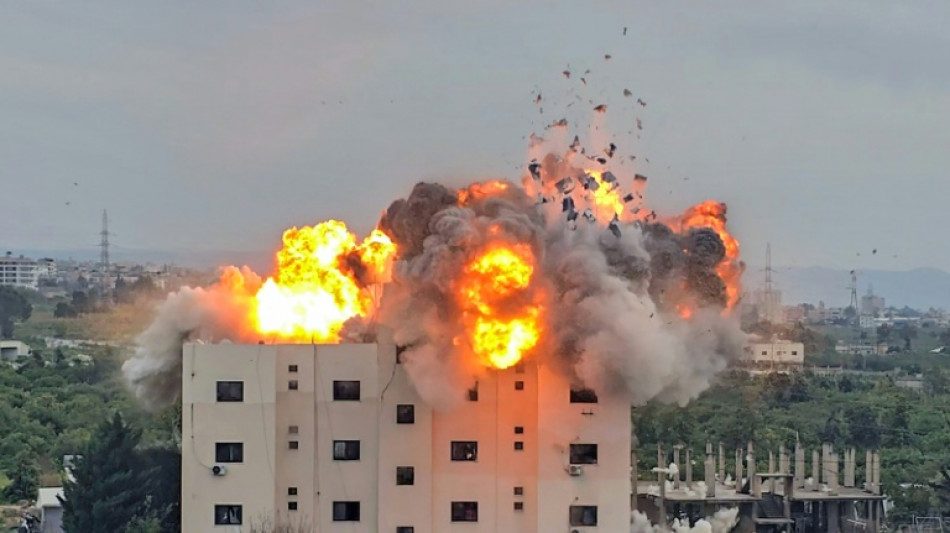
Iran, Lebanon bore brunt of missiles and drones launched during war / Photo: KAWNAT HAJU - AFP/File

 Nocturnal 'coffee frog' discovered in Costa Rica

 India's 'cockroach' protest movement keeps heat on Modi
 Russia's only anti-war party eyes support boost at elections

 Canada tries to adapt to a future of wildfires
 Death of NBA forward Clarke ruled accident due to heroin, cocaine

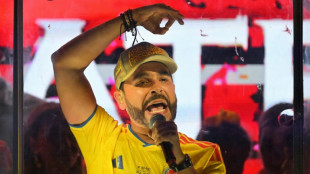
 Abelardo de la Espriella, Colombian president and flamboyant millionaire

 Maradona's 'Hand of God' ball heads to US auction

 Rybakina advances while Andreeva exits at Toronto

 Shelton storms to Montreal win as title defence solidifies

 All Blacks need to improve says coach after opening win against Stormers

 Spain imposes border checks on Italy as migrant showdown grows
 Bezzecchi smashes Silverstone track record in MotoGP qualifying
 Rashid Khan takes six wickets as Afghanistan thrash Ireland
 Flintoff quits England Lions role after Sydney Thunder appointment
 Movement, El Vecino and RISE Partner to Launch First Digital Dollar Wallet for Mexican Remittances
 FIFA chief Infantino travels to Colombia for presidential inauguration
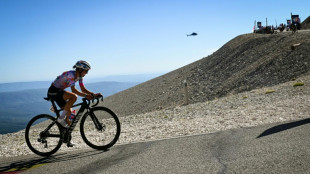 Niewiadoma seizes Tour de France Femmes lead on Mont Ventoux

 Trump's ex-lawyer all set for confirmation as US attorney general

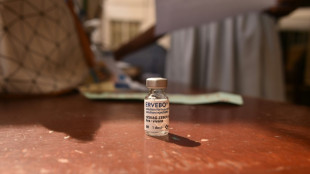 WHO urges Ervebo vaccine trial in DR Congo Ebola outbreak

 Hardline Trump ally De la Espriella to take office in Colombia

 Cambridge to review hiring process amid plagiarism row

 STARTRADER in Discussions with Trustpilot to Consolidate Review Profiles

 US unexpectedly loses jobs in blow to Trump's economy claims
 Call for Infantino to resign comes in wake of wave of support

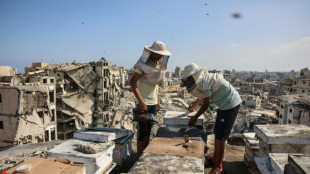 Gaza beekeeper starts again on rooftop amid ruins of war
Some three-quarters of the airstrikes during the Middle East war targeted sites in Iran or Lebanon, according to an AFP analysis of data from ACLED, a non‑profit that tracks political violence worldwide.
At least 7,700 strikes or series of strikes by missiles, drones, rockets or bombs, were recorded by the US-based conflict research group between the start of the war on February 28 up to April 8, when a fragile ceasefire concluded between Tehran and Washington came into effect.
ACLED collected and vetted its data from sources that it considers reliable, such as news reports, social networks, institutions, and other NGOs.
This count, which includes attacks that were intercepted, cannot be considered an exhaustive list from the conflict.
- Iran -
Approximately four out of 10 recorded attacks targeted Iran, mostly attributed to the Israeli military, According to AFP's analysis, in only a third of the cases could the target be identified as military or linked to the Islamic Revolutionary Guard Corps (IRGC), the regime's ideological army.
A third of the attacks had no identified target. April 6 and 7 -- the two days preceding the ceasefire -- saw the highest number of strikes.
- Lebanon -
Lebanon, where Israel has been conducting a campaign triggered by the pro-Iranian movement Hezbollah on March 2 launching an offensive, accounted for a third of the attacks, according to ACLED data as of April 3.
The vast majority were carried out by Israeli forces, while nearly 10 percent were Hezbollah attacks against Israeli positions in the south of Lebanon.
Israel asserts the two-week ceasefire agreed between the United States and Iran does not apply to Lebanon and it has continued to bombard the country.
- Israel -
One in seven attacks targeted Israel, most of which were intercepted. The attacks were in almost equal proportions from Iran and Hezbollah.
- Other countries -
The main countries targeted by Iran were Gulf states, primarily the United Arab Emirates, Kuwait, Saudi Arabia, and Bahrain. In Iraq, 40 percent of the attacks were against Kurdish groups and 20 percent against US interests.
Qatar and Oman were targeted to a lesser extent.
In Syria, ACLED recorded approximately one hundred incidents, but these were mainly the result of Iranian missiles and drones being intercepted by Israel. Several dozen similar incidents were recorded in the West Bank and Jordan.
In Turkey, four missile launches were intercepted by NATO to protect its Incirlik airbase, where US troops are stationed.
- Most common targets -
Israel targeted 15 bridges or their approaches in Lebanon and around 20 in Iran.
Attacks against energy infrastructure in Iran were most intense during the second and third weeks of the conflict, as well as during the week of the ceasefire announcement.
Iran's key petrochemical complex at Assalouyeh, already targeted in mid-March, was struck again on April 6 by Israel. Numerous Iranian fuel depots were also hit.
ACLED reported four strikes near Iran's only nuclear power plant, in Bushehr.
Among the Gulf oil monarchies, Saudi Arabia and the United Arab Emirates were the countries whose oil infrastructure was most frequently attacked, followed by Kuwait.
Across all countries, strikes against energy infrastructure resulted in damage in approximately 40 percent of cases, according to AFP's analysis.
Military bases housing US personnel were targeted around 50 times in total, primarily during the first two weeks of the conflict.
dvz-lc-shu-ot-paj/gv/rmb
A.Santos--PC