
Brazil lowers benchmark rate to 14.5% in second consecutive cut / Photo: Evaristo Sa - AFP

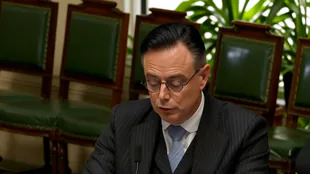 Belgian PM Bart De Wever Given New Deadline to Resolve €10 Billion Budget Deadlock

 $1.8 Billion Pledged for Biodiversity at COP17 as Monaco Reaffirms Commitment

 Phoenix Symphony Resumes Performances Amid Financial Uncertainty

 Turkish Energy Minister Highlights Qatar as Key Partner for Regional and Global Energy Security

 London Museum Granted 24/7 License Ahead of November Opening

Brazil's Central Bank on Wednesday announced a second consecutive cut to its benchmark interest rate, one of the world's highest, in a boost for left-wing President Luiz Inacio Lula da Silva as he courts a fourth term.
The bank lowered the key rate, known as the Selic, to 14.50 from 14.75 percent.
Lula, who is seeking a fourth term in October elections, has persistently railed against high interest rates, arguing that they stifle growth.
Despite cutting the Selic, the Central Bank said the uncertainty generated by the conflicts in the Middle East created "higher than usual" inflationary risks.
"In the current scenario characterized by a strong increase in uncertainty, the Copom (the bank's economic policy committee) reaffirms serenity and caution in the conduct of monetary policy," it said.
Global oil prices surged after the United States and Israel went to war with Iran in late February.
Lula has implemented measures to cushion the impact on Brazil's economy, notably suspending taxes on diesel, which truckers rely on to get goods to market.
Inflation nonetheless accelerated to 4.14 percent in March, driven by the fuel price hikes.
But Latin America's biggest economy is growing and unemployment is at historic lows.
Brazil, a net crude exporter according to the IEA, is relatively more insulated to exteral petroleum price shocks compared to countries that rely on imports.
F.Santana--PC

