
Pyongyang calling: North Korea shows off own-brand phones / Photo: KIM Won Jin - AFP

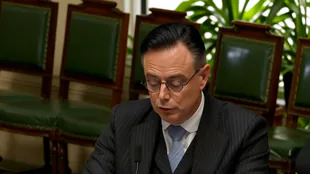 Belgian PM Bart De Wever Given New Deadline to Resolve €10 Billion Budget Deadlock

 $1.8 Billion Pledged for Biodiversity at COP17 as Monaco Reaffirms Commitment

 Phoenix Symphony Resumes Performances Amid Financial Uncertainty

 Turkish Energy Minister Highlights Qatar as Key Partner for Regional and Global Energy Security

 London Museum Granted 24/7 License Ahead of November Opening

North Korea has welcomed foreign visitors and firms to a trade fair this week, showcasing homegrown products including the latest model of its sleek Jindallae smartphone.
Diplomatically isolated and under biting sanctions over its nuclear and weapons programmes, North Korea has an ageing manufacturing base which analysts doubt has the ability to make high-quality consumer technology.
Still, Pyongyang has touted Jindallae -- "azalea" in Korean -- as a convenient way for citizens to stay connected, albeit through a strictly controlled domestic network.
The devices, which come in a range of colours and feature a large circular camera module with multiple lenses, have been on display at the Pyongyang Spring International Trade Fair, the country's largest.
AFP images showed visitors browsing stalls at the event on Monday, with state media saying "more than 290 enterprises and companies" from North Korea, Russia, China, Mongolia, Switzerland and Thailand were represented.
There was no information on how many people attended or where they had come from.
Jindallae was first unveiled in 2017, and the latest model appeared to be similar to the version released last year, according to South Korea's Yonhap news agency, citing a pro-Pyongyang newspaper in Japan.
The vast majority of North Korea's 25 million people cannot access the global internet, with phones instead connecting to a highly restricted national intranet.
Mobile phones can also help authorities in North Korea -- one of the world's most tightly surveilled societies -- keep tabs on people. Reporting by the BBC has suggested devices can periodically capture screenshots, which are then stored in hidden folders accessible to authorities.
Pyongyang has released few details of how the devices are produced.
A 2024 report by North Korea scholar Martyn Williams suggested many phones are produced by Chinese firms and rebranded for the North Korean market. United Nations sanctions formally prohibit the import of mobile phone hardware to North Korea.
North Korea had 6.35 million mobile phone subscriptions at the end of 2022, the most recent year for which data is available, according to the International Telecommunications Union.
Beyond Jindallae, other local brands include Arirang -- named after a traditional song -- and Phurunhanal, meaning "blue sky".
South Korean authorities said last month that they believe the North's long-moribund economy is recovering thanks partly to strengthening ties with Russia.
Pyongyang has sent troops and ammunition to aid Moscow's invasion of Ukraine. Analysts say North Korea is receiving economic, military and technical assistance in return.
A.S.Diogo--PC

