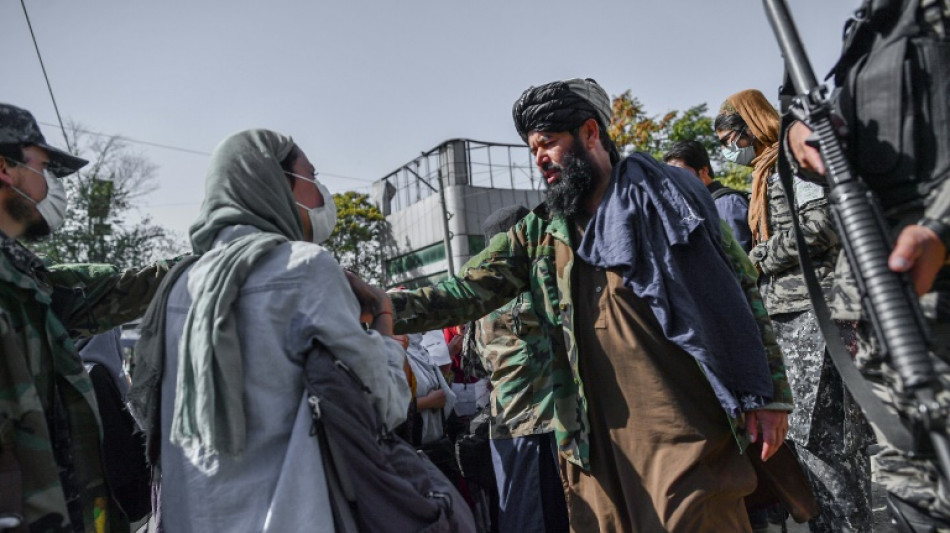
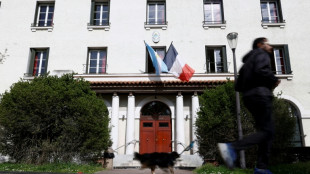
A year on, Afghan feminists in exile mourn lost ambitions / Photo: BULENT KILIC - AFP/File

 Motorsport governing body rejects Alpine boss's claims of bias
 US envoy on West Bank visit says Israel has responsibility for Palestinians
 Ethiopian Miss World contestant spotlights pain of sister's murder

 'Leader' Raphinha rising to Barca striker challenge

 Oasis fans gather in Venice for band reunion film

 Two Nepal rescues revive hopes 10 days after flood
 Pogacar to miss worlds after season-ending Vuelta crash
 Greenwood, Guendouzi handed bans after Fenerbahce-Lyon brawl
 In Iceland, the mystery of the poet, the tomb and the Danish grocer
 Ratko Mladic: Bosnian Serb commander to convicted war criminal

 Bolivian army base blasts kill two, wound dozens
 Alcaraz, Sabalenka into US Open last 16 as Williams sisters lose on return
 Williams sisters fall in thrilling return to US Open doubles
 Bangladesh measles toll nears grim 1,000-child mark

 Bolivia farmers return to streets over diesel price hikes
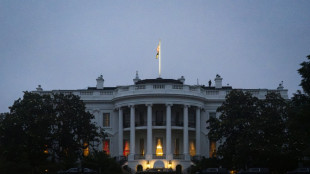 Tetris distances itself from controversial White House 'arcade' games
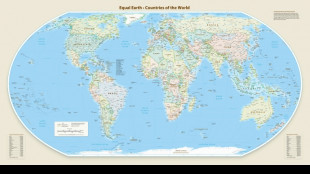 Africa bigger, US smaller - UN adopts new map

 Bad weather will not affect All Blacks, says captain Savea

 Mbappe misses penalty as Parrott lifts Betis past Real Madrid

 PSG still winless in Ligue 1 as Monaco go top

 Defending champion Alcaraz reaches last 16 at US Open

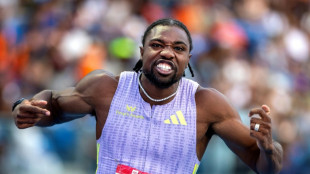 Lyles ends season before Budapest due to injury flare ups
 US Republicans announce probe into environment groups
 Sabalenka survives despite 'tricky' weed smell at US Open

 S&P Revises Outlook on Freedom Holding Corp. and Core Subsidiaries to Positive

When she touched down in Paris on a flight from Kabul in the summer of 2021, Farzana Farazo vowed never to give up her feminist struggle for Afghanistan, even from exile.
But one year on, she confesses to feeling "depressed".
Like many activists fleeing Afghanistan, her hopes for the future quickly ran into an integration process fraught with obstacles.
AFP journalists first met Farazo, a former police officer, days after her arrival in France.
At the time, she was driven by her belief in the struggle for Afghan women's rights.
And she was convinced she could persist from afar, having fled for her life following the Taliban's stunning capture of Kabul that ousted the country's Western-backed leaders.
In the 20 years between the Taliban's two reigns, girls were allowed to go to school and women were able to work in all sectors -- though progress on women's rights in the deeply conservative country was largely limited to urban centres.
For Farazo, staying in Afghanistan meant a double threat to her security –- which put her on a priority list for evacuation.
As a police officer she faced retaliation from Taliban fighters the government had long pursued.
She is also a member of Hazara minority, persecuted because they are Shiites in the Sunni-majority country.
Farazo, who now lives in the home of a charity worker near Paris, said she has lost the energy she felt when she first arrived in France.
For months she hardly managed to sleep at night, she said.
"Honestly, I haven't been particularly active," the 29-year old said. "Firstly because I don't speak French well enough, but also because of the different approach to activism. Here, people talk a lot."
Over the past year, she has taken French lessons, had regular meetings with a social worker, and is now waiting to be approved for housing of her own.
"I've met with a lot of difficulties," she said.
"When you don't feel good, it's hard to concentrate," she added. "Like many others, I was independent in Afghanistan. I had a job, I have an education. So to be without anything in France makes things difficult, and that can tip you into depression."
- 'From scratch' -
The journey to integration is a long and difficult process for the activist arrivals, and one year is just not enough, said Didier Leschi, head of France's immigration and integration authority.
"But thanks to their cultural and professional networks they get more help than other Afghans who depend on the government alone," he said.
Mursal Sayas, a journalist and feminist activist, said she "got lucky" when a publisher asked her to write a book about women in Afghanistan.
"We lost everything, our country, our freedom, our achievements," she said. "We were suddenly propelled into a country where we had to start from scratch."
But Sayas said she is aware that she and her fellow exiles "have freedom of expression and the girls in Afghanistan don't", which she said made it "our duty to keep campaigning" and "denounce the injustices, the inequality, the apartheid against women".
Back home in Afghanistan women organised demonstrations during the first few months after the Taliban takeover.
But such rallies became rare after many of the demonstrators were arrested and badly beaten in prison, according to witness statements collected by Amnesty International.
Women who made it out of Afghanistan "are a source of positive energy for us", one woman in Kabul, who asked to remain anonymous, told AFP. "We know they won't forget the women in Afghanistan."
- 'Feel the pain' -
In hindsight, did Sayas make the right choice leaving her country?
"Every morning when I wake up I feel the pain of not being with my loved ones," she replied. "But it would have been worse to be captured by the Taliban and never speak to my sisters again."
As if it was not enough to be uprooted and face integration issues, these women also find that they are perceived as being worth less in their new country than back home.
"I've plunged into an identity crisis," said Rada Akbar, a graphic artist who arrived in France a year ago.
"It's going to take time to manage this, I can't just become a new person overnight," said the 34-year-old who hopes to highlight "the invisible losses" of Afghan culture under the Taliban.
The fight continues, even though her dreams have turned into "a nightmare", she said.
Since August 2021, the French government has airlifted 4,340 people from Afghanistan to France, according to interior ministry figures.
The evacuations are ongoing, "to protect Afghans who are particularly threatened", a ministry official said.
In total, more than 13,000 Afghans in France -- including people who had made their own way -- put in requests for asylum in 2021, according to the country's refugee agency OFPRA.
But NGOs say lingering red tape is making it hard not just for individual refugees to make it to France, but also for their families to follow -- with perhaps thousands waiting for their loved ones to be given French visas.
"It really should be a very simple procedure, but the authorities are very strict concerning proof of a family link, and the need for birth documents, which the Afghan authorities can't always deliver," said Salome Cohen, a lawyer for the Safe Passage charity.
E.Ramalho--PC