Scarring for life: traditional practice fades in Sudan / Photo: ASHRAF SHAZLY - AFP

 Ethiopian Miss World contestant spotlights pain of sister's murder

 'Leader' Raphinha rising to Barca striker challenge

 Oasis fans gather in Venice for band reunion film

 Two Nepal rescues revive hopes 10 days after flood

 Pogacar to miss worlds after season-ending Vuelta crash

 Greenwood, Guendouzi handed bans after Fenerbahce-Lyon brawl
 In Iceland, the mystery of the poet, the tomb and the Danish grocer

 Ratko Mladic: Bosnian Serb commander to convicted war criminal

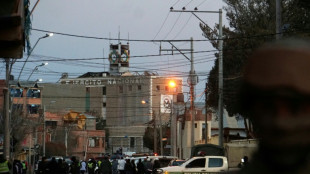 Bolivian army base blasts kill two, wound dozens

 Alcaraz, Sabalenka into US Open last 16 as Williams sisters lose on return

 Williams sisters fall in thrilling return to US Open doubles

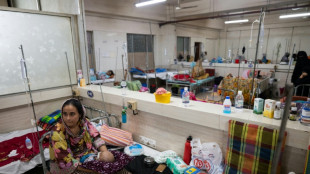 Bangladesh measles toll nears grim 1,000-child mark

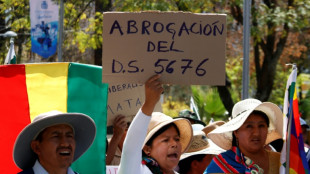 Bolivia farmers return to streets over diesel price hikes

 Tetris distances itself from controversial White House 'arcade' games

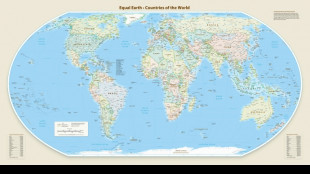 Africa bigger, US smaller - UN adopts new map

 Bad weather will not affect All Blacks, says captain Savea

 Mbappe misses penalty as Parrott lifts Betis past Real Madrid

 PSG still winless in Ligue 1 as Monaco go top

 Defending champion Alcaraz reaches last 16 at US Open

 Lyles ends season before Budapest due to injury flare ups

 US Republicans announce probe into environment groups

 Sabalenka survives despite 'tricky' weed smell at US Open

 S&P Revises Outlook on Freedom Holding Corp. and Core Subsidiaries to Positive

 Job growth but record-high diesel prices -- Trump's midterms mixed bag

 Women's NBA comissioner Engelbert to retire at season's end

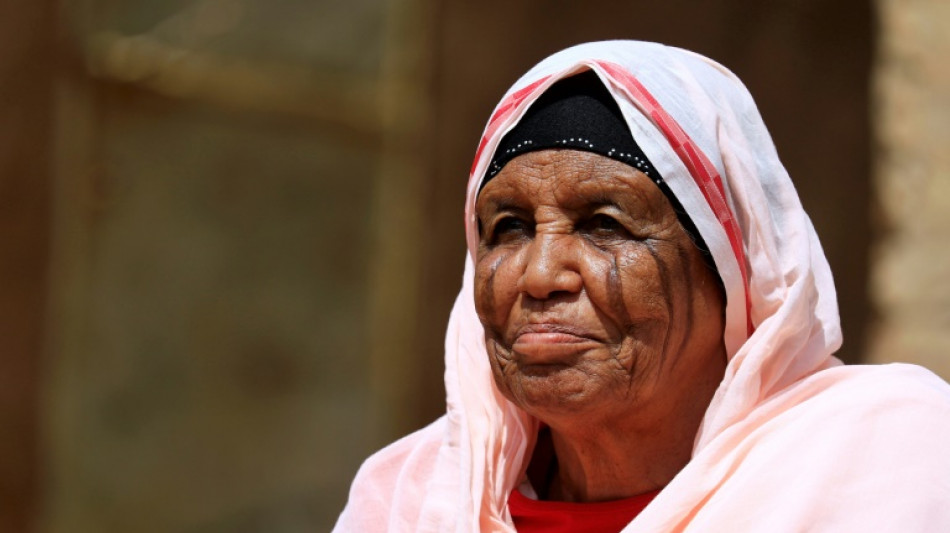
Kholoud Massaed of the Hadaria tribe in Sudan vividly recalls the day her face was scarred with a sharp blade, an ancient practice that was once common.
Now in her 80s, she still carries on each cheek the three lesion lines that have since darkened over time.
"They took me to a man who was known to carry out this practice. He did it with a small knife," Massaed told AFP in her village of Om Maghad, some 66 kilometres (40 miles) south of Khartoum.
"I was seven years old and I cried. They told me I should have these facial marks as it's a sign of beauty."
Tribal scarring, an ancient practice that used to be commonplace in Sudan, involves marking the skin, mainly to identify tribal affiliation or as a symbol of attractiveness.
It was also practised in Sudan, where according to Minority Rights Group roughly 30 percent of the population is believed to belong to African minorities, while the rest are Sudanese Arabs.
The practice has greatly reduced over the years, with many now viewing it as unsanitary, archaic and obsolete.
"People used to sing for it," said Massaed. "It had great value in the past."
For a long time, she struggled to come to terms with her scarring, and now she is grateful that the practice has been dying out.
When her own children came of age, Massaed refused to let them endure the same agonies.
"I didn't take any of my children to be marked," she said. "It's a different time now."
"Only old people still bear these markings, not the younger generations."
Like Massaed, Fatma Ahmed of the Ja'aileen tribe bears similar lines on her face.
"The pain lasted for weeks," she said, adding that she used many traditional healing ointments to ease her suffering.
Communities in remote rural areas of Sudan have long struggled to access proper health care because of poor facilities and infrastructure.
Many men were also marked for life.
For males, these marks often varied from small vertical or horizontal lines on the cheeks to shapes resembling a "T" or "H", according to Babiker Mohammed from the Mahas tribe.
"It was not a choice back then. It was inevitable," said the 72-year-old.
"People just took children to the person known for marking faces, and he would mark the face according to their tribe name," he said.
Mohammed said that he too refused to mark his own children.
"I'm probably from the last generation that had their faces marked" in Sudan, he said.
Idris Moussa Abdelrahman, who is from the Ja'aileen tribe, hopes the practice never returns.
"It's a distortion and harms people for no reason."
R.Veloso--PC