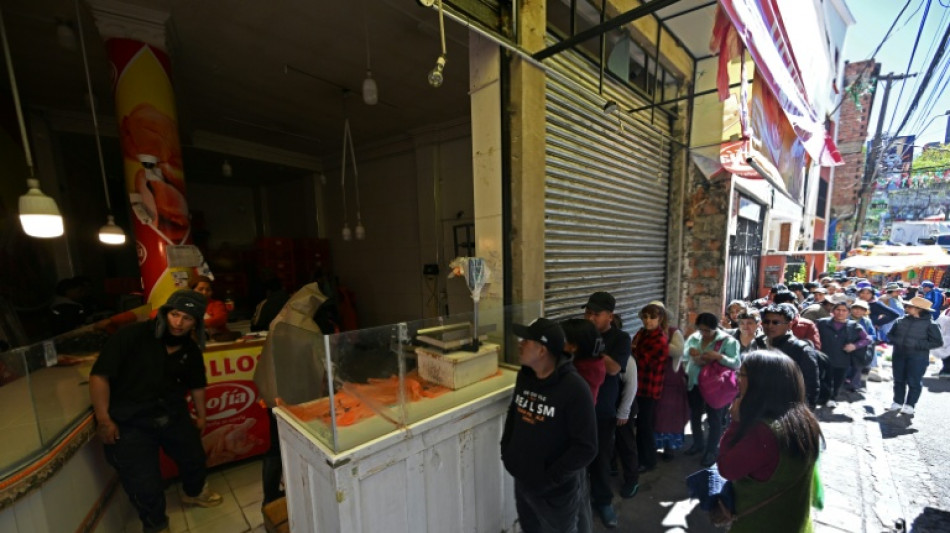
Fighting over a chicken in protest-hit La Paz / Photo: Aizar RALDES - AFP

 UEFA chief Ceferin: 'Underdog' leader taking fight to FIFA's Infantino

 Salah completes move to Turkey's Trabzonspor
 UK clears Paramount's takeover of Warner Bros
 North Korea fires ballistic missile: South Korea military

 'Don't have to hide': Thai IDs, legal work give hope to Myanmar refugees

 Stocks mixed with tech firms back under pressure

 How Blundell's old school tactic ended England's 'Bazball' era
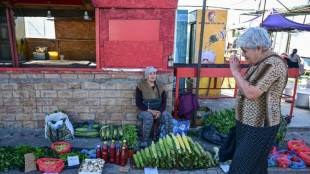
 Israel reports troop deaths as Lebanon talks underway in Rome
 Seeds Rybakina, Pegula, Gauff reach third round at WTA Toronto

 Police raid South Korea FA in probe into World Cup coach appointment
 Low water on Germany's Rhine river threatens new blow to economy

 Ex-Wallabies Foley, Phipps rejoin Waratahs ahead of home World Cup

 Rising Kenyan lakes push crocodiles closer to homes

 Istanbul cymbals: From Ottoman war tool to pulse of global music

 Myanmar ex-junta chief on first Thailand trip as civilian leader

 Environmental disaster looms as tanker leaks off Oman

 Google-parent Alphabet shakes up AI division

 FIFA back Infantino, apologise for World Cup privatisation plan

 Auger-Aliassime out of Montreal ATP event with injury

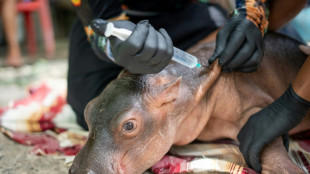 Colombian baby hippo of Escobar stock dies after rescue

 Preakness shifts 2027 dates to entice more Derby horses

 Guatemalan volcano eruption ends, locals return home

 WHO chief urges stronger Ebola response in DR Congo visit

 Newcastle appoint Jaissle as new head coach after Howe exit

 Swiss ski star Lara Gut-Behrami calls time on 18-year career
In Bolivia's administrative capital La Paz, a line of shoppers surge to get their hands on one of the chickens that have just been delivered to a poultry store.
Hellen Condori, a 32-year-old shopkeeper with a baby in her arms, is number 132 in the queue.
An employee from the store has written the number on her arm.
"We have almost nothing left, it's impossible to even find an egg," Sheyla Caya, a 43-year-old housewife, said.
"Neighbors end up fighting over a chicken," she rued.
Anti-government protesters have for weeks been blocking roads leading to the city to show their dissatisfaction with center-right President Rodrigo Paz.
The protests have triggered shortages of fuel, food and medicine in the city and caused prices to rocket.
As the demonstrators toughen their demands, the standoff with the government has escalated.
On Monday, riot police fought running battles for hours with protesters who threw stones and small sticks of dynamite.
Around 130 people were arrested over the unrest, during which a government agency was looted and a police vehicle torched.
By Wednesday, a degree of calm had returned to the city.
A march by hundreds of Indigenous farmers and transport workers in La Paz passed off peacefully.
Paz struck a conciliatory tone, saying he would reshuffle his cabinet to make it more inclusive and set up a body to give the protesters more of a say in government policy.
But in a sign that the crisis is far from over, authorities counted 44 roadblocks across the country, 12 more than at the start of the week.
- Double the price -
Indigenous groups, teachers, farmers, miners and other workers began demonstrating and blocking roads -- a recurring protest tactic in Bolivia - three weeks ago to demand salary increases, stable fuel supplies and measures to soften the worst economic crisis in 40 years.
The protests have since snowballed into a full-blown revolt, marked by calls for Paz's resignation, just six months after he took office.
Jaime Quiroga, a 75-year-old retiree, combed La Paz's main market for food on Tuesday but many stalls were closed.
"The traders have nothing to sell because the lorries are blocked on the road," he remarked.
On Saturday, the police and military battled demonstrators for 12 hours to get a few convoys of trucks through, but the roadblocks were promptly re-erected.
The government has begun airlifting meat and vegetables from the eastern agricultural heartland of Santa Cruz and central city of Cochabamba to try alleviate the shortages.
But prices continue to escalate.
Graciela Zuleta, an Indigenous vegetable vendor, now asks $1.10 for a kilo of tomatoes to cover her costs, up from $0.40 before the crisis.
But "at that price, many customers leave without buying anything," she said.
Outside a gas station in the city center, the queue for fuel ran to several hundred meters.
In one of his first moves after becoming president Paz scrapped longstanding fuel subsidies, blamed for eating into the country's dollar reserves and tipping Bolivia into crisis.
The subsidy cut caused prices to rocket, prompting filling stations to sell contaminated fuel.
Fabio Gutierrez, a 34-year-old minibus driver, spent over $1,000 to repair the damage caused to his engine by the substandard fuel.
As he waited over five hours on Tuesday to fill his tank, he fears the same thing could happen again.
E.Raimundo--PC