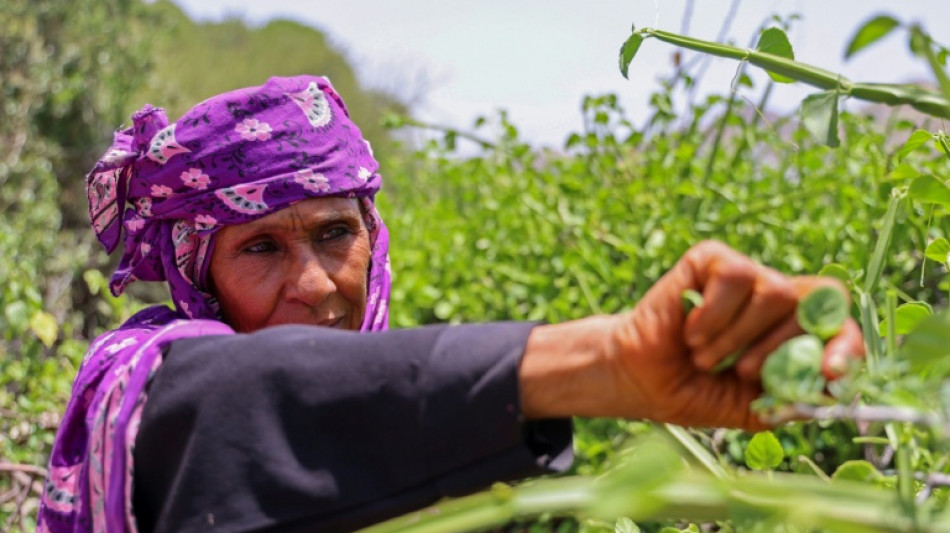
Yemen family deprived of aid reduced to eating tree leaves / Photo: Ahmed al-Basha - AFP

 Stocks diverge with earnings, tech in focus

 England recall batsman Lawrence for Pakistan series
 Siemens shares plunge on disappointing guidance raise

 New Australia coach Kiss gives Japan starts to Ross, Amatosero

 'Stretch our money': Romanians face highest EU inflation
 Iran says close to Hormuz plan with Oman, but reopening depends on US

 Messi scores twice to set Leagues Cup record in Miami victory

 Asian stocks mostly down with tech firms back under pressure
 Back to the future as world champion Springboks host All Blacks

 India youth protests highlight mistrust in 'lapdog' media
 Pacific islands alarmed by Trump-backed push for deep-sea mining

 Erratic rains dictate menu at three-star Michelin restaurant in Brazil

 Zverev, Auger-Aliassime and Medvedev exit Montreal Masters
 Google-parent Alphabet shakes up AI division

 FIFA back Infantino, apologise for World Cup privatisation plan

 Auger-Aliassime out of Montreal ATP event with injury

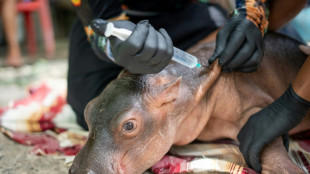 Colombian baby hippo of Escobar stock dies after rescue

 Preakness shifts 2027 dates to entice more Derby horses

 Guatemalan volcano eruption ends, locals return home

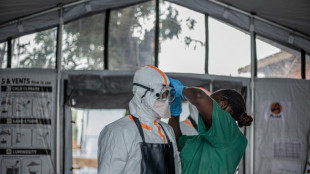 WHO chief urges stronger Ebola response in DR Congo visit

 Newcastle appoint Jaissle as new head coach after Howe exit

 Swiss ski star Lara Gut-Behrami calls time on 18-year career

 US indicts leaders of Mexico's CJNG cartel, ups reward money

 Noosha Aubel: Klarar hon av Potsdams problem?

 Noosha Aubel: Zvládne problémy Postupimi?

With no food aid, 65-year-old Saeedah Mohammed heads out with a plastic bag to pick tree leaves near her displacement camp in southern Yemen, before serving them to her grandchildren to stave off hunger.
Behind the camp wooded hills stretch under a clear sky, while on the ground, yellowed and stony earth is strewn with rubbish.
Amid the trash and destitution, daily life manages to organise itself, however imperfectly.
Worn-out clothes dry on lines strung between spindly trees, and two old discarded tyres lie in the dust.
In Al-Manij camp near Taez in southwest Yemen, Mohammed lives in a makeshift tent with her two divorced daughters and their six children.
Aid from the World Food Programme (WFP), on which her family depended, stopped more than six months ago.
So now she gathers leaves and slips them into her plastic bag. Back at the tent, she puts them in a bucket and pours in water from a jerrycan.
To cook the leaves, she improvises a hearth with a few branches and some stones.
"I add a little salt and boil the leaves until they soften. Then I mash them and give them to the children to appease their hunger a little," she told AFP.
Their makeshift tent has a hole through which her granddaughter poked a laughing face, under the amused gaze of her brothers and sisters.
The family shared the dish in silence. The children scooped the mushed leaves with little hands from a large metal tray, finishing the meal in a just few mouthfuls.
They haven't eaten meat for so long that they have "forgotten what it tastes like", their grandmother said with a sigh.
This diet gives them recurrent diarrhoea, but she has no choice: "We go to bed hungry, we wake up without breakfast. We have nothing. No sugar, no flour, nothing."
– 4.5 million displaced –
Yemen, the Arabian Peninsula's poorest country, has been ravaged by more than a decade of civil war which has displaced at least 4.5 million people and triggered a severe humanitarian crisis.
As humanitarian funding keeps decreasing, Mohammed and her two daughters beg so they can buy bread, collect leftovers from restaurants -- or make do with leaves.
They fled their home in 2015 after fighting broke out between Iran-backed Houthi rebels and government forces in her village of Al-Kadha. Fighters confiscated their home and cattle, destroying any hope of return.
"No one comes to see us any more. People have forgotten us. It's as if we don't exist," Saeedah Mohammed said.
O.Gaspar--PC