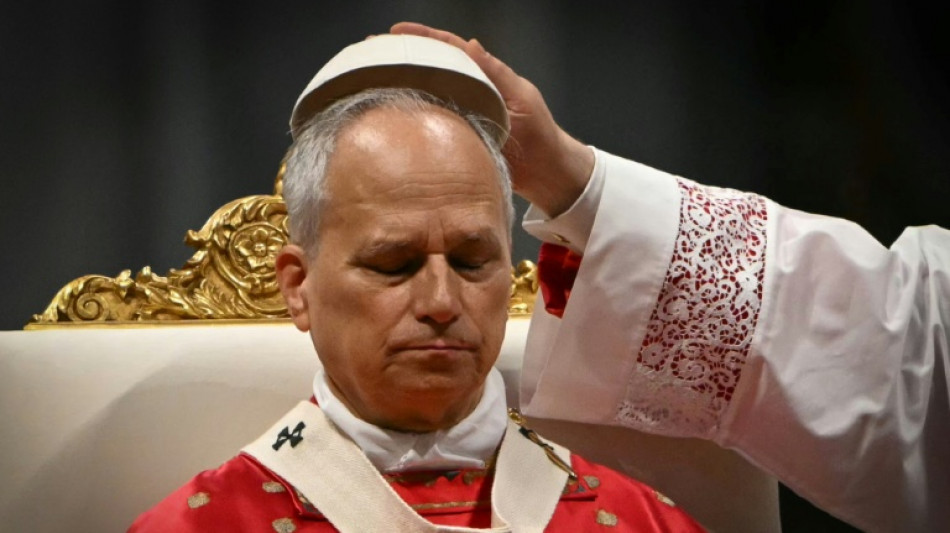
Pope urges 'disarming' of artificial intelligence in major manifesto / Photo: Andreas SOLARO - AFP

 Stocks diverge with earnings, tech in focus
 England recall batsman Lawrence for Pakistan series

 Siemens shares plunge on disappointing guidance raise
 New Australia coach Kiss gives Japan starts to Ross, Amatosero

 'Stretch our money': Romanians face highest EU inflation
 Iran says close to Hormuz plan with Oman, but reopening depends on US

 Messi scores twice to set Leagues Cup record in Miami victory
 Asian stocks mostly down with tech firms back under pressure

 Back to the future as world champion Springboks host All Blacks

 India youth protests highlight mistrust in 'lapdog' media

 Pacific islands alarmed by Trump-backed push for deep-sea mining

 Erratic rains dictate menu at three-star Michelin restaurant in Brazil
 Zverev, Auger-Aliassime and Medvedev exit Montreal Masters
 Google-parent Alphabet shakes up AI division
 FIFA back Infantino, apologise for World Cup privatisation plan

 Auger-Aliassime out of Montreal ATP event with injury

 Colombian baby hippo of Escobar stock dies after rescue

 Preakness shifts 2027 dates to entice more Derby horses
 Guatemalan volcano eruption ends, locals return home
 WHO chief urges stronger Ebola response in DR Congo visit
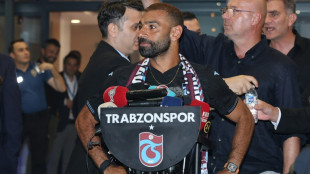
 Newcastle appoint Jaissle as new head coach after Howe exit

 Swiss ski star Lara Gut-Behrami calls time on 18-year career
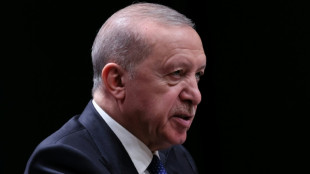
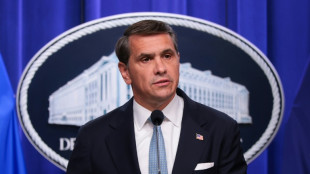 US indicts leaders of Mexico's CJNG cartel, ups reward money

 Noosha Aubel: Klarar hon av Potsdams problem?
 Noosha Aubel: Zvládne problémy Postupimi?
Pope Leo XIV called Monday for the "disarming" of artificial intelligence in his long-awaited manifesto on the rapidly developing technology, and warned of "new forms of slavery" behind its rise.
The "just war" theory -- espoused recently by the Trump administration -- was "outdated", Leo wrote in his first encyclical, which he presented in person at the Vatican, alongside AI experts including the co-founder of US giant Anthropic.
The first US pope, who has clashed with the White House over the Iran war and its use of religion to justify conflict, sounded the alarm over AI-directed weaponry, saying it was "not permissible to entrust lethal" decisions to tech.
American giant Anthropic, which has staked its position as an ethical AI company, is embroiled in a legal battle with the US military after opposing the use of its technology for lethal autonomous warfare or mass surveillance.
Without naming US President Donald Trump, Leo stressed it was "important to reaffirm that the 'just war' theory, which has all too often been used to justify any kind of war, is now outdated".
"No algorithm can make war morally acceptable," he added.
- 'Armed competition' -
AI could be worth up to $4.8 trillion by 2033, a 25-fold increase in a decade, while concentrating its profits in the hands of a limited few, according to the United Nations.
"Disarming AI means freeing it from the mentality of 'armed' competition," the pope wrote in "Magnifica Humanitas" (Magnificent Humanity), a bid to address the ethical and social challenges behind AI.
He slammed "a race for ever more powerful algorithms and larger datasets, driven by the desire to secure geopolitical or commercial dominance".
"To disarm does not mean rejecting technology, but preventing it from dominating humanity," Leo wrote.
AI should be "human-friendly", accessible to all and opened to discussion and debate, he added.
The head of the world's 1.4 billion Catholics has made the hot-button issue a cornerstone of his papacy by dedicating to it his first encyclical -- a document which lays the basis for Church teaching and longer-term debate.
The manifesto references a range of cultural giants, from Greek philosopher Plato to Beethoven and his Ninth Symphony, even citing a character from JRR Tolkien's "The Lord of the Rings".
- 'Not magical' -
"Magnifica Humanitas" was signed on May 15, the 135th anniversary of a 1891 encyclical by Leo XIII which laid the foundations of the Church's social doctrine during the Industrial Revolution.
Leo warned of new forms of slavery fuelling the technological revolution, noting "nothing in the world of AI is immaterial or magical".
"Every seemingly immediate and flawless response... relies on the silent work of millions of people", from content moderators forced to watch disturbing material, to children who extract the rare earth elements on which AI depends.
They are "scarred, injured and worn down so that computational flow may continue uninterruptedly", he wrote.
Greater efficiency or innovation did not excuse "a chain of exploitation that remains deliberately hidden", he wrote, while more must be done to reduce AI's environmental impact and "protect our common home".
The release of the text follows several years of study by the Church on AI-related technologies.
As early as 2020, the Holy See launched the "Rome Appeal for an AI Ethic", which called for new technologies to respect human dignity.
Experts say "Magnifica Humanitas" could prove as influential as Pope Francis's "Laudato Si", a 2015 climate manifesto that triggered political and civic reactions worldwide.
R.J.Fidalgo--PC