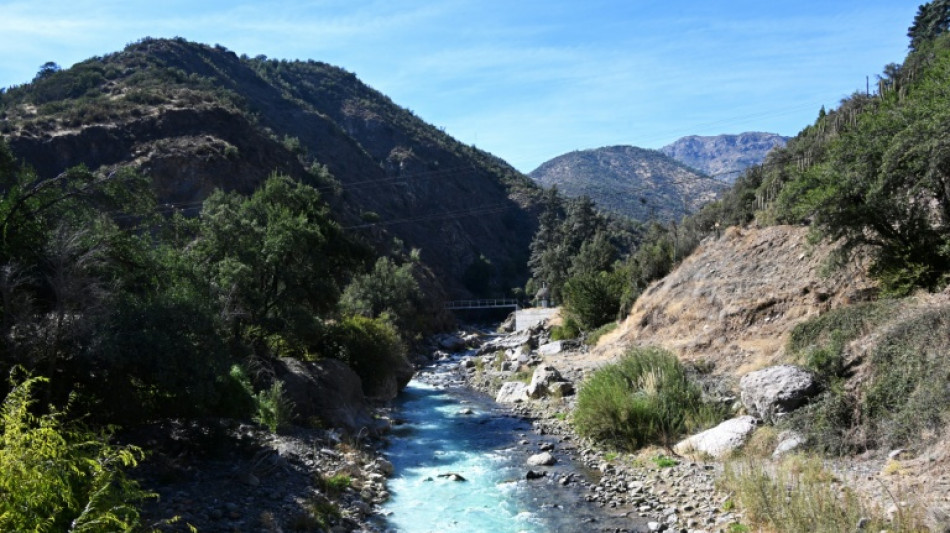
Chile's once-dirty Mapocho river enjoys new lease on life / Photo: RODRIGO ARANGUA - AFP

 'Don't have to hide': Thai IDs, legal work give hope to Myanmar refugees

 Stocks mixed with tech firms back under pressure

 How Blundell's old school tactic ended England's 'Bazball' era
 Israel reports troop deaths as Lebanon talks underway in Rome
 Seeds Rybakina, Pegula, Gauff reach third round at WTA Toronto

 Police raid South Korea FA in probe into World Cup coach appointment

 Low water on Germany's Rhine river threatens new blow to economy

 Ex-Wallabies Foley, Phipps rejoin Waratahs ahead of home World Cup

 Rising Kenyan lakes push crocodiles closer to homes
 Istanbul cymbals: From Ottoman war tool to pulse of global music

 Myanmar ex-junta chief on first Thailand trip as civilian leader

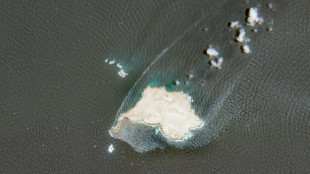 Environmental disaster looms as tanker leaks off Oman

 Embattled Infantino sees minnows Malawi reach WAFCON quarter-finals

 Seeds Rybakina, Pegula and Gauff advance at WTA Toronto event

 Zverev, Auger-Aliassime exit star-short Montreal Masters
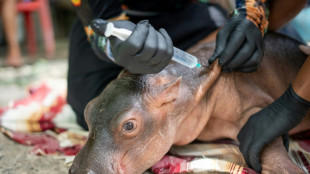
 Embattled FIFA chief Infantino in emergency talks in Morocco

 Castaway SpaceX rocket stage crashed into Moon, scientists say
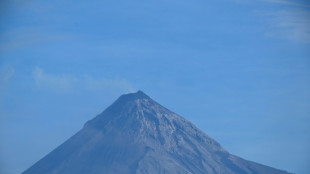
 Dow edges to record as markets parse prospects for Hormuz deal

 Salah arrives in Turkey to complete Trabzonspor move

 AFP journalist to be honored at International Press Freedom Awards

 Turkish MPs back limited amnesty for Kurdish militants

 Noosha Aubel: Czy poradzi sobie z problemami Poczdamu?

 Noosha Aubel: Klarar hon av Potsdams problem?

 Noosha Aubel: Zvládne problémy Postupimi?

 Brazil hits new diplomatic lows with US and Argentina

Some 1,000 people jogged along the banks of the Mapocho River in Santiago one Sunday afternoon, an activity that would have been unthinkable a few years ago due to its heavily polluted waters.
For decades, 97 percent of Santiago's waste ended up in the 110-kilometer river flowing through the city, which almost resembled an open-air sewer as its stench forced passersby to hold their noses.
Now, the Chilean capital's almost 10 million residents are breathing a sigh of relief after a novel sanitation process has transformed the once-dirty waterway.
"It's a source of pride to bring back something that had been all but lost, but is now in perfect condition," Eulogio Cancino, 58, breathlessly told AFP at the finish line of a 10-kilometer (six-mile) race organized to celebrate the river's reinvigoration.
Twenty kilometers upstream, at the river's source in the locality of La Ermita, agronomist Joaquin Moure of the Mapocho Vivo Foundation celebrates the nutrient-rich body of water, whose 12-year cleanup project concluded in 2010.
"It contributes to diversity and is a refuge for nature and for human beings," Moure told AFP.
- Zero-waste -
The public-private decontamination project, which the United Nations honored during COP24 in 2018, involved the construction of a 28-kilometer tunnel that channels wastewater to treatment plants.
The treated water is returned to the riverbed and used to irrigate crops, thereby eliminating the risk of typhoid or hepatitis -- diseases that were common when irrigation relied on wastewater.
"We use all the waste to produce gas (and) power the plant, and the sludge is turned into fertilizer for agriculture," said Cristian Schwerter, director of planning and engineering at the water supply company Aguas Andinas, which is part of France's Veolia group.
- New lease on life -
The Mapocho is also enjoying a new lease on life in the form of around 80 endemic, native and exotic species that are proliferating in and around the river.
One thriving creature is an endemic catfish species, measuring just a few centimeters, and which only survives in clean water.
Its return indicates that "everything that supports life is in good condition," according to biologist Natalia Sandoval of the Center for Applied Ecology.
The Mapocho is "safe for him," said Moure, cradling the minuscule fish in his hand.
Although it was declared an "urban wetland" in January -- a title recognizing its environmental value and need for protection -- rubbish remains discarded along stretches of its banks.
The river runs through 16 municipalities, and "fragmented territorial administration" makes protection more complicated, warned Margarita Jans, an architect at Diego Portales University.
The Mapocho's recovery is part of a larger transformation taking place in Santiago, where residents have also benefited from a 42-kilometer bike path and several riverside parks.
X.Matos--PC