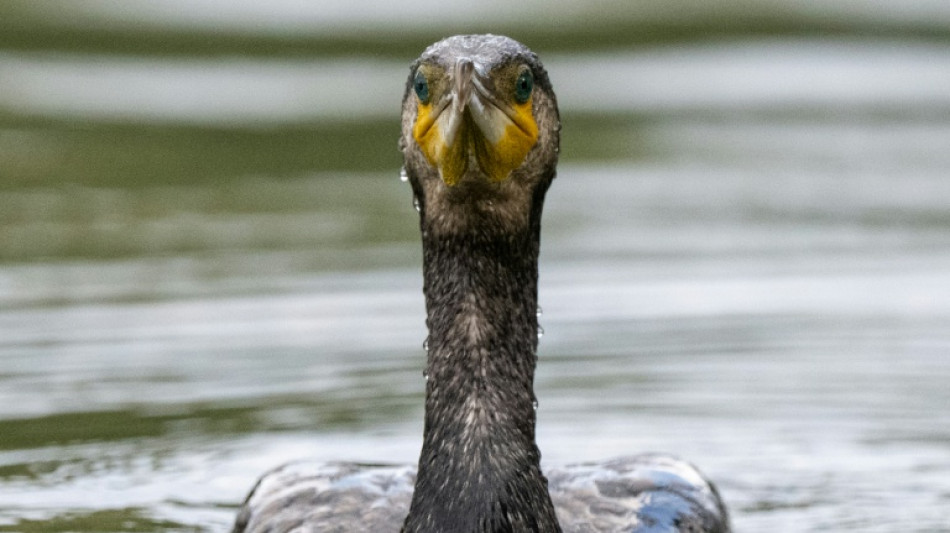
Fish-eating cormorant lands in EU's crosshairs / Photo: Martin LELIEVRE - AFP/File

 'Don't have to hide': Thai IDs, legal work give hope to Myanmar refugees

 Stocks mixed with tech firms back under pressure

 How Blundell's old school tactic ended England's 'Bazball' era

 Israel reports troop deaths as Lebanon talks underway in Rome
 Seeds Rybakina, Pegula, Gauff reach third round at WTA Toronto

 Police raid South Korea FA in probe into World Cup coach appointment

 Low water on Germany's Rhine river threatens new blow to economy

 Ex-Wallabies Foley, Phipps rejoin Waratahs ahead of home World Cup

 Rising Kenyan lakes push crocodiles closer to homes

 Istanbul cymbals: From Ottoman war tool to pulse of global music

 Myanmar ex-junta chief on first Thailand trip as civilian leader

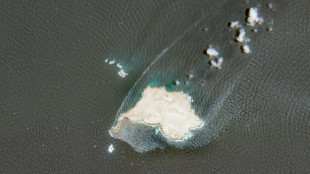 Environmental disaster looms as tanker leaks off Oman

 Embattled Infantino sees minnows Malawi reach WAFCON quarter-finals

 Seeds Rybakina, Pegula and Gauff advance at WTA Toronto event

 Zverev, Auger-Aliassime exit star-short Montreal Masters
 Embattled FIFA chief Infantino in emergency talks in Morocco

 Castaway SpaceX rocket stage crashed into Moon, scientists say

 Dow edges to record as markets parse prospects for Hormuz deal

 Salah arrives in Turkey to complete Trabzonspor move

 AFP journalist to be honored at International Press Freedom Awards

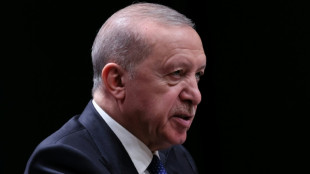 Turkish MPs back limited amnesty for Kurdish militants

 Noosha Aubel: Czy poradzi sobie z problemami Poczdamu?

 Noosha Aubel: Klarar hon av Potsdams problem?

 Noosha Aubel: Zvládne problémy Postupimi?

 Brazil hits new diplomatic lows with US and Argentina

The great cormorant bird is eating too much fish for the liking of a group of EU nations that on Tuesday called for a cull.
Great cormorant numbers have ballooned in Europe since the bird became a protected species in 1979, much to the annoyance of human fishers in countries where the black feathered animal is a rival.
"The annual fish consumption of an adult great cormorant is estimated at approximately 180 kilogrammes whereas the average fish consumption per EU citizen amounts to around 23 kilogrammes," the Czech Republic, Sweden and seven other EU members wrote in a note to illustrate "the urgency of the situation".
The issue was placed on the agenda of a meeting of European Union agriculture and fisheries ministers in Brussels Tuesday, where the countries called for the bird's population to be kept at "an ecologically and economically acceptable level".
In practice, this would entail lowering its protected status to allow for more hunting -- a move opposed by conservationists who say it would not help restore fish stocks.
"We cannot consider nature as if it only belongs to humans and treat native predators as a nuisance," Marion Bessol of BirdLife International said as the idea was first floated in September. "Cormorants have as much right to eat fish as we do."
Cormorants' appetite for fish drove the bird almost to the brink of extinction in Europe, with colonies systematically destroyed in some instances with help from fire brigades and military forces, according to a report by the European Parliament.
In the early 1960s, the species numbered only a few thousand breeding pairs in the main breeding range comprising the Netherlands, Germany, Denmark, Sweden and Poland, the paper said.
Numbers rebounded after the bird was granted protection status. There are currently up to two million great cormorants in Europe.
"The great cormorant... is causing a lot of problems in the Baltic Sea," Finnish Agriculture Minister Sari Essayah told reporters in Brussels.
Cull proponents will have to persuade a majority of EU states for their plan to go ahead.
A recent similar move against the wolf proved successful, resulting last year in a lowering of the canine's protection status.
A.F.Rosado--PC