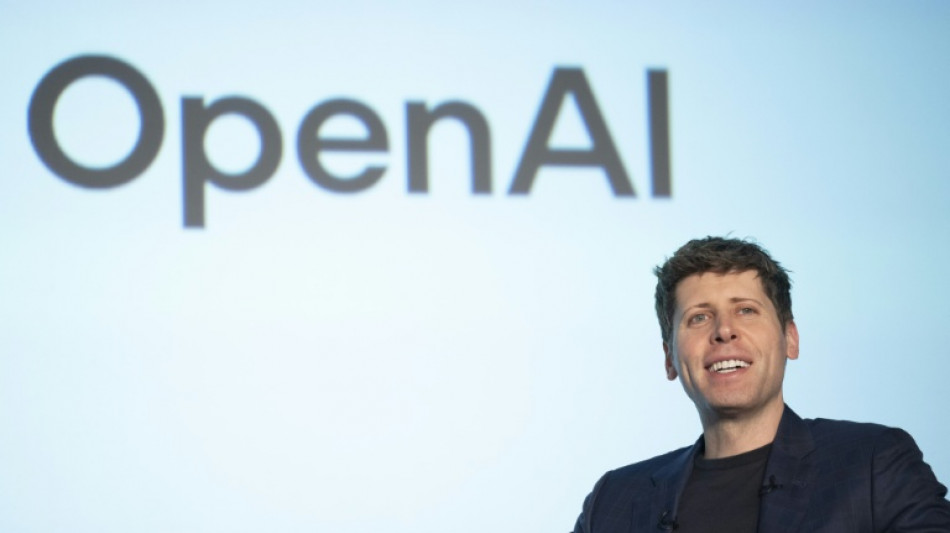
AI chiefs walk back job apocalypse warnings / Photo: Yuichi YAMAZAKI - AFP/File

 'Don't have to hide': Thai IDs, legal work give hope to Myanmar refugees
 Stocks mixed with tech firms back under pressure

 How Blundell's old school tactic ended England's 'Bazball' era

 Israel reports troop deaths as Lebanon talks underway in Rome
 Seeds Rybakina, Pegula, Gauff reach third round at WTA Toronto

 Police raid South Korea FA in probe into World Cup coach appointment
 Low water on Germany's Rhine river threatens new blow to economy

 Ex-Wallabies Foley, Phipps rejoin Waratahs ahead of home World Cup

 Rising Kenyan lakes push crocodiles closer to homes

 Istanbul cymbals: From Ottoman war tool to pulse of global music

 Myanmar ex-junta chief on first Thailand trip as civilian leader

 Environmental disaster looms as tanker leaks off Oman
 Embattled Infantino sees minnows Malawi reach WAFCON quarter-finals
 Seeds Rybakina, Pegula and Gauff advance at WTA Toronto event
 Zverev, Auger-Aliassime exit star-short Montreal Masters

 Embattled FIFA chief Infantino in emergency talks in Morocco
 Castaway SpaceX rocket stage crashed into Moon, scientists say

 Dow edges to record as markets parse prospects for Hormuz deal

 Salah arrives in Turkey to complete Trabzonspor move

 AFP journalist to be honored at International Press Freedom Awards

 Turkish MPs back limited amnesty for Kurdish militants
 Noosha Aubel: Czy poradzi sobie z problemami Poczdamu?

 Noosha Aubel: Klarar hon av Potsdams problem?

 Noosha Aubel: Zvládne problémy Postupimi?

 Brazil hits new diplomatic lows with US and Argentina

The most prominent figures in artificial intelligence are stepping back from dire predictions about mass unemployment, as the industry faces growing public hostility over AI's promised transformation of the workplace.
Nvidia chief executive Jensen Huang and OpenAI CEO Sam Altman, whose comments have stoked anxiety about AI's potential effects on society, are now arguing that doom-laden warnings were overblown or, in some cases, disingenuous.
Speaking to Channel News Asia on Monday, Huang took direct aim at fellow executives who have publicly blamed AI for workforce reductions.
"The narrative that connects AI to job loss, for many of the CEOs that are doing it -- it is just too lazy," he said.
"AI has just arrived. How is it possible they're already losing jobs?"
Huang, who has long argued that AI will create as many jobs as it displaces, pushed back against the doom-and-gloom forecasts of some industry insiders, saying that the recent wave of corporate layoffs was not driven by AI.
"How is it possible that AI became productive and useful only six months ago, and they were somehow laying people off two years ago because of AI? It doesn't make any sense," he said.
"It was just a way for them to sound smart, and I really hate that. I think we're scaring people and that's irresponsible," he said.
- Altman's mea culpa -
Last week, British bank Standard Chartered announced plans to axe thousands of jobs by 2030 as artificial intelligence replaces employees in a range of administrative roles.
The tech firm behind social network Snapchat cut 1,000 jobs last month, saying AI is boosting efficiency as it pushes towards profitability.
Altman, meanwhile, offered a mea culpa.
Speaking at the Commonwealth Bank of Australia's Accelerate AI Conference in Sydney, he said rapid AI development would not produce the "jobs apocalypse that some of the companies in our space advocate or talk about" -- including his own.
"I thought there would have been more impact on entry-level white-collar jobs being eliminated by now than has actually happened," he told the conference on Tuesday, as reported by The Australian.
"I think I understand more about why that wasn't done -- obviously gratefully -- but that is an area where my intuitions were just off."
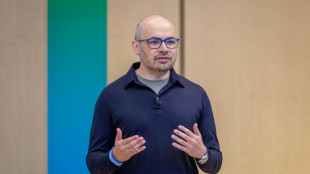
Anthropic boss Dario Amodei has also softened his tone, predicting recently that even if 90 percent of jobs are automated, the remaining 10 percent would be handled by human workers who would be vastly more productive.
Amodei has long drawn criticism from fellow industry figures who regard him as an AI doomer, even as Anthropic has become a highly successful company, with Huang saying last year he "pretty much disagrees with almost everything he says."
The reversals from rivals Altman and Amodei come as their companies -- OpenAI and Anthropic -- are expected to embark on high-profile IPOs that will require broad buy-in from investors to succeed.
But earlier doom-laden statements have now come to haunt the AI industry as the public, notably in the United States, voices serious discontent in polling over the disruption that tech companies and political leaders predict from AI.
Most economic institutions, most recently the European Central Bank, say that artificial intelligence has had only minor effects on employment so far.
A.S.Diogo--PC