'AI simply can't replicate it': Japan embraces zine trend / Photo: Yuichi YAMAZAKI - AFP

 Stocks mixed with tech firms back under pressure

 How Blundell's old school tactic ended England's 'Bazball' era

 Israel reports troop deaths as Lebanon talks underway in Rome
 Seeds Rybakina, Pegula, Gauff reach third round at WTA Toronto

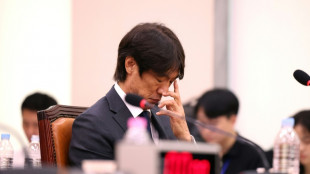 Police raid South Korea FA in probe into World Cup coach appointment
 Low water on Germany's Rhine river threatens new blow to economy

 Ex-Wallabies Foley, Phipps rejoin Waratahs ahead of home World Cup

 Rising Kenyan lakes push crocodiles closer to homes

 Istanbul cymbals: From Ottoman war tool to pulse of global music

 Myanmar ex-junta chief on first Thailand trip as civilian leader

 Environmental disaster looms as tanker leaks off Oman

 Embattled Infantino sees minnows Malawi reach WAFCON quarter-finals

 Seeds Rybakina, Pegula and Gauff advance at WTA Toronto event

 Zverev, Auger-Aliassime exit star-short Montreal Masters

 Embattled FIFA chief Infantino in emergency talks in Morocco

 Castaway SpaceX rocket stage crashed into Moon, scientists say

 Dow edges to record as markets parse prospects for Hormuz deal

 Salah arrives in Turkey to complete Trabzonspor move

 AFP journalist to be honored at International Press Freedom Awards

 Turkish MPs back limited amnesty for Kurdish militants

 Noosha Aubel: Czy poradzi sobie z problemami Poczdamu?

 Noosha Aubel: Klarar hon av Potsdams problem?

 Noosha Aubel: Zvládne problémy Postupimi?

 Brazil hits new diplomatic lows with US and Argentina

 NZ boxer Parker promises ring return after doping ban 'lifted'

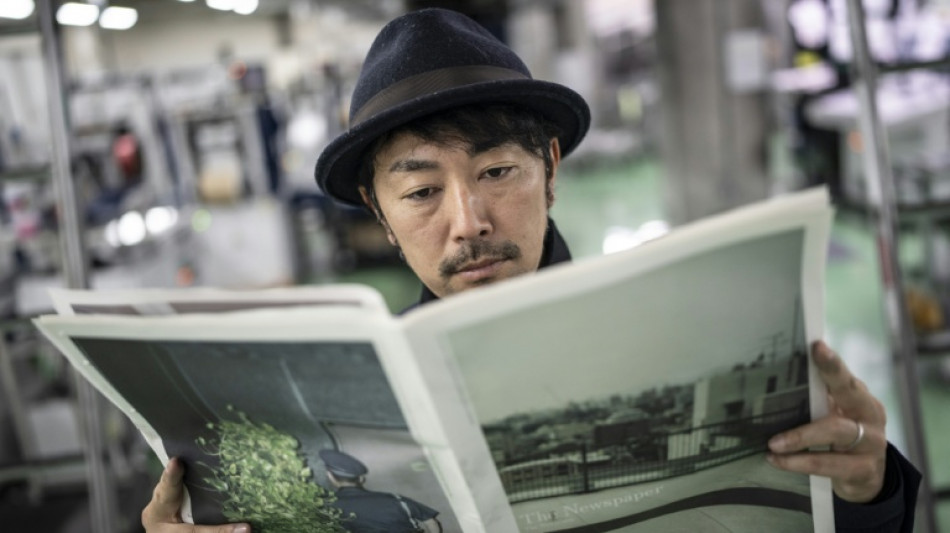
Through the noise of rushing papers and whirring belts at a print factory in Kyoto, two creators watch their photo essay come to life in broadsheet form -- part of an effort to win new audiences in the age of AI.
Despite the decline of the publishing industry, self-publication and handmade "zine" magazines are growing in popularity in Japan, reflecting the country's enduring love of paper in the digital era.
While speaking to AFP at the plant, his hands black with ink, one of the creators, Kazuma Obara said "I think (paper) is a medium that engages all five senses", unlike social media.
Obara and his creative partner Akihico Mori are among the latest artists to use a printing press offered by the Kyoto Shimbun newspaper, which is aiming to find alternative uses for its machines as subscriptions fall.
As the machine printed their work on newsprint paper, five technicians in uniform quickly flipped through the pages to check the quality.
"I think print media is incredibly open. You can hand it to someone, you can read it together," 40-year-old photographer Obara said, calling mobile phones "very insular".
Mori, a 44-year-old writer, said people can "feel the creator's passion when they hold the work in their hands".
"I think that's what makes it so appealing, and AI simply can't replicate it."
- Rise of self-publishing -
The pair's work was later showcased at popular international photography festival Kyotographie that ended in May.
Yoshihiko Okazaki of Kyoto Shimbun Printing said the company's services have been used by artists ranging from teenagers to those in their 70s.
"Surprisingly, it resonates with younger people... I even hear comments like, 'it's interesting precisely because it's old'."
Japan has seen a rapid decline in print media, with book and magazine sales falling to just 40 percent of their 1996 pinnacle of 2.6 trillion yen ($16.3 billion).
Newspaper circulation peaked in 1997 at 53.76 million, but it dropped to more than half that in 2025, according to the Japan Newspaper Publishers & Editors Association.
Many authors and publishers around the world fear the trend will be accelerated by artificial intelligence and social media -- in the UK, a 2025 study showed that half of novelists believe AI is likely to replace their work.
However, like in other countries worldwide, do-it-yourself publication including zines -- which originated in the 1930s with sci-fi fans in the US -- is growing in Japan, especially among younger generations.
Public broadcaster NHK reported, citing one private research firm, the self-publishing market is estimated at 150 billion yen in the year ending March 2026, nearly double the figure four years ago.
- 'Something tangible' -
On one weekend in Tokyo, hundreds of visitors flocked to a zine fair showcasing a wide range of handmade magazines in different sizes and formats -- some incorporating abstract designs, photography or personal monologues.
"AI and social media are driven by algorithms that feed us nothing but what we want to see or what suits us best," said 22-year-old visitor Harumi Kikuchi.
"But the fact that many zine makers are here suggests there are many different worldviews."
Zine creator Watashi Kishino, who hand draws her daily life in black-and-white illustrations, said people can "make a lot of things with AI and digital technology".
"But I believe there's a charm in having something tangible to hold in your hands like this," Kishino said, showing her works.
Major bookstores are also embracing the trend as young people increasingly drift away from physical books.
Sanseido, a 145-year-old bookstore in Tokyo's book district Jimbocho, began putting zines on their shelves almost a year ago.
"We felt that zines could appeal to a different audience than traditional readers," Masato Sugiura, deputy head of the sales promotion unit, told AFP.
"Everyone is looking for something that really speaks to them. Readers are perhaps drawn more to zines, which are niche and cover a broader range of topics," he added.
Kishino remains hopeful that physical books and magazines will endure despite the digital age.
"There's warmth that only paper can offer," she said. "There's definitely people who are looking for that."
P.Cavaco--PC